
Views: 218 Author: Farwise Lighting Publish Time: 2026-08-21 Origin: Site


Content Menu
● How Does an LED Produce Light?
>> 1. Semiconductor Materials Form the LED Chip
>> 2. Electrical Current Moves Electrons
>> 3. Electron-Hole Recombination Creates Photons
● How White LED Light Is Created
>> Why This Matters for Furniture Lighting
● Why LEDs Are More Efficient Than Incandescent Lamps
● From LED Chip to Finished Lighting System
● Why Color Consistency Is Important
>> A Practical Project Example
● Common LED Lighting Problems and Their Causes
>> Flickering
>> Overheating
>> Uneven Light or Visible Dots
● A Buyer's Checklist for LED Silicone Strip Lights
● Choosing an OEM/ODM Lighting Partner
● Build a Better Furniture Lighting Solution
● FAQ
>> How does an LED produce light?
>> Why can two LED strips look like different colors?
>> Do LED lights generate heat?
>> Why does an LED strip flicker when dimmed?
>> Are LED silicone strip lights suitable for furniture lighting?
An LED produces light through electroluminescence: when electrical current passes through a semiconductor junction, electrons release energy as photons. This efficient process is the foundation of modern LED strip lighting, cabinet lighting, wardrobe lighting, bathroom cabinet lighting, and other integrated furniture illumination systems.
For buyers, designers, and lighting brands, understanding how an LED works is more than basic science. It helps explain why some LED lighting systems deliver smooth, stable, consistent illumination for years, while others develop flicker, color inconsistency, overheating, or early failure.
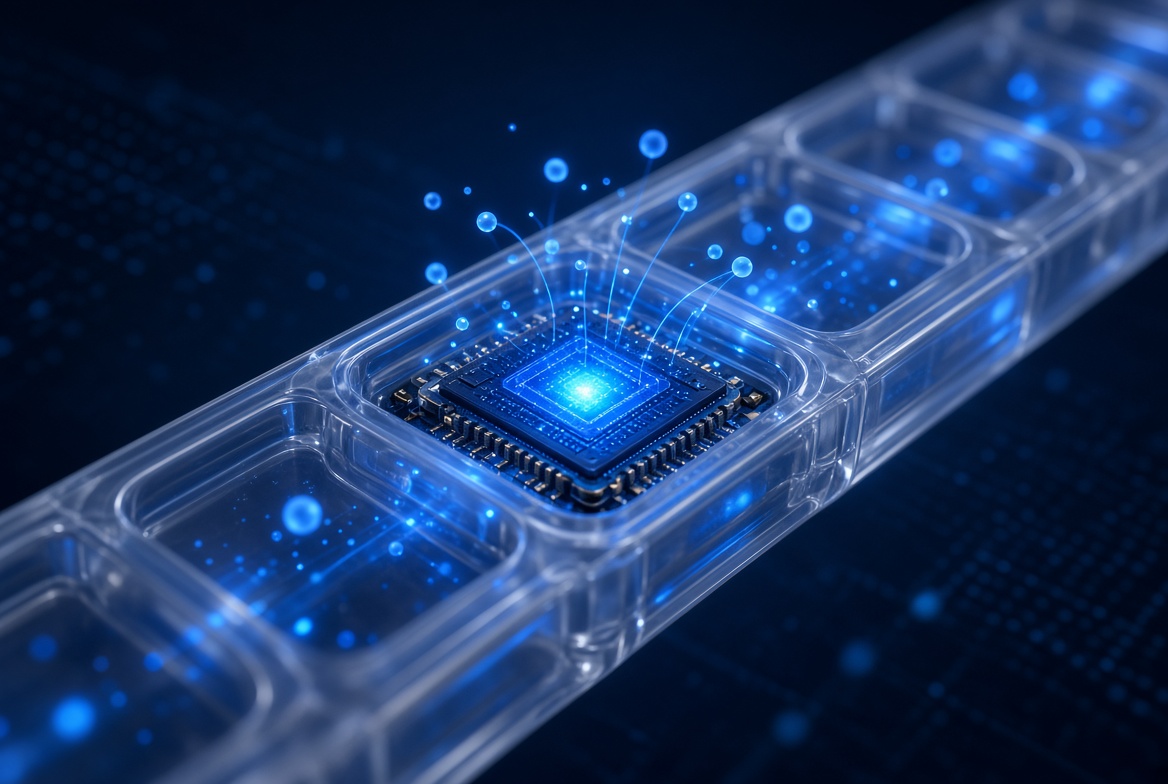
LED stands for Light-Emitting Diode. It is a solid-state electronic component that converts electrical energy into visible light.
Unlike an incandescent bulb, which creates light by heating a filament until it glows, an LED does not rely on a fragile heated filament. Instead, it uses semiconductor materials arranged into a small electronic structure called a p-n junction.
This difference is central to why LED lighting is widely used in furniture, retail, residential interiors, commercial displays, and smart-home installations. The LED itself is small, controllable, directional, and suitable for compact lighting designs such as silicone strip lights installed in cabinet grooves, wardrobe profiles, mirrors, bed frames, and architectural details.
The U.S. Department of Energy explains that LEDs use a p-n junction where electrons and holes recombine and release energy that can take the form of light. It also notes that LEDs naturally emit light in a narrow wavelength band, which is why specific materials and optical conversion methods are used to create different colors and white light.
At the core of every LED light is a controlled movement of electrons. The process is fast, electronic, and continuous while power is supplied.
An LED chip is made from semiconductor materials. These materials are engineered so that one side contains an excess of electrons and the other side has spaces where electrons can move.
These two regions are called:
- The n-type layer, which has extra electrons
- The p-type layer, which contains electron vacancies, often called holes
- The p-n junction, where the two layers meet
When the LED receives the correct electrical input, the junction becomes active.
When voltage is applied, electrons move from the n-type region toward the p-type region. At the same time, holes move in the opposite direction.
This movement is not random. The LED's semiconductor structure directs electrons and holes toward the p-n junction, where they can combine.
In a finished furniture-lighting system, this electrical control depends on more than the LED chip. It also depends on the driver, wiring, connectors, dimming method, installation design, and the surrounding thermal structure.
When an electron meets a hole, the electron drops to a lower energy state. The released energy is emitted as a photon, which is a particle of light.
This process is called electroluminescence.
The color of the emitted light depends largely on the semiconductor material and its energy bandgap. Different material systems create different wavelengths, which people perceive as different colors.
For example:
- Shorter wavelengths may appear blue or violet
- Longer wavelengths may appear red or amber
- White illumination usually requires color conversion or color mixing
This is why LED lighting is not simply "a brighter diode." It is an engineered system in which chip selection, phosphor formulation, optical design, circuit design, and heat management affect the final appearance and performance of the light.
A single LED chip does not automatically generate the broad spectrum needed for comfortable white lighting. Most white LEDs are made by combining a blue or near-ultraviolet LED source with phosphor materials.
The phosphor absorbs part of the original light and re-emits it at other wavelengths. The combination is perceived by the human eye as white light.
The Department of Energy notes that general white illumination can be created through broadband conversion, such as blue emission combined with phosphors, rather than relying only on narrow-band LED emission.
In cabinet, wardrobe, and mirror applications, the quality of white light strongly affects how users perceive surfaces, finishes, fabrics, food, cosmetics, and decorative objects.
A lighting supplier should therefore assess more than whether a strip can turn on. Important considerations include:
- Color consistency across the same project
- Stable appearance between production batches
- Diffusion quality inside silicone sleeves or aluminum profiles
- Suitability for visible and concealed installation areas
- Compatibility with sensors, dimmers, and smart-control systems
- Heat dissipation in enclosed furniture structures
For example, a wardrobe lighting project may include multiple doors, shelves, drawers, and hanging zones. If different sections use LEDs with noticeable color variation, the entire installation can look inconsistent even when every strip functions normally.
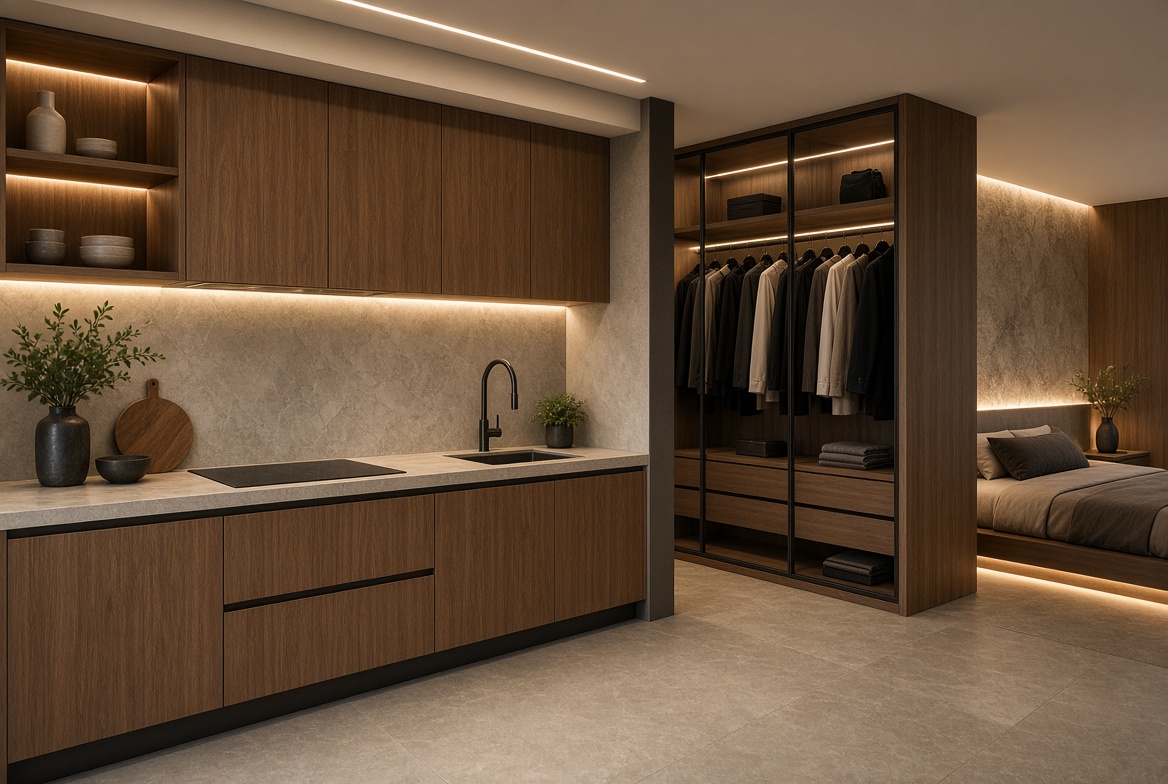
Traditional incandescent lamps create light by heating a filament. A large portion of the electrical energy becomes heat rather than useful visible light.
LEDs generate light through semiconductor action, so they can convert electrical energy more directly into visible output. This makes LEDs well suited to applications where low energy consumption, compact dimensions, controllability, and reduced heat exposure are important.
The U.S. Department of Energy identifies solid-state lighting as a major area for energy-efficient product development and innovation.
However, "efficient" does not mean "heat-free." Every LED system still generates heat. The difference is that LED heat must be controlled through good design rather than assumed away.
An LED chip can operate at elevated temperatures, but excessive junction temperature can reduce light output, affect color stability, and shorten component life.
Department of Energy research states that thermal droop occurs when LED optical output decreases as junction temperature rises. Ambient temperature, drive current, and the thermal design of the lamp or luminaire all influence junction temperature and output characteristics.
For furniture lighting, this is especially important because LEDs are often installed in:
- Enclosed cabinet channels
- Shallow aluminum profiles
- Silicone sleeves
- Wood panels with limited ventilation
- Bed frames and headboards
- Mirror cabinets near humid environments
- Compact smart-lighting assemblies
A well-designed lighting solution considers the entire thermal path: LED board, housing, profile, mounting surface, adhesive method, driver location, and airflow around the installation.
A high-quality LED lighting solution is not defined by the chip alone. The final experience depends on how the complete system works together.
| System element | What it does | Why it matters |
|---|---|---|
| LED source | Produces the light | Influences color, brightness stability, and visual consistency |
| Circuit board | Supports and connects the LEDs | Affects heat transfer and electrical reliability |
| Optical layer | Diffuses, directs, or softens light | Helps reduce glare and create a continuous lighting effect |
| Silicone housing | Protects and shapes flexible lighting | Supports flexible, soft, and integrated furniture-lighting designs |
| Driver | Converts and regulates electrical power | Poor matching can cause flicker, instability, or failure |
| Dimming control | Adjusts the light output | Must be matched with the driver and intended control method |
| Connector system | Joins lighting sections and power | Influences installation speed, serviceability, and reliability |
| Installation structure | Holds and protects the light | Determines heat handling, appearance, and long-term usability |
For OEM and ODM projects, the best approach is to evaluate these parts as one solution rather than purchasing them separately without system verification.
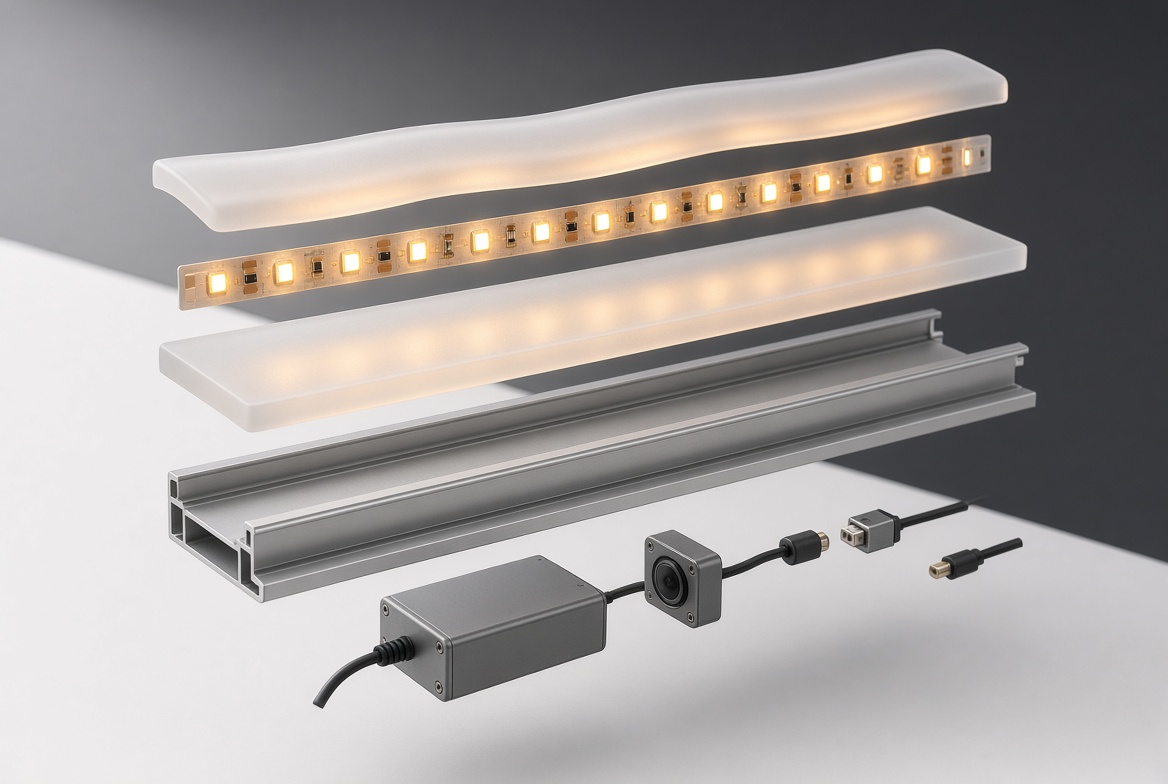
Two LED strips can both be described as warm white or cool white but still look visibly different when installed side by side.
This happens because LED production naturally involves variation in light output, color point, and forward voltage. Manufacturers manage this variation through a process called binning, which groups LEDs with similar measured characteristics.
Lumileds explains that LEDs are commonly divided into bins based on characteristics such as light output, color point, and forward voltage, helping manufacturers deliver more predictable performance within defined tolerances.
Imagine a custom kitchen project with lighting under upper cabinets, inside glass cabinets, beneath the island edge, and around a display wall.
If the four lighting zones come from uncontrolled batches, the kitchen may show multiple versions of "warm white." One area may look yellow, another pinkish, and another slightly green. The problem may not be obvious in packaging, but it becomes highly visible once the strips are installed against white cabinetry, stone surfaces, and reflective glass.
For project-based furniture lighting, buyers should ask suppliers how they manage:
- Production-batch consistency
- LED source selection
- Incoming-material inspection
- Color appearance across connected strips
- Reorder consistency for long-term programs
- Quality control for finished assemblies
Many lighting complaints are not caused by one defective LED. They often result from mismatch or weak control across the full system.
Flicker can be caused by driver instability, unsuitable dimming controls, poor electrical connections, or an incompatible dimmer-driver combination.
Energy Star materials identify flicker, erratic dimming behavior, flashing, drop-out, and audible noise as potential outcomes of incompatible LED lamps, drivers, and dimmers.
Visible color differences may result from mixed LED bins, inconsistent raw materials, uneven phosphor conversion, or differences between production batches.
This matters most in continuous lighting lines, open shelving, mirrored cabinets, and high-visibility furniture details.
Poor heat transfer can reduce output and accelerate changes in the LED system. The risk increases when strips are installed inside narrow, enclosed, or poorly ventilated areas.
The driver is one of the most important components in a low-voltage lighting system. If it is poorly matched to the load, control method, or installation environment, the lighting system may dim unpredictably, flicker, or stop operating.
A strip may generate enough light but still look poor if the LED spacing, diffuser, mounting depth, silicone design, or profile selection does not suit the installation.
For visible furniture applications, smoothness and visual comfort can be as important as illumination itself.
Before selecting an LED silicone strip light or integrated furniture-lighting solution, assess the project as a complete application.
1. Define the installation location, including cabinet, wardrobe, bathroom cabinet, bed frame, display shelf, or wall detail.
2. Identify whether the lighting will be visible directly or hidden behind a panel, diffuser, lip, or profile.
3. Confirm the required lighting effect, such as soft ambient light, functional task light, decorative edge light, or sensor-triggered illumination.
4. Check the intended control method, including manual switching, touch control, door sensors, infrared sensors, smart-home control, or dimming.
5. Consider the installation environment, especially heat, moisture, cleaning requirements, narrow spaces, and cable-routing limitations.
6. Request samples that reflect the real installation condition rather than evaluating a strip only on a worktable.
7. Test the complete system with the intended driver, controller, connector, and installation method.
8. Confirm the supplier's capacity for repeat orders, customization, technical communication, and project-level quality control.
For brands, furniture manufacturers, distributors, and project contractors, the supplier relationship should go beyond sourcing a standard product.
A capable OEM/ODM partner should help turn an installation requirement into a manufacturable lighting solution. This may include custom dimensions, functional integration, lighting effects, silicone structures, connector layouts, control options, packaging requirements, and exterior design.
Farwise Technology Co., Ltd. has focused on LED lighting for 16 years and provides commercial and residential lighting solutions for cabinet, wardrobe, bathroom cabinet, bedroom, and furniture-lighting applications. Its product range includes LED silicone strip lights and related furniture-lighting solutions designed for diversified whole-home, commercial-fit-out, soft-decoration, and smart-home projects.
For long-term projects, the most valuable supplier is not necessarily the one offering the lowest initial quotation. It is the one that can provide stable quality, responsive engineering support, repeatable production, customization capability, and a solution that works reliably after installation.
LEDs produce light through a remarkably efficient semiconductor process, but successful furniture lighting depends on much more than the LED chip. Color consistency, thermal design, drivers, dimming compatibility, optical diffusion, silicone housing, and installation details all shape the final result.
If you are developing a cabinet-lighting, wardrobe-lighting, bathroom-lighting, or smart-furniture project, contact Farwise Technology to discuss your OEM/ODM requirements, request samples, and develop a lighting solution tailored to your application.
An LED produces light when electrical current causes electrons and holes to recombine inside a semiconductor p-n junction. The released energy is emitted as photons, which are visible light.
An LED driver regulates the electrical power supplied to the LEDs. It helps maintain stable operation and can reduce risks such as flicker, inconsistent dimming, or premature failure caused by unsuitable power delivery.
They may use LEDs from different color groups, production batches, phosphor formulations, or operating conditions. Consistent source selection and production control are important for projects where lighting sections are installed next to each other.
Yes. LEDs generate less radiant heat than incandescent lamps, but they still produce heat at the chip and system level. Good thermal design helps maintain light output, color stability, and long-term reliability.
Flicker may occur when the dimmer, driver, and LED strip are not designed or tested to operate together. It can also be caused by wiring issues, unstable power supplies, or incorrect installation.
Yes. LED silicone strip lights can suit cabinets, wardrobes, shelves, bed frames, mirrors, and decorative details because they are flexible and can support integrated lighting designs. The correct design should be selected according to the installation space, desired light effect, control method, and environmental conditions.
- [U.S. Department of Energy: Energy Efficient Lighting Technology Options]
- [U.S. Department of Energy: Solid-State Lighting]
- [U.S. Department of Energy: Solid-State Lighting R&D Opportunities]
- [U.S. Department of Energy: LED Luminaire Reliability—Impact of Color Shift]
- [Energy Star: LED Dimming Compatibility and Control Issues]
- [Energy Star: Dimming LED Lights—Insights and Solutions]


