
Views: 236 Author: Farwise Lighting Publish Time: 2026-08-18 Origin: Site


Content Menu
● What Is Architectural Neon Lighting?
>> Where Architectural Neon Lighting Performs Best
● What Is Facade Flood Lighting?
>> Typical Facade Flood Lighting Applications
● Architectural Neon Lighting vs Facade Flood Lighting
● How Light Changes Architectural Perception
>> Use Neon Lighting When the Detail Is the Story
>> Use Flood Lighting When the Building Is the Story
● The Most Important Selection Criteria
>> 1. What Must Be Visible From a Distance?
>> 2. Is the Surface Flat, Textured, or Curved?
>> 3. Does the Project Need Dynamic Control?
>> 4. How Important Is Light Spill Control?
● A Practical Hybrid Lighting Strategy
● Installation and Maintenance Considerations
>> For Architectural Neon Lighting
● Why Custom Manufacturing Matters
● FAQ
>> What is the main difference between architectural neon lighting and facade flood lighting?
>> Can LED silicone neon strip lights be used outdoors?
>> Which lighting option is better for a building entrance?
>> Is facade flood lighting suitable for textured walls?
>> Can architectural neon lighting support custom shapes?
>> How can a project reduce glare from façade lighting?
>> Can these lighting solutions be used in furniture projects?
Architectural neon lighting and facade flood lighting both transform buildings after dark, but they do so in fundamentally different ways. Architectural neon lighting defines edges, curves, and brand signatures with continuous lines of light, while facade flood lighting illuminates broad building surfaces to reveal scale, materials, entrances, and architectural form.
For designers, contractors, furniture-lighting brands, hospitality projects, and commercial developers, the right choice depends on the visual objective—not simply on brightness. In practice, the strongest façade schemes often use both: neon flex for precise visual storytelling and flood lighting for wide-area architectural emphasis.

Architectural neon lighting usually refers to flexible, continuous LED light systems designed to recreate the clean, uninterrupted appearance of traditional neon. Modern LED silicone neon flex replaces fragile glass tubing with flexible, impact-resistant, weather-conscious materials suitable for interior and exterior applications.
Rather than lighting an entire wall, LED neon lighting follows a line. It can trace a roofline, frame an entrance, emphasize a curved facade detail, outline a canopy, create illuminated signage, or add a soft visual layer to furniture and interior architectural elements.
For projects involving hospitality, retail, residential developments, public spaces, or branded commercial environments, architectural neon lighting is especially useful when the lighting itself is intended to become part of the visual identity.
Architectural neon lighting is often selected for projects that require detail, flexibility, and a refined continuous-light effect:
- Building outlines and roof edges
- Curved façade details and archways
- Hotel entrances and reception exteriors
- Retail storefronts and logo features
- Bridge rails and landscape structures
- Decorative ceiling lines and wall recesses
- Cabinet, wardrobe, vanity, and bedroom lighting concepts
- Wayfinding, signage, and feature walls
- Smart-home and color-changing lighting scenes
A silicone LED strip light is not merely a decorative component when properly specified. It can become a system-level element that links architectural design, user navigation, brand recognition, and nighttime atmosphere.
From a manufacturing perspective, the critical difference lies in consistency. A line of light must look continuous from end to end. Uneven brightness, visible LED dots, poor bends, color inconsistency, or unstable connections can quickly undermine an otherwise premium project.
Facade flood lighting uses directional fixtures with wider beams to project light across large building surfaces. It is commonly used to illuminate exterior walls, columns, entrances, stonework, landscape features, signage zones, and high-rise elevations.
The principal purpose is broad coverage. A facade flood light can visually lift an entire building from darkness, creating a stronger sense of presence, safety, orientation, and nighttime visibility.
Flood lighting is typically more practical than linear neon lighting when the goal is to reveal a large, flat, textured, or tall façade. Wide-beam fixtures can wash a surface with light, while narrower optics can concentrate attention on selected architectural features.
The Illuminating Engineering Society emphasizes that outdoor lighting should have a clear purpose, be directed only where needed, use no more light than necessary, and be controlled for the relevant time and context.
Facade flood lighting is well suited to:
- Large commercial building elevations
- Hotels, offices, malls, and exhibition centers
- Historic structures and monuments
- Warehouse and industrial exteriors
- Public entrances and arrival zones
- Stone, brick, metal, and textured architectural walls
- Landscape walls, trees, and public plazas
- Security-focused perimeter areas
- Architectural features visible from a long distance
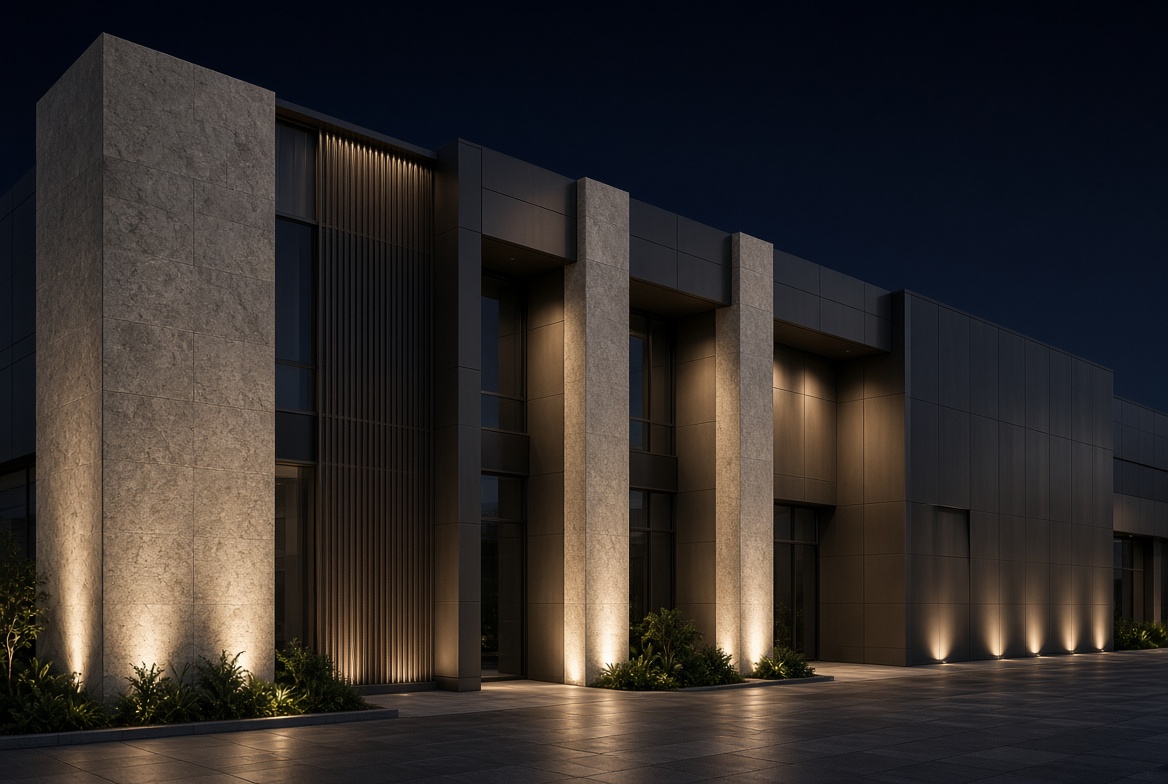
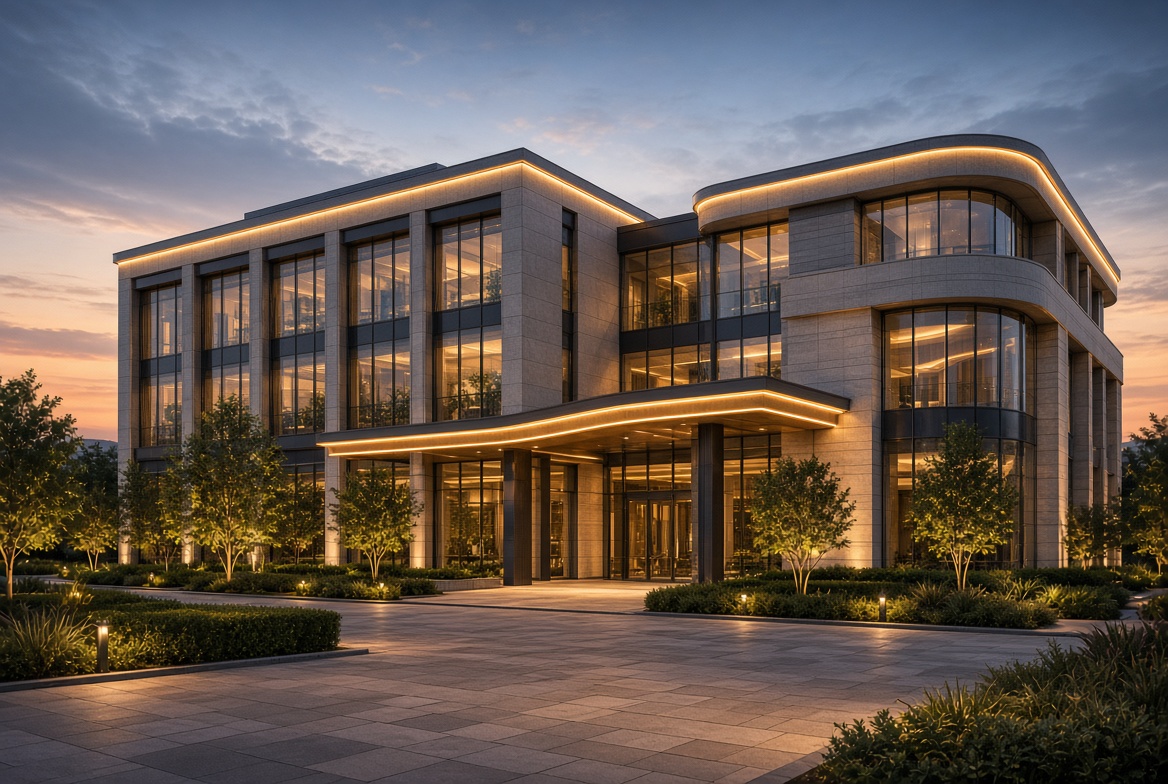
Floodlights are particularly effective where architectural mass matters more than fine-line detail. For example, a large hotel façade may need a soft wall wash to express its material and scale, while the entrance canopy may use neon flex to form a memorable visual signature.
| Comparison Factor | Architectural Neon Lighting | Facade Flood Lighting |
|---|---|---|
| Primary visual effect | Continuous lines, contours, symbols, and decorative accents | Broad illumination across walls and architectural surfaces |
| Best for | Curves, edges, signage, entrances, outlines, and detail work | Large façades, tall elevations, textured walls, and open exterior areas |
| Light direction | Linear and close to the installation surface | Projected from a fixture toward a target surface |
| Design expression | Precise, modern, branded, and highly customizable | Dramatic, architectural, functional, and large-scale |
| Installation approach | Requires careful routing, bending, joining, and mounting | Requires fixture positioning, aiming, spacing, and glare management |
| Suitable façade type | Curved, segmented, irregular, and detail-rich surfaces | Broad, flat, tall, or visually dominant surfaces |
| Typical user experience | Creates atmosphere and guides attention | Establishes visibility and reveals the building form |
| Customization potential | High for shape, length, light output, color, control, and exterior appearance | High for beam direction, fixture placement, output distribution, and controls |
| Common project risk | Uneven illumination, poor sealing, voltage drop, and inconsistent bends | Glare, spill light, harsh shadows, and uneven wall coverage |
Neither approach is universally better. The correct answer depends on what viewers should notice first.
A façade is not only a physical surface. At night, lighting determines how people read its depth, scale, entrance hierarchy, and identity.
Architectural neon lighting directs the eye along a defined path. It can make a curved roofline feel lighter, help visitors recognize a storefront, or turn a simple architectural detail into a visual landmark. It is a highly intentional form of illumination: the designer chooses exactly what should be seen.
Facade flood lighting works differently. It reveals a wider visual field. A floodlight can make a dark, large wall legible from across a street, show the texture of stone or cladding, and establish a building's relationship with its surroundings.
Choose architectural LED neon lighting when the project needs to highlight:
- Curves, outlines, frames, and narrow architectural edges
- Brand-shaped visual elements
- Decorative exterior lines
- Controlled visual rhythm across a façade
- Feature entrances and canopy details
- Furniture-integrated lighting in cabinets, wardrobes, and bathrooms
- Interior-exterior visual continuity
A continuous silicone neon strip can be especially valuable for projects where rigid fixtures would interrupt the intended line. It allows lighting designers to follow geometry rather than force the architecture to follow the lighting.
Choose facade flood lighting when the project needs to highlight:
- Overall building mass
- Large façade materials
- Vertical scale
- Large entrances and public zones
- Monumental or heritage architecture
- Exterior safety and navigation
- Wall washing or broad visual coverage
Flood lighting is frequently used for wall washing, grazing, uplighting, and surface emphasis. A wide flood beam is commonly suited to broad, relatively uniform surfaces, while grazing techniques can reveal texture and depth when fixtures are positioned close to the wall.
The best lighting specification begins with the intended outcome. Before choosing a fixture category, project teams should answer several practical questions.
If people will view the project from a road, plaza, or neighboring building, broad façade illumination may be more effective. Flood lighting helps a large building maintain visual presence at a distance.
If the key visual message is a logo, edge, curved feature, or entrance frame, architectural neon lighting offers a clearer and more distinctive result.
Surface geometry should guide the lighting method.
- Flat, broad façades often suit flood lighting and wall washing.
- Textured stone, brick, or perforated metal can benefit from controlled grazing.
- Curved features, recessed lines, and irregular details often favor flexible neon lighting.
- A mixed-material facade may require both systems.
This is where an experienced manufacturer can add practical value. Lighting is not selected only by appearance. The mounting surface, bending route, cable path, exposure conditions, and maintenance access all affect long-term results.
For restaurants, hotels, retail spaces, entertainment venues, and smart-home projects, dynamic lighting can create different moods for different times of day or events.
Architectural neon lighting is highly adaptable for controlled color scenes, segmented effects, and customized visual patterns. Flood lighting can also support dynamic control, but it is usually more focused on changing the appearance of an entire surface rather than creating fine graphic lines.
Outdoor lighting should illuminate the intended area without causing unnecessary glare or intrusion into nearby properties, roads, or windows. This is especially relevant for urban buildings, residential developments, and mixed-use projects.
Use shielding, accurate aiming, proper mounting height, timers, dimming, and zoning controls. The goal is not maximum brightness; it is a balanced, comfortable result.
Many project teams treat architectural neon lighting vs facade flood lighting as an either-or decision. That often leaves visual potential unused.
A layered design can provide a more complete result:
1. Use floodlights to establish the façade's overall presence.
2. Use neon flex to define entrances, rooflines, arches, or signature details.
3. Use targeted accent lighting to draw attention to signage, columns, or landscape elements.
4. Divide the installation into independently controlled zones.
5. Reduce output late at night when full visual impact is no longer needed.
For example, a commercial building may use façade flood lighting to softly illuminate the main wall, silicone neon strip lights to outline the entrance canopy, and low-glare accent fixtures to highlight the company sign. The result feels intentional rather than overlit.
Lighting design should be evaluated as a long-term system, not a one-night visual presentation. Project teams should consider installation quality, environmental exposure, accessibility, wiring layout, and replacement planning before approval.
Focus on:
- Correct bending direction for the intended shape
- Stable mounting channels or clips
- Consistent connection methods
- Weather-conscious sealing for exterior projects
- Proper power distribution across longer runs
- Accessible locations for drivers and controllers
- Matching light color and brightness across separate sections
Flexible LED neon systems are widely used for building façades, bridges, landscapes, retail, hospitality, signage, and architectural installations because they can follow curves and details more easily than rigid linear fixtures.
Focus on:
- Beam angle selection
- Fixture aiming and spacing
- Glare control
- Surface reflectance
- Shadows created by ledges, columns, and balconies
- Maintenance access at height
- Protection from rain, dust, heat, and corrosion
- Coordination with surrounding buildings and pedestrian areas
A lighting mock-up is strongly recommended for visible façade projects. Even a well-designed rendering cannot fully predict how a material reflects light at night. Stone, glass, aluminum, painted surfaces, and textured cladding can all respond differently under real conditions.
For OEM and ODM projects, a generic lighting product may not match the architectural concept, installation environment, or end-user expectations. Customization is especially valuable when a lighting solution must align with a brand's design language or integrate into a broader furniture and interior lighting system.
Farwise Technology Co., Ltd. supports customers with customized LED silicone strip lighting and integrated lighting solutions for commercial, residential, furniture, and smart-home applications. With 16 years of manufacturing experience, the company can support project-specific requirements involving dimensions, functions, lighting concepts, and exterior design.
For cabinet lighting, wardrobe lighting, bathroom vanity lighting, bedroom lighting, and architectural feature lighting, the goal is the same: create a stable, visually consistent, and practical lighting experience that can be reliably implemented at scale.
Choose architectural neon lighting when you need continuous lines, curved forms, visual identity, or detailed decorative emphasis. Choose facade flood lighting when you need wide coverage, large-scale wall illumination, stronger building visibility, or surface-focused architectural expression.
For projects that need both presence and personality, combine them. Floodlights can reveal the building; LED silicone neon lighting can make it memorable.
Ready to develop a custom architectural, furniture, or façade lighting solution? Contact Farwise Technology Co., Ltd. to discuss your OEM/ODM requirements, application scenario, design concept, and integrated lighting needs.
Architectural neon lighting creates continuous illuminated lines along edges, curves, and design details. Facade flood lighting projects light over a broader area to illuminate large exterior surfaces.
Yes, suitable silicone neon lighting systems can be used in exterior architectural applications when the product design, sealing method, installation system, and environmental protection are matched to the project conditions. Outdoor suitability should always be confirmed during specification and installation planning.
It depends on the visual objective. Flood lighting is effective for making the entrance area visible and welcoming, while neon lighting is ideal for outlining canopies, doors, logos, and decorative details. Combining both is often the most effective solution.
Yes. Flood lighting can reveal a wall's material and architectural form. When texture is a key feature, grazing or carefully angled lighting may create stronger shadows and depth than a broad, uniform wash.
Yes. Flexible LED neon lighting is designed for straight runs, curves, contours, letters, and custom architectural details. The selected bending direction and mounting method should match the intended design.
Use accurately aimed fixtures, appropriate beam control, shielding, dimming, zoning, and operating schedules. Avoid directing light toward windows, traffic routes, or neighboring properties, and use only the illumination needed for the design purpose.
Yes. LED silicone strip lights and related linear lighting systems can be integrated into cabinets, wardrobes, bathroom vanities, bedrooms, display units, and smart-home installations to add function, comfort, and visual depth.
- [Illuminating Engineering Society — Position on Outdoor Light at Night]
- [Alcon Lighting — The Art of Facade Lighting for Commercial and Public Spaces]
- [KEYFINE — How LED Neon Lights Are Used in Architectural Lighting]
- [Bullard Bollards — Architectural LED Neon Lighting]
- [GQLamp — Facade and Architectural Lighting Design Guide]
- [COLORLED — Lighting Methods and Products Used in Architectural Facade Lighting]


