
Views: 222 Author: Farwise Lighting Publish Time: 2026-09-13 Origin: Site


Content Menu
● Why Mirror LED Strip Lighting Matters
● Three Mirror Lighting Layouts to Consider
>> Backlit Mirror LED Strip Lighting
>> Front-Lit Mirror LED Strip Lighting
● How to Choose an LED Strip for a Mirror
>> Start With the Intended Use
>> Choose a Comfortable Light Appearance
>> Use Diffusion to Avoid Visible Dots
● A Practical Mirror LED Strip Installation Process
>> Step 1: Define the Lighting Effect
>> Step 2: Measure the Mirror and Installation Zone
>> Step 3: Test the Lighting Before Final Mounting
>> Step 4: Prepare the Mounting Surface
>> Step 5: Install the LED Strip Without Stressing It
>> Step 6: Conceal the Driver and Cables
>> Step 7: Verify the User Experience
● Smart Controls Make Mirror Lighting More Useful
● Common Mirror Lighting Problems and How to Avoid Them
>> Uneven Light Around the Mirror
>> Flickering or Unstable Operation
>> Adhesive Peeling in Humid Areas
● Why Integrated Furniture Lighting Creates Better Results
● Build a Mirror Lighting Solution That Fits the Project
● FAQ
>> 1.What is the best LED strip placement for a bathroom mirror?
>> 2.Can LED strip lights be installed behind any mirror?
>> 3.Are silicone LED strip lights suitable for curved mirrors?
>> 4.Should mirror LED strip lights be dimmable?
>> 5.How can I prevent LED dots from showing on the mirror or wall?
>> 6.Is it safe to install LED strip lights in a bathroom?
>> 7.Can mirror lighting be connected to motion sensors or smart controls?
>> 8.Can Farwise customize mirror lighting solutions?
Mirror LED strip lighting can turn an ordinary bathroom mirror, dressing mirror, or wardrobe mirror into a more functional and visually refined feature. The best result does not come from simply attaching a light strip to glass—it comes from matching the lighting layout, installation method, control option, and moisture protection to the way people actually use the space.
At Farwise Technology Co., Ltd., we have spent 16 years developing furniture and architectural lighting solutions, including LED silicone strip lights, LED cabinet lights, wardrobe lights, bathroom cabinet lights, and LED power supplies. From our experience supporting customized projects, the most successful mirror lighting installations balance facial visibility, visual comfort, clean construction, and long-term reliability.
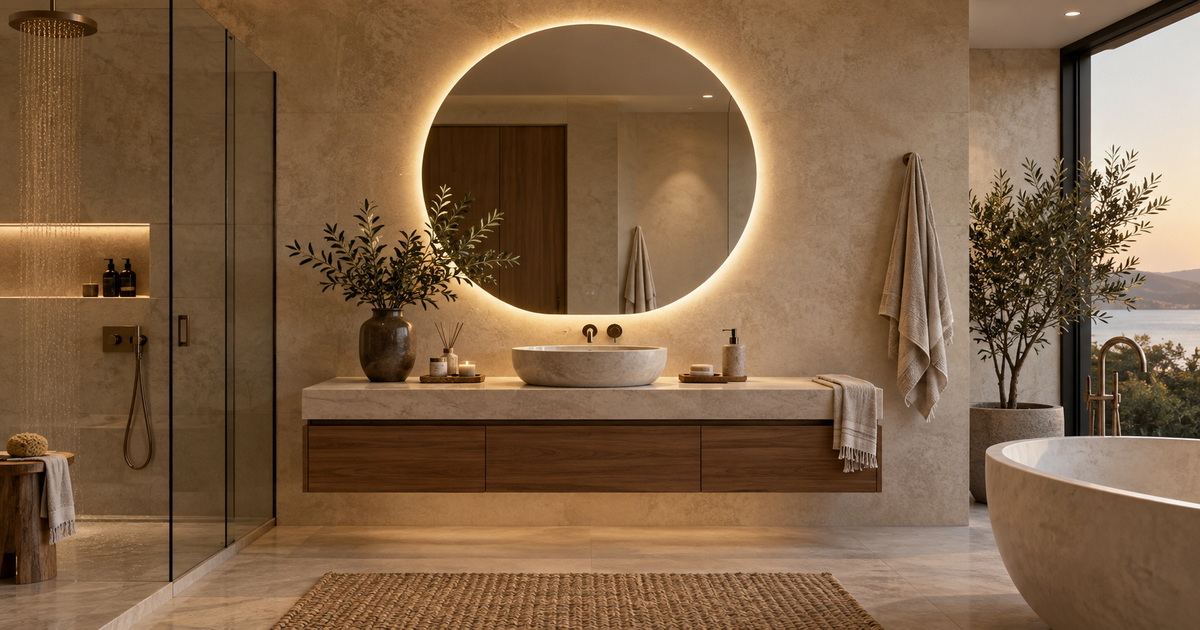
A mirror is used for more than reflection. In bathrooms, it supports grooming. In bedrooms and wardrobes, it helps users choose clothing and check appearance. In salons, hotels, retail fitting rooms, and makeup areas, it becomes part of the customer experience.
Poorly placed overhead lighting often creates shadows below the eyes, chin, and nose. A carefully planned mirror LED strip light system can reduce these shadows while also creating a premium visual effect.
The most important benefit is not simply brightness. It is usable light in the right direction.
Mirror lighting can support several goals:
- Improve visibility for shaving, skincare, makeup, hair styling, and dressing
- Create a soft halo around a wall-mounted mirror
- Make a compact bathroom or dressing area feel more open
- Add ambient light without relying on a harsh ceiling fixture
- Enhance the perceived value of custom furniture and bathroom cabinetry
- Integrate motion sensing, dimming, touch control, or smart-home control
- Create a consistent lighting language across cabinets, wardrobes, bed frames, and mirrors
For furniture makers, contractors, and lighting brands, mirror lighting is also an opportunity to create a complete lighting system, rather than selling a mirror or cabinet as a standalone item.

The lighting layout determines how the mirror looks and how effectively it supports daily tasks. Before selecting an LED strip, decide whether the project needs decorative light, functional light, or both.
| Layout | Where the LED Strip Is Installed | Best Use | Main Advantage |
|---|---|---|---|
| Backlit mirror | Behind the mirror, facing the wall | Bathrooms, hotel rooms, bedrooms, hallways | Creates a soft floating halo |
| Front-lit mirror | Around the front edge or integrated into the frame | Vanity mirrors, grooming areas, salons | Helps reduce facial shadows |
| Edge-lit mirror | Along the mirror edge or inside a slim border | Decorative mirrors, wardrobes, modern interiors | Creates a clean linear appearance |
| Cabinet-integrated mirror light | Built into the bathroom cabinet or mirror cabinet | Bathroom storage, medicine cabinets, hospitality projects | Combines storage, reflection, and task lighting |
A backlit mirror uses light behind the mirror to wash the wall surface. This creates a refined halo effect and gives the mirror a floating appearance.
This approach works especially well when the mirror is slightly offset from the wall. The light should be distributed evenly around the rear perimeter instead of concentrated in one area.
A backlit design is ideal when the goal is atmosphere. However, it may not provide enough frontal light for detailed makeup or grooming by itself.
Expert recommendation: Use backlighting as ambient illumination, then add front-facing or side lighting if the mirror is used frequently for detailed facial tasks.
Front lighting places the LED strip where light reaches the face directly. It may be built into a frame, mounted beside the mirror, or integrated into a diffuser profile around the perimeter.
This is usually the better option for:
- Makeup mirrors
- Bathroom vanity mirrors
- Dressing mirrors
- Beauty salons
- Barber stations
- Hotel guestroom mirrors
The goal is to create even light across the face. When light comes only from above, facial features can appear shadowed. When light is placed closer to the sides and front of the mirror, users can see skin tone, hair, and clothing more naturally.
An edge-lit design is often selected for contemporary interiors. The light follows the outline of the mirror, making the mirror itself look more defined.
This layout is suitable for:
- Round mirrors
- Oval mirrors
- Full-length wardrobe mirrors
- Decorative bedroom mirrors
- Boutique retail fitting rooms
- Modern bathroom furniture collections
For a more seamless visual effect, use a diffused lighting solution rather than exposing individual LED points. LED silicone strip lights can be especially useful for curved, rounded, or irregular mirror shapes because they can follow smooth contours more easily than rigid lighting components.
A mirror lighting project should begin with the application, not with the light strip. The same product may perform very differently in a dry bedroom, a humid bathroom, or a high-use hotel vanity.
Ask one basic question: What will users do in front of this mirror?
If the primary purpose is grooming, prioritize clear and balanced facial illumination. If the purpose is ambience, prioritize soft diffusion and comfortable visual appearance. If the mirror is part of a smart furniture system, consider sensors, dimming, and control compatibility from the beginning.
| Application | Primary Lighting Goal | Recommended Design Direction |
|---|---|---|
| Bathroom mirror | Grooming and daily routines | Front light plus soft backlight |
| Bedroom vanity | Makeup, skincare, dressing | Even facial lighting with dimming |
| Wardrobe mirror | Outfit selection and dressing | Vertical or side lighting with sensor control |
| Hotel mirror | Comfort, appearance, and durability | Easy-to-use control and integrated construction |
| Retail fitting room | Clothing color evaluation and customer experience | Balanced front-facing lighting |
| Decorative mirror | Mood and architectural detail | Backlit or edge-lit design |
Light appearance affects how a room feels and how people see themselves in a mirror.
A warmer white tone can create a relaxed, residential atmosphere. A more neutral appearance is often versatile for bathrooms and dressing areas. A cooler white tone can feel crisp and clean, but it may appear less welcoming in a bedroom or hospitality setting.
For projects where makeup, apparel, or surface finishes matter, color quality is important. Better color rendering helps users see colors more faithfully. This is particularly valuable in salons, wardrobe areas, retail spaces, and premium bathroom cabinets.
Do not choose light appearance based only on trends. Consider the wall color, mirror frame, cabinet finish, surrounding fixtures, and the user's routine.
A common installation mistake is placing a standard strip too close to the mirror edge or reflective wall surface. This can create visible bright points instead of a smooth light line.
For a premium result, consider:
- LED silicone strip lights with continuous diffusion
- Aluminum profiles with suitable covers
- Sufficient distance between the light source and the reflective surface
- A mounting position that hides the light source from direct view
- A consistent bend radius around curved mirrors
A smooth line of light looks more intentional. It also reduces visual clutter and gives the mirror a more finished appearance.
Bathroom installations require more careful planning than dry-area mirror projects. The location of the mirror matters.
A mirror above a vanity may experience steam and splashes. A mirror close to a shower area may face greater humidity exposure. The LED strip, connectors, driver placement, and cable routing should all be considered as one system.
Important considerations include:
- Keep power components away from direct moisture exposure
- Use suitable protected lighting products in humid locations
- Place connections where they can be inspected or serviced if needed
- Avoid relying only on adhesive in areas exposed to heat, steam, or moisture
- Use secure mounting methods for long-term installation stability
- Follow applicable local electrical requirements
For hardwired installations, especially in bathrooms and commercial projects, use a qualified electrician or installer.
A clean installation begins before the LED strip is cut. Measuring, wiring access, mounting space, and control placement should all be confirmed first.
Choose whether the mirror will be:
- Backlit
- Front-lit
- Edge-lit
- Framed with integrated light
- Combined with cabinet or wardrobe lighting
Do not mix layouts without a clear reason. A well-designed combination can be elegant, but too many light lines can make a mirror look busy.
Measure the full lighting path, including corners, curves, cable exit points, and the distance from the wall. For round and oval mirrors, allow for the additional length needed to follow the curve accurately.
Also identify:
- Where the power supply will be located
- How cables will be concealed
- Where controls or sensors will be placed
- Whether the mirror must remain removable for service
- Whether the surface can support adhesive or needs mechanical fixing
Before peeling adhesive backing or closing a cabinet panel, test the complete system.
Check:
- Light output consistency
- Dimming response
- Sensor function
- Controller pairing
- Cable polarity and connection security
- Light uniformity around the entire mirror
- Whether any bright points are visible from normal viewing angles
This step can prevent costly rework after installation.
Clean the mounting surface thoroughly. Dust, oil, moisture, and residue can weaken adhesive performance.
For long mirror runs, humid environments, or commercial projects, do not depend entirely on adhesive. Consider using mounting clips, profiles, brackets, or other secure fixing methods appropriate for the material and installation environment.
Avoid sharp bends, twisted sections, and excessive pulling. This is especially important around corners and curved mirror frames.
For flexible lighting, follow the product's recommended bending direction. For silicone LED strip lights, plan the route carefully so the strip curves naturally rather than being forced into a tight shape.
A mirror can look premium from the front but unfinished from the side if wiring is exposed. Hide drivers and cables inside a cabinet, behind a removable panel, in a wall cavity where permitted, or in a dedicated service space.
Good cable management improves both appearance and maintainability.
After installation, stand where the user will stand. Look at the mirror from different angles. Test the lighting at full brightness and at lower levels.
Ask:
- Does the light create uncomfortable glare?
- Are there visible dots or dark corners?
- Does the mirror provide useful facial illumination?
- Are controls easy to reach?
- Does the lighting look consistent with nearby cabinet or wardrobe lights?
This final inspection is where a technically correct installation becomes a genuinely comfortable one.
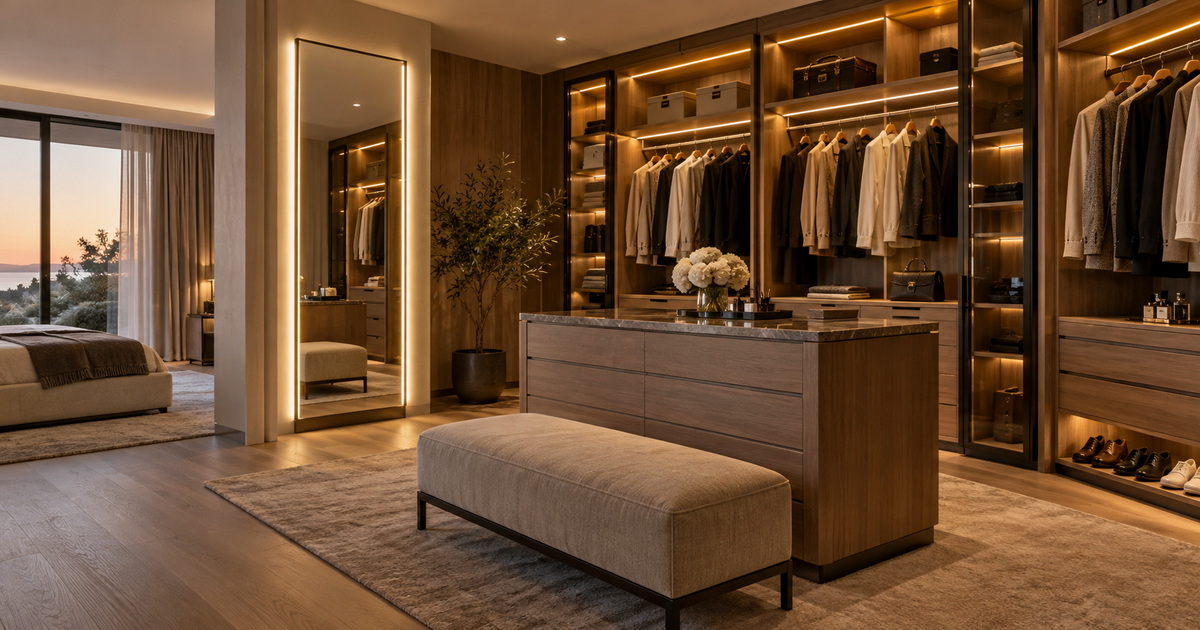
Mirror LED strip lighting becomes more practical when users can control it naturally. The right control method depends on the project type and the expected user behavior.
Touch switches are common for bathroom mirrors because they are simple and visually discreet. Motion sensors can be effective for wardrobe mirrors, hallway mirrors, and bathroom cabinets.
For example, a wardrobe mirror can activate when a door opens or when a person approaches. This creates a convenient user experience while avoiding unnecessary operation.
Dimming is one of the most useful features for mirror lighting.
A user may want brighter light for shaving or makeup and softer light at night. In bedrooms and hotel rooms, dimming can help the mirror lighting become part of the room's ambient lighting rather than a single-purpose fixture.
For whole-home or premium hospitality projects, mirror lighting can be integrated with wider lighting scenes.
Examples include:
- A morning routine scene that activates bathroom and wardrobe lighting
- A night mode that provides low-level mirror illumination
- A dressing-room scene that combines wardrobe light, mirror light, and ceiling light
- A hospitality control system that creates a consistent guestroom experience
The control solution should always be practical. A complicated control system can reduce usability, even if it offers many functions.
Even high-quality lighting components can perform poorly if the system is designed incorrectly. These are common issues we see in mirror and furniture-lighting projects.
Uneven light may result from poor strip placement, inconsistent mounting distance, unsuitable diffusion, or insufficient planning around corners.
How to avoid it: Keep the lighting path consistent. Use a suitable diffused strip or profile. Test the effect before permanent installation.
Flickering may be related to loose wiring, incompatible dimming components, poor-quality power management, or incorrect system matching.
How to avoid it: Treat the LED strip, driver, controller, connectors, and dimming method as one matched system. Check all connections before final installation.
Heat, steam, moisture, and imperfect surface preparation can cause adhesive-backed strips to detach over time.
How to avoid it: Clean and dry the surface fully. Use mechanical support where appropriate, especially for bathroom, hospitality, and long-run installations.
A bright LED strip can be uncomfortable when the light source is directly visible in the mirror.
How to avoid it: Reposition the strip, add diffusion, increase the offset from the reflective surface, or use an indirect backlighting layout.
A backlit mirror may look attractive but still leave the face underlit.
How to avoid it: Add front-facing or side lighting when the mirror is used for grooming, makeup, shaving, or detailed work.
Mirror lighting performs best when it is planned together with the rest of the furniture lighting system.
A bathroom cabinet may include mirror lighting, under-cabinet light, internal shelf light, and sensor control. A wardrobe system may combine hanging-rail lighting, drawer lighting, vertical cabinet light, and a mirror light. A bedroom project may extend the same lighting design to bedside details and bed-frame lighting.
This system-based approach offers several advantages:
- A consistent visual style across the room
- Fewer compatibility problems between components
- More coordinated control options
- Cleaner cable planning
- Better opportunities for customization
- A more complete solution for distributors, contractors, and furniture brands
Farwise Technology Co., Ltd. provides LED silicone strip lights, cabinet lights, wardrobe lights, bathroom cabinet lights, and LED power supplies for these connected applications. We support OEM and ODM customization for project requirements involving size, function, lighting solution, and appearance.
For brands, builders, and furniture manufacturers, the value is not limited to one mirror light. The value is a reliable, adaptable lighting system that can be applied across multiple furniture and interior scenarios.
The best mirror LED strip light is the one that supports the real use of the space. A bathroom mirror needs practical facial illumination. A wardrobe mirror benefits from convenient sensing and clean vertical light. A decorative bedroom mirror may need only a soft halo. A hotel project requires intuitive operation, serviceability, and visual consistency across many rooms.
Before placing an order, confirm the mirror style, installation location, desired lighting effect, control method, moisture exposure, cable route, and customization requirements.
Farwise Technology Co., Ltd. can help develop coordinated LED lighting solutions for mirrors, cabinets, wardrobes, bathrooms, bedrooms, and custom furniture projects. Contact our team with your drawings, samples, application requirements, or project concept to discuss an OEM/ODM mirror lighting solution designed for your market.
For grooming tasks, front-facing or side lighting usually provides better facial visibility than backlighting alone. A combination of front light and soft rear halo light can deliver both practical illumination and a refined visual effect.
Most wall-mounted mirrors can be adapted for backlighting if there is enough clearance behind the mirror for light to spread onto the wall. The mirror mounting method, wall condition, wiring route, and service access should be planned before installation.
Yes. Flexible silicone LED strip lights are often a strong option for round, oval, arched, and custom-shaped mirrors because they can follow curves more naturally than rigid lighting solutions. The installer should still follow the recommended bending direction and avoid forcing tight turns.
Dimming is highly recommended for multipurpose mirrors. It allows users to choose brighter light for grooming and softer light for nighttime use, relaxation, or ambient illumination.
Use a diffused lighting solution, maintain a suitable distance between the strip and the reflective surface, and conceal the direct view of the LEDs. Proper positioning and testing before final mounting are essential.
It can be safe when the lighting system is selected and installed appropriately for the environment. Keep power components protected from moisture, use suitable products for humid locations, and use a qualified electrician for hardwired or high-voltage work.
Yes. Mirror lighting can be paired with touch switches, door sensors, motion sensors, dimmers, remote controls, and smart-home systems. The ideal option depends on whether the mirror is in a bathroom, wardrobe, bedroom, hotel room, or retail setting.
Yes. Farwise supports OEM/ODM customization for furniture lighting applications. Customization may include dimensions, functions, lighting layouts, control methods, overall solution design, and appearance requirements.
1. [SignliteLED — A Guide for Mirror LED Strip]
2. [Farwise Lighting — Company Profile]
3. [U.S. Department of Energy — Solid-State Lighting]
4. [U.S. Department of Energy — LED Lighting]
5. [International Energy Agency — Lighting]
6. [National Electrical Manufacturers Association — Lighting Resources]


