
English
Views: 251 Author: Farwise Lighting Publish Time: 2026-08-10 Origin: Site


Content Menu
● The Short Answer: LED Strip Lights Are Not Universally Compatible
● Why Compatibility Matters in Furniture Lighting Projects
● The Six Compatibility Checks Every Buyer Should Make
>> 1. Match the Strip Light and Power Supply Voltage
>> 2. Confirm the Power Supply Has Enough Capacity
>> 3. Match the Controller to the LED Strip Type
>> 4. Check Connectors, Polarity, and Pin Arrangement
>> 5. Consider Dimming Compatibility Before Installation
>> 6. Evaluate Heat, Mounting, and Environmental Conditions
● Can You Mix LED Strip Lights From Different Brands?
● A Practical Pre-Installation Compatibility Checklist
● Common LED Strip Compatibility Problems and Solutions
>> The LED Strip Does Not Turn On
>> The Light Flickers When Dimmed
>> The End of the Strip Looks Dimmer
>> The Color Does Not Match Another Strip
>> The Connector Keeps Failing
● Choosing a Reliable LED Silicone Strip Light Partner
● Build a Lighting System That Works Together
● FAQ
>> 1. Are all LED strip lights compatible with the same power supply?
>> 2. Can I connect different brands of LED strip lights together?
>> 3. Can a normal dimmer control LED silicone strip lights?
>> 4. Why does my LED strip light become dim at one end?
>> 5. Do waterproof LED strip lights work in bathroom cabinets?
>> 6. Are addressable LED strips compatible with standard RGB controllers?
>> 7. What should I send a manufacturer before requesting a custom LED strip solution?
Are all LED strip lights compatible? No. LED strip lights may look similar, but a reliable lighting system depends on whether the strip, power supply, controller, connector, dimmer, mounting method, and installation environment work together as one system.
For cabinet lighting, wardrobe lighting, bathroom vanity lighting, bed-frame lighting, and smart-home projects, compatibility is more than a wiring detail. It affects light consistency, dimming performance, service life, installation efficiency, and future maintenance.
At Farwise Technology Co., Ltd., we have worked in the LED lighting field for 16 years. From furniture factories and interior contractors to smart-home integrators and private-label brands, we repeatedly see the same lesson: a high-quality LED strip alone cannot guarantee a successful project. The complete lighting solution must be matched before production, installation, and handover.
This guide explains how to evaluate LED strip light compatibility from a practical project perspective.
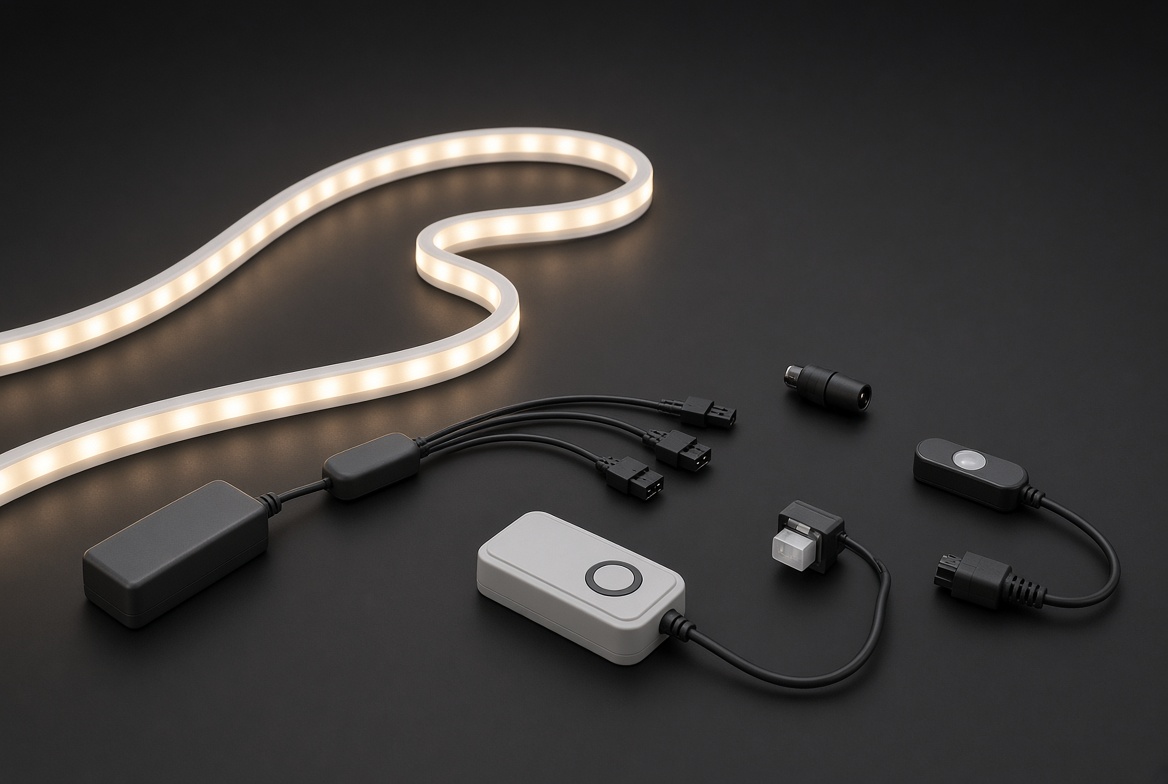
Two LED strips can have a similar appearance but use different electrical systems, control signals, connector layouts, or installation structures. Connecting unmatched parts can lead to flickering, uneven brightness, poor color control, damaged components, or a system that simply does not turn on.
Before combining LED strip lights from different suppliers or product lines, check these core points:
- Electrical input: The strip and power supply must operate at the same rated voltage.
- Control method: Single-color, tunable white, RGB, RGBW, and addressable strips require different control systems.
- Pin layout: Connector pin count, polarity, and signal arrangement must match.
- Power capacity: The driver must support the full connected lighting load with a suitable operating margin.
- Dimming protocol: The dimmer, driver, controller, and strip must be designed to communicate correctly.
- Installation environment: Indoor, humid, enclosed, and exposed locations require different protection and heat-management approaches.
- Mechanical fit: The strip must fit the channel, profile, silicone housing, or furniture groove without being compressed, twisted, or sharply bent.
A compatibility check should be performed before ordering, not after installation.
Furniture lighting is often installed in narrow, concealed, and difficult-to-service spaces. A lighting issue inside a cabinet, wardrobe, bathroom mirror, or upholstered bed frame can be expensive to diagnose and repair after the furniture has been assembled.
For this reason, professional buyers should treat LED lighting as a system, not as a standalone accessory.
A complete furniture lighting system may include:
- LED silicone strip lights or flexible LED strips
- Constant-voltage driver or power supply
- Sensor switch, touch switch, dimmer, or smart controller
- Extension cables and connectors
- Aluminum profile, mounting clips, or recessed channel
- Diffuser, end caps, and sealing accessories
- Motion, door, hand-wave, or wireless control components
If one component is poorly matched, it can reduce the performance of every other component in the installation.
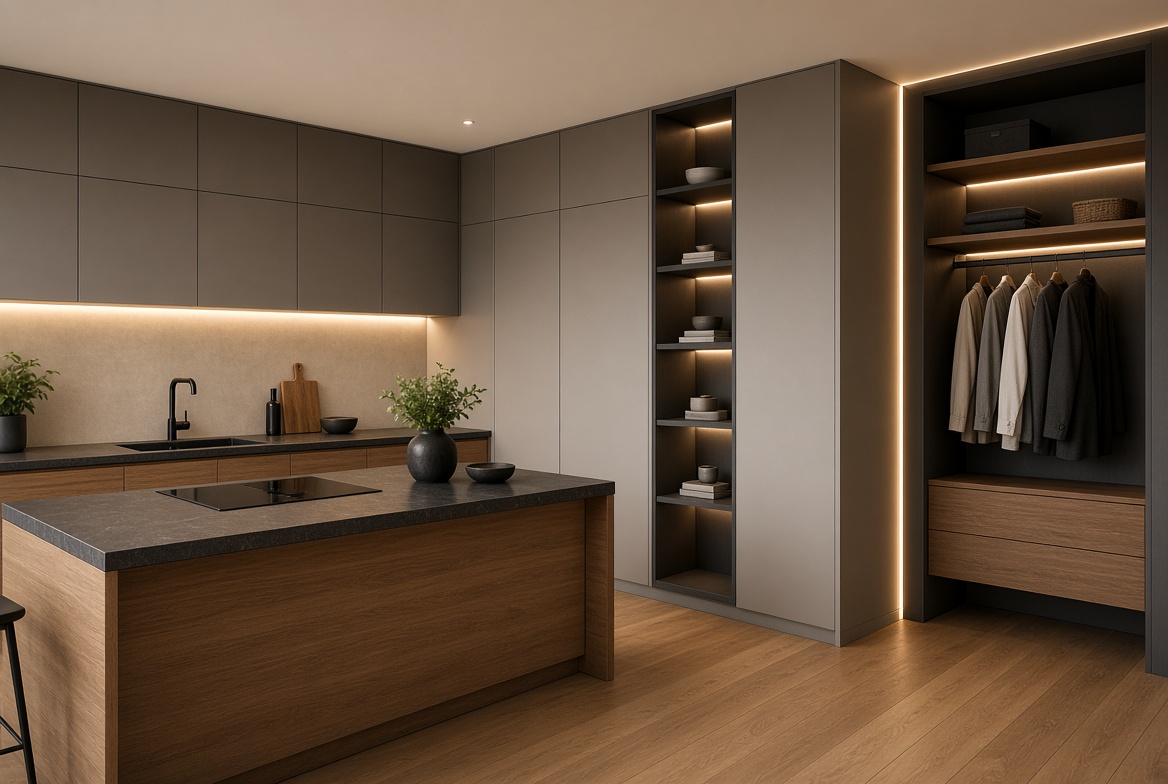
Voltage matching is the first and most important rule.
An LED strip light is designed to work with a specific low-voltage DC input. The driver must provide the exact voltage required by the strip. A mismatch can result in weak output, unstable operation, overheating, or immediate component damage.
For example, do not assume that a power supply designed for one low-voltage strip can safely operate another strip merely because the connector fits.
When reviewing a lighting proposal, confirm:
- The rated input voltage of the LED strip
- The output voltage of the driver
- The voltage rating of connectors and extension cables
- The voltage requirement of sensors, switches, and controllers
- Whether every component uses the same system voltage
Expert advice: Treat voltage as a non-negotiable requirement. Never use connector appearance as proof of electrical compatibility.
A driver must supply the entire connected lighting load without being pushed to its limit. An overloaded power supply may run hot, flicker, shut down unexpectedly, or experience a shorter working life.
To assess the system, project teams should calculate the total load based on the selected strip, installed length, and any connected accessories. Then, choose a driver with reasonable headroom rather than selecting one that only barely meets the calculated requirement.
This matters especially in:
- Long wardrobe lighting runs
- Multi-shelf cabinet systems
- Kitchen projects with several illuminated zones
- Retail display furniture
- Hotel room furniture packages
- Smart-home lighting systems with multiple control points
A properly sized power supply supports more stable output and gives the system greater tolerance during daily operation.
Not all LED strip lights use the same control method. This is one of the most common causes of compatibility problems.
A standard single-color strip usually needs a simple on/off switch or compatible dimmer. A tunable-white strip needs a controller that can manage warm and cool white channels. RGB and RGBW strips require multiple color channels. Addressable strips need a dedicated digital signal and a compatible controller protocol.
| LED Strip Type | Typical Control Requirement | Compatibility Risk |
|---|---|---|
| Single-color strip | On/off switch or compatible dimmer | Wrong dimmer can cause flicker or poor dimming range |
| Tunable-white strip | Dual-channel controller | Incorrect channel connection prevents color-temperature adjustment |
| RGB strip | RGB controller | Pin order or controller mismatch can produce incorrect colors |
| RGBW or RGBCCT strip | Multi-channel controller | Missing or miswired channels limit lighting functions |
| Addressable strip | Digital controller and matched signal protocol | A standard RGB controller cannot control individual pixels |
Important: A controller that physically connects to a strip is not necessarily electronically compatible with it.
For smart furniture and whole-home projects, compatibility must also be verified between the lighting controller and the intended control method, such as wall switch, wireless remote, sensor, mobile application, voice platform, or home automation gateway.
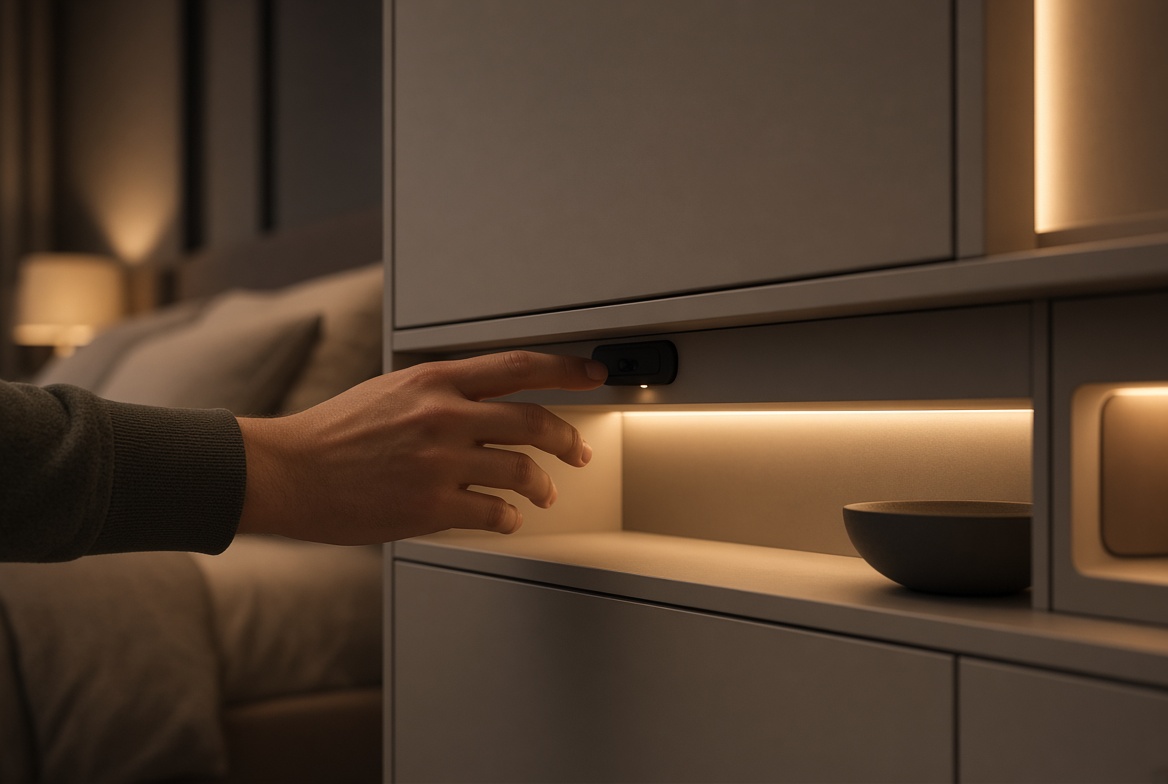
Connectors are often treated as a minor accessory, but they are a major point of failure in LED strip light systems.
Different strips may use different pin counts, wire arrangements, connector shapes, locking methods, and polarity markings. Even products with the same number of pins may have a different signal order.
Before connecting two components, verify:
- Connector type and physical size
- Number of pins
- Positive and negative polarity markings
- Color-channel order
- Data and clock signal arrangement, where applicable
- Waterproof sealing requirements
- Cable gauge and wire length
- Whether the connection is designed for permanent installation
For a long-term furniture lighting project, soldered connections or professionally assembled wiring harnesses are often more dependable than loosely fitted universal clips. Quick connectors can be useful for samples, short runs, or field assembly, but their contact quality should be tested carefully.
Many LED strip lights are dimmable, but that does not mean they will work correctly with every dimming method.
Dimming performance depends on the relationship between the strip, driver, dimmer, and controller. A mismatch can cause:
- Visible flickering
- Audible driver noise
- Flashing at low brightness
- Poor dimming range
- Delayed response
- Uneven brightness between lighting zones
- Failure to turn fully off
For furniture lighting, common control options include touch sensors, door sensors, hand-wave sensors, infrared sensors, wireless remotes, and smart controllers. Each option should be tested with the exact strip and driver selected for the final project.
Field lesson: A lighting system may appear stable during a short bench test but behave differently after it is installed with final cable lengths, multiple zones, and enclosed furniture structures. Always test the final configuration before mass production or full-site installation.
Electrical matching alone is not enough. LED strips also need an installation environment that supports stable performance.
Heat buildup can affect light output, color consistency, adhesive durability, and component lifespan. This is particularly important when strips are installed inside enclosed cabinetry, narrow profiles, upholstered furniture, or locations with limited airflow.
LED silicone strip lights can be especially useful where a soft, seamless lighting appearance, flexible installation, or better protection is required. However, the silicone housing, mounting groove, bend direction, and end-sealing method should still be matched to the project conditions.
Before selecting a solution, review:
- Whether the installation area is dry, humid, dusty, or frequently cleaned
- Whether the strip will be hidden inside an enclosed cavity
- Whether the mounting surface helps or limits heat dissipation
- Whether the strip needs a recessed, surface-mounted, or flexible profile
- Whether the bend radius suits the furniture design
- Whether connectors and end caps need protection from moisture
- Whether maintenance access is possible after installation
For bathroom cabinetry and other moisture-prone areas, the protection level of the entire assembly matters. A protected strip alone is not enough if the connector, cable entry, end cap, or driver is unsuitable for the environment.
Sometimes, but only after a complete compatibility check.
Mixing strips from different brands may be possible when the electrical input, control method, pin configuration, light output behavior, color quality, and physical dimensions are fully aligned. However, it is rarely the best choice for visible, high-volume, or long-term projects.
The risks include:
- Inconsistent brightness between sections
- Different white-light appearance
- Uneven dimming behavior
- Mismatched adhesive or mounting thickness
- Connector fit problems
- Different bending characteristics
- Different production-batch color consistency
- Difficult troubleshooting after installation
For continuous cabinet lines, wardrobe interiors, mirror lighting, or commercial furniture collections, using a coordinated system from one experienced manufacturer can reduce uncertainty.
A manufacturer that supports OEM and ODM development can also help align the strip light, silicone extrusion, connector system, sensor solution, packaging, and installation method around the final furniture application.
Before releasing a furniture lighting project, use this checklist.
1. Confirm the LED strip type and required lighting effect.
2. Confirm the driver output matches the strip's rated voltage.
3. Calculate the total connected lighting load.
4. Select a driver with suitable operating capacity.
5. Match the dimmer, sensor, or controller to the strip type.
6. Verify connector pin count, polarity, and channel arrangement.
7. Test the full system using the intended cable lengths.
8. Check brightness consistency from the beginning to the end of each lighting run.
9. Inspect heat conditions inside the final furniture structure.
10. Confirm that the strip, connectors, end caps, and driver suit the installation environment.
11. Test switching, dimming, and sensor response repeatedly.
12. Keep a confirmed sample or approved wiring diagram for production reference.
This process is simple, but it prevents many costly after-sales issues.
First, check voltage matching, polarity, cable continuity, connector engagement, and driver output. If the strip includes a controller, confirm that the controller supports the correct strip type and signal arrangement.
Flicker often indicates a mismatch between the dimmer and driver, insufficient driver capacity, loose connections, or excessive voltage loss through long cables. Test the system using the final driver, controller, and wiring configuration.
This is often caused by voltage drop across a long run, inadequate cable sizing, or an unsuitable power-feed layout. Review the installation design rather than assuming the strip itself is defective.
Color differences may result from different strip types, production batches, control settings, or component quality. For visible continuous lighting, install strips from the same approved batch whenever possible.
Repeated connector issues may come from poor contact, mechanical stress, moisture exposure, unsuitable wire gauge, or frequent movement. For permanent furniture lighting, consider a more secure connection design.
A strong supplier should do more than provide a catalog. They should help you reduce compatibility risk before production begins.
When choosing a manufacturer for furniture lighting, look for support in:
- Product selection for cabinet, wardrobe, bathroom, bedroom, and display applications
- LED silicone strip light customization
- OEM and ODM project development
- Connector and cable-harness matching
- Sensor and controller integration
- Appearance and packaging customization
- Sample testing and approval
- Production consistency and quality control
- Application-based technical guidance
- Long-term supply support
Farwise Technology Co., Ltd. focuses on commercial and residential lighting solutions for furniture and interior applications. Our product range includes LED silicone strip lights and coordinated furniture lighting solutions for integrated home projects, engineering installations, soft furnishing applications, and smart-home systems.
Whether you need a concealed wardrobe light, a flexible cabinet lighting solution, a bathroom vanity lighting system, or a custom LED silicone strip light for an OEM project, the best result starts with a complete compatibility review.
The right question is not, "Can these LED strip lights connect?" The better question is, "Will this complete lighting system perform reliably in the finished application?"
A successful project requires the strip, driver, controller, connectors, mounting method, and installation environment to work together. By checking compatibility before installation, you can achieve better lighting consistency, easier assembly, lower maintenance risk, and a more professional final result.
Need a custom LED silicone strip light or furniture lighting solution? Contact Farwise Technology Co., Ltd. to discuss your application, control requirements, installation structure, and OEM/ODM customization needs. Our team can help you develop a coordinated lighting solution designed for your product, project, and market.
No. The power supply must match the voltage requirement of the LED strip and provide sufficient capacity for the total connected load. A connector that fits does not prove that the power supply is compatible.
You may be able to connect them if their voltage, strip type, control method, pin layout, color characteristics, and physical design match. For visible or long-term installations, using one coordinated system is usually safer.
Not always. The dimmer must be compatible with the driver and the strip's control method. Incorrect combinations can cause flickering, limited dimming range, or unstable output.
The most likely cause is voltage drop caused by excessive run length, cable resistance, insufficient power feeds, or an unsuitable system design. Review the full wiring layout and driver selection.
They can be suitable, but the full installation must be considered. The strip, connectors, end caps, cable entries, power supply, and mounting location all need to suit the humidity level and cleaning conditions.
No. Addressable LED strips use digital control signals and require a controller that supports their specific communication method. Standard RGB controllers are designed for non-addressable color channels.
Provide the application scenario, installation drawings or photos, required lighting effect, control preference, available mounting space, environmental conditions, target market, expected order quantity, and any branding or packaging requirements.
1. Mingxue Lighting. "[Are All LED Strip Lights Compatible?]" — Overview of voltage, LED type, controllers, connectors, dimming, and power-load considerations. [mingxueled]
2. DigiKey TechForum. "[How to Properly Pair LED Strip Lights with Compatible LED Drivers]" — Guidance on voltage matching, driver capacity margin, dimming protocols, heat management, and power-feed planning. [forum.digikey]
3. WLED Project. "[Compatible LED Strips]" — Technical distinctions between addressable and non-addressable LED strips and their control requirements. [kno.wled]
4. Waveform Lighting. "[Everything You Need to Know About LED Strip Lights]" — Information on low-voltage strip lighting, power supplies, dimming, brightness, heat considerations, and connection methods. [waveformlighting]
5. VST Lighting. "[LED Strip Disadvantages: Technical Limits and Risks]" — Practical guidance on voltage drop, heat buildup, dimming mismatch, mounting conditions, and installation planning. [vstlighting]


