
Views: 218 Author: Farwise Lighting Publish Time: 2026-08-28 Origin: Site


Content Menu
● What Does "High-Density" Mean in LED Strip Lighting?
● Why LED Density Matters in Furniture Lighting
>> Smoother Light With Fewer Visible Dots
>> Better Light Quality for Daily Tasks
>> A More Premium Visual Finish
● High-Density vs. Standard LED Strip Lights
● How to Identify a High-Density LED Strip Light
>> Test the Strip in Its Actual Profile
>> Confirm Driver Compatibility
● Where High-Density LED Strips Work Best
>> Wardrobe and Closet Lighting
>> Bathroom Vanity and Mirror Cabinets
>> Bedroom and Headboard Lighting
>> Retail and Hospitality Displays
● Expert Checklist: Selecting the Right Solution
>> Choosing Brightness Before Viewing Comfort
>> Ignoring the Diffuser and Profile
>> Cutting Before Confirming Layout
>> Forgetting Future Maintenance
● Custom High-Density LED Strip Solutions From Farwise
● FAQ
>> 1. Is a high-density LED strip light always better?
>> 2. Can high-density LED strips eliminate visible light dots completely?
>> 3. Are high-density LED strips suitable for wardrobe lighting?
>> 4. Why is an aluminum profile important for LED strip lighting?
>> 5. Can high-density LED strips be used in bathroom cabinets?
>> 6. What should I send to a manufacturer for a customized project?
>> 7. What is the most common mistake in cabinet LED lighting?
A high-density LED strip light is a flexible lighting strip with LEDs positioned closely together, helping create a smoother, more continuous line of light than conventional strips. For cabinet, wardrobe, bathroom vanity, and bedroom furniture lighting, density matters because it directly affects visual comfort, hotspot control, reflected light, and the final perceived quality of the installation.
At Farwise Technology Co., Ltd., we have focused on furniture and commercial lighting solutions for 16 years. In real projects, the best result rarely comes from choosing the brightest strip alone. It comes from matching the LED strip, diffuser, profile, driver, control method, installation position, and furniture material into one reliable lighting system.

"High-density" describes the closer arrangement of LED emitters along a strip. When more LEDs are placed within the same length, the gaps between light sources become smaller. This generally helps the strip produce a more even light line, especially when it is installed in a shallow aluminum profile, behind a diffuser, or close to a reflective surface.
The practical value is not simply "more LEDs." It is about achieving a cleaner and more refined lighting effect in the finished furniture.
A high-density LED strip is commonly selected when a project needs:
- A more continuous appearance with fewer visible light dots
- Better visual comfort in close-range lighting applications
- Softer reflected light on glossy cabinet panels or mirrors
- More consistent illumination inside wardrobes and drawers
- A premium light line for kitchen, retail, hospitality, or residential interiors
- Better compatibility with slim profiles and shallow installation spaces
For example, under a kitchen cabinet, a strip with widely spaced light points may create separate bright spots on the countertop. A high-density solution, paired with an appropriate diffuser and profile, can create a more even task-lighting effect instead.
Furniture lighting is viewed at close range. Unlike high-ceiling commercial lighting, the user may be only a few centimeters away from the light source when opening a wardrobe, preparing food, using a vanity, or reading in bed.
This makes the visual quality of the light line especially important.
The most obvious advantage is improved uniformity. When LED emitters are closer together, the light can blend more easily before it reaches the diffuser or illuminated surface.
This is valuable for:
- Cabinet under-lighting
- Wardrobe hanging-rail lighting
- Mirror and bathroom cabinet illumination
- Display shelving
- Recessed furniture channels
- Headboard and bedside ambient lighting
However, density alone does not guarantee a dot-free result. The final effect also depends on the distance between the strip and diffuser, the diffuser material, the profile depth, installation height, and the reflectivity of nearby surfaces.
In kitchens, wardrobes, and bathroom cabinets, lighting is functional as well as decorative. Users need to see colors, objects, edges, and surfaces clearly.
Color rendering is particularly important where people choose clothing, prepare food, apply makeup, or evaluate finishes. The U.S. Department of Energy notes that a CRI of at least 80 is generally recommended for interior lighting, while 90 or above indicates excellent color fidelity.
For this reason, a professional furniture-lighting solution should evaluate more than LED density. It should also consider:
- Color rendering quality
- Color consistency between production batches
- Stable driver performance
- Dimming compatibility
- Glare control
- Installation depth
- Heat dissipation
- Long-term maintenance requirements
A continuous light line often makes furniture appear more refined. In high-end residential interiors, retail displays, and hospitality spaces, lighting is frequently used to emphasize material textures, handle-free cabinet details, shelving lines, and architectural transitions.
High-density strips are especially useful where the lighting itself is visible. They can reduce the "dotted" appearance that may distract from the furniture design.
The right choice depends on the lighting objective, installation condition, and expected visual finish.
| Consideration | High-Density LED Strip Light | Standard LED Strip Light |
|---|---|---|
| Visible light dots | Usually less noticeable when installed correctly | More likely to show individual LED points |
| Light-line appearance | Smoother and more continuous | May appear segmented at close range |
| Best use | Premium furniture, shallow profiles, display and task areas | General indirect lighting and less visible locations |
| Installation tolerance | Often more forgiving in compact applications | May need a deeper profile or stronger diffuser |
| Visual comfort | Better potential for close-range lighting | Depends heavily on profile and mounting position |
| System planning | Requires careful driver and thermal matching | Also requires planning, but visual demands may be lower |
The key point is simple: high density improves the potential for visual uniformity, but system design determines the final result.
A product description alone is not enough. Buyers, designers, and project teams should review the full lighting configuration before making a decision.
Look at the physical arrangement of the LEDs. Smaller gaps between emitters usually indicate a higher-density design. A visual inspection can be useful, but it should not replace technical confirmation from the manufacturer.
Ask for:
- Product drawings
- Installation images
- Illuminated photos in a profile
- Recommended mounting distance
- Suggested diffuser type
- Application-specific samples
A strip can look smooth when placed on a table but show individual light points after installation. The profile shape, diffuser cover, channel depth, and viewing angle can all change the result.
Before approving a large order, test the complete assembly:
1. Install the strip inside the intended aluminum profile or silicone housing.
2. Use the planned diffuser or cover.
3. Place it at the real installation depth.
4. Turn on the light in a typical room environment.
5. View it from normal user angles.
6. Check the illuminated furniture surface for hotspots, glare, and shadow lines.
This process is particularly important for handle-free cabinets, mirror cabinets, open wardrobe shelving, and display furniture.
A high-quality strip can still perform poorly if the driver is unsuitable. Inconsistent output, unstable dimming, visible flicker, or premature system failure may come from the power supply or control configuration rather than the strip itself.
The Department of Energy explains that flicker can create effects such as a "phantom array," where moving eyes may perceive dots or lines from a flickering source. This is why lighting systems used in daily living areas should be evaluated as a complete strip-plus-driver solution.
When discussing a project with a supplier, clarify:
- Dimming method
- Control system compatibility
- Driver location
- Cable routing
- Load planning
- Maintenance access
- Expected operating environment
High-density strips are highly adaptable, but they are most valuable in applications where users see the light source or illuminated surface from a short distance.
Under-cabinet lighting should help users prepare food, read labels, and work comfortably on the countertop. A smoother light line can reduce distracting bright points on polished stone, stainless steel, glass backsplashes, and glossy cabinet finishes.
For kitchen projects, consider a complete system that includes a profile, diffuser, suitable driver, sensors or touch controls, and serviceable wiring.
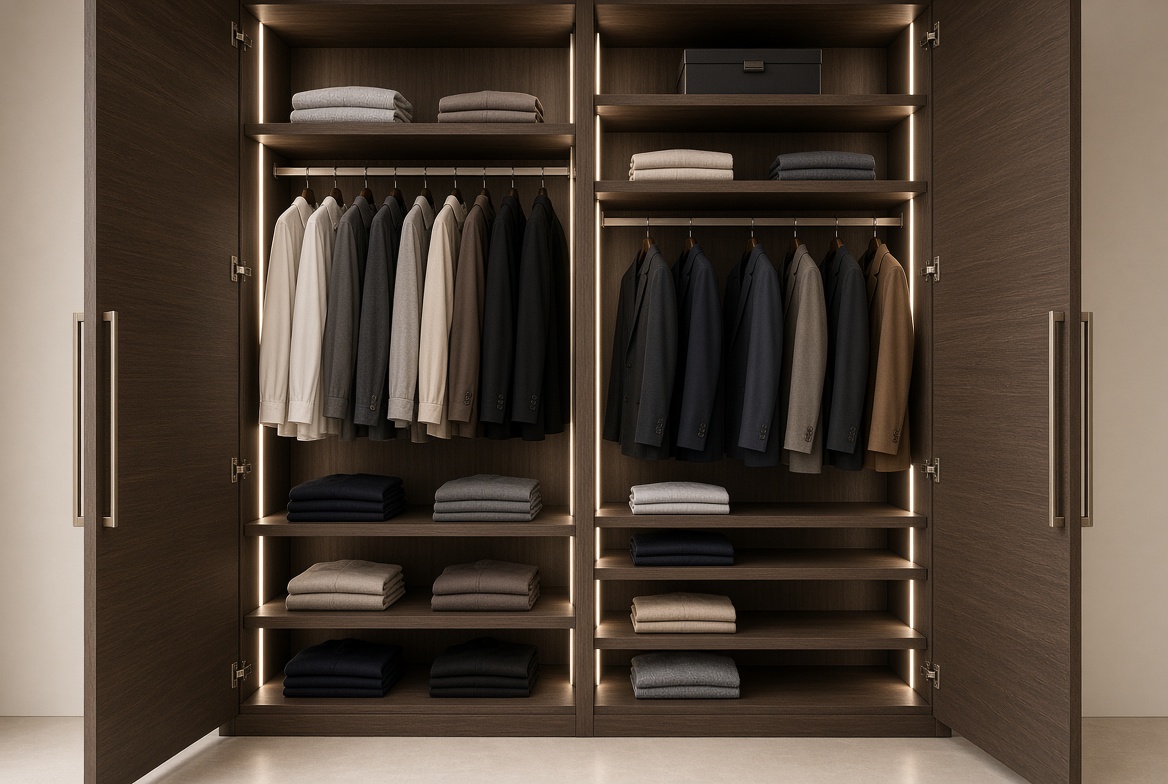
Wardrobe lighting needs to reveal fabric color, clothing details, and storage zones. High-density strips are often used in hanging rails, shelf edges, recessed channels, and vertical side panels.
Motion-sensor or door-triggered control can improve convenience and reduce unnecessary operating time. The installation should avoid direct glare into the user's eyes when the wardrobe door opens.
Bathroom lighting requires careful planning because users view their face and skin tone at close range. A smooth, well-diffused light line around or beside a mirror can create a more comfortable experience than a visible row of bright points.
The light source, driver location, housing protection, wiring route, and local electrical requirements should all be reviewed for humid environments.
For bedrooms, the aim is usually atmosphere rather than maximum brightness. High-density strips work well in headboards, bedside niches, bed frames, coves, and concealed furniture gaps.
Choose a lighting arrangement that directs light toward surfaces rather than directly into the eyes. Warm, comfortable illumination and easy dimming control are often more important than raw output.
Shelves, display cabinets, reception counters, wine displays, and decorative wall features benefit from a continuous, polished light line. In these applications, lighting often supports both product presentation and brand perception.
A consistent visual result across multiple locations requires dependable production control, matched color appearance, clear installation instructions, and repeatable system components.
A successful high-density LED strip project starts with the lighting goal, not the product name. Use this checklist when evaluating an OEM or ODM lighting partner.
- Define whether the light is for task lighting, ambient lighting, display lighting, or decorative accent lighting.
- Identify whether the LEDs will be directly visible.
- Review furniture dimensions, installation channels, and available wiring space.
- Decide where the driver and control components can be safely installed and accessed.
- Confirm the desired control method, such as touch, door sensor, motion sensor, remote, or smart-home integration.
- Evaluate the effect with real cabinet materials, not only with a standalone sample.
- Specify the required light appearance and color-rendering expectations.
- Review heat management for enclosed furniture cavities.
- Confirm cut lengths, connector requirements, and installation workflow.
- Request clear quality-control standards for batch consistency and long-term supply.
Thermal management deserves special attention. LEDs generate heat during operation, and proper heat dissipation helps prevent overheating and preserves light output over time. ENERGY STAR notes that LED products use heat sinks to absorb and dissipate heat, helping prevent overheating and early failure.
For enclosed cabinet channels or compact furniture spaces, aluminum profiles, appropriate mounting surfaces, ventilation considerations, and correct driver selection can all contribute to a more stable system.
Many lighting problems do not come from the strip itself. They come from incomplete project planning.
More brightness does not automatically mean better lighting. If the source is visible, an overly intense or poorly diffused strip may create glare and visual fatigue.
Start with the application: What should the user see? How close will they be to the light? What surfaces will reflect it?
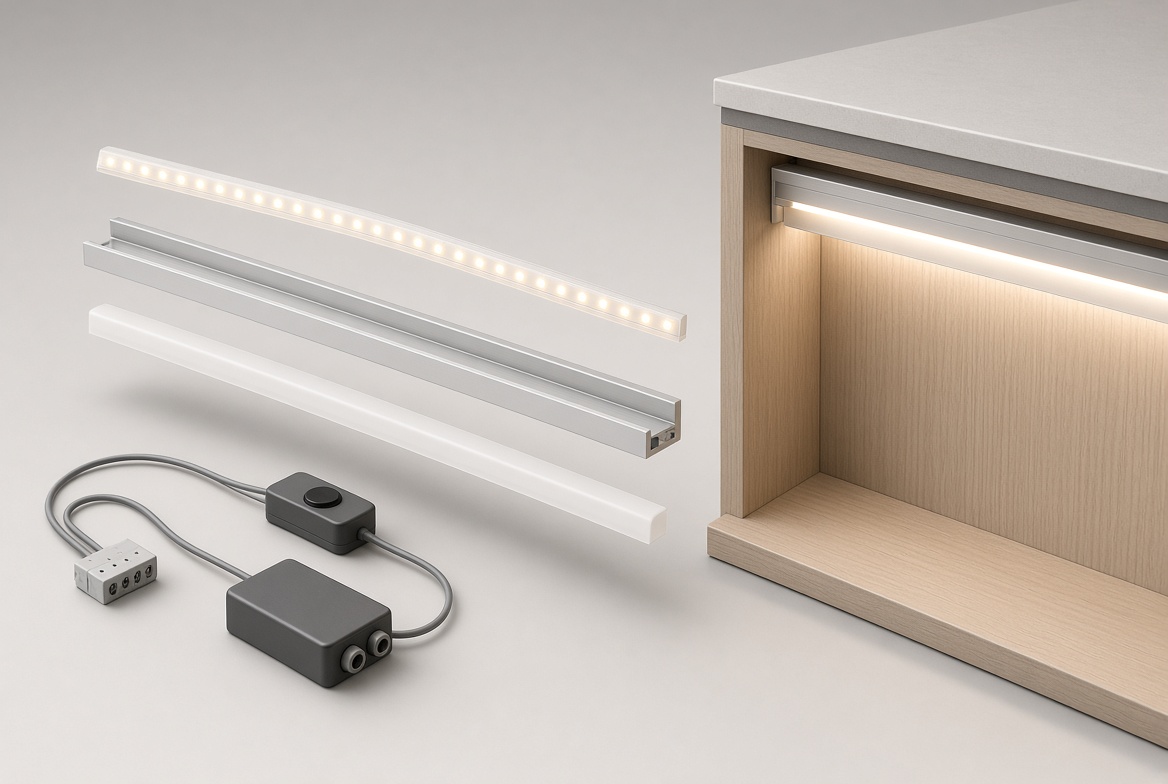
A high-density strip installed without the right profile may still look unfinished. The aluminum channel supports heat dissipation and installation stability, while the diffuser helps soften the light line.
The strip, profile, and cover should be selected as one integrated solution.
LED strips should only be cut at approved cutting positions. Measure the cabinet or channel carefully, plan cable exits, and test the layout before final installation.
A mock-up can prevent wasted material and uneven light distribution in the finished furniture.
Drivers, controllers, and connectors may require future access. A lighting design that looks clean on installation day can become difficult to service if key components are permanently sealed behind panels.
Plan accessible maintenance points wherever possible.
Farwise Technology Co., Ltd. is a source manufacturer with 16 years of experience in LED lighting. We provide integrated commercial and residential furniture-lighting solutions, including LED silicone strip lights and a complete range of lighting products for cabinets, wardrobes, bathroom cabinets, bedrooms, and customized interior applications.
We support OEM and ODM projects that require tailored:
- Sizes and cutting lengths
- Lighting functions and control options
- Silicone housing and product appearance
- Furniture installation methods
- System configurations
- Packaging and branding
- Project-specific lighting solutions
Our approach is built around application compatibility. Whether you are developing a complete home-furnishing project, a commercial fit-out, a smart-home system, or a furniture lighting collection, we help align the product structure, lighting effect, control experience, and installation requirements before production begins.
Contact Farwise today to discuss your furniture-lighting project, request application guidance, or develop a customized high-density LED strip solution for your market.
Not always. It is generally a stronger choice when users can see the light source at close range or when a smooth light line is important. For concealed indirect lighting, a standard strip may be sufficient if the installation depth and diffuser are appropriate.
They can significantly reduce visible dots, but a fully smooth result depends on the complete installation. The profile depth, diffuser material, distance to the illuminated surface, and viewing angle all affect the final appearance.
Yes. They are well suited to wardrobe rails, shelves, vertical channels, and drawer areas because they can create more uniform close-range illumination. Door sensors and motion controls can also improve usability.
An aluminum profile helps create a cleaner installation, protects the strip, supports the diffuser, and assists with heat dissipation. It is especially valuable in enclosed furniture spaces and premium visible-lighting applications.
Yes, provided the full system is designed for the environment. The strip housing, driver placement, wiring, protection requirements, and local electrical regulations should be reviewed before installation.
Provide drawings or photos of the furniture, installation dimensions, intended lighting location, desired control method, target market, required appearance, expected order quantity, and any packaging or branding requirements.
A common mistake is selecting the strip without testing it in the actual profile and cabinet structure. A sample should always be evaluated with the intended diffuser, installation depth, and furniture finish.
1. U.S. Department of Energy. [LED Basics]
2. U.S. Department of Energy. [Flicker Basics]
3. ENERGY STAR. [Learn About LED Lighting]
4. Flexfire LEDs. [LED Strip Light Thermal Management]
5. PAC Lights. [Maximizing Energy Efficiency With the Right LED Lighting Strips]
6. Mingxue LED. [What Is High Density LED Strip Light?]


