
English
Views: 222 Author: Farwise Lighting Publish Time: 2026-10-15 Origin: Site


Content Menu
● Why RGB LED Neon Strip Lighting Works in Premium Hotels
● Plan RGB LED Neon Strip Lighting Around Hotel Zones
>> Reception: Establish Identity Without Visual Noise
>> Guestrooms: Give Guests Control Over Atmosphere
>> Bathrooms and Wardrobes: Protect Functional Lighting
● Separate Decorative Color from Everyday White Light
● Design Hotel Lighting Controls Guests Can Understand
>> Use Scenes Based on Guest Activities
>> Verify the Complete Control Chain
● Validate the Design with a Realistic Hotel Mock-Up
>> Follow a Structured Sample Review
>> Judge the Result, Not Just the Sample
● Plan Silicone Neon Strip Installation Before Furniture Production
>> Coordinate These Details Early
● Compare Hotel Lighting Suppliers Beyond the Initial Quotation
● Build a Maintainable Lighting Handover
● Develop a Coordinated Hotel Lighting Solution with Farwise
>> 1.Can RGB LED Neon Strip Lighting Create a Premium Hotel Atmosphere?
>> 2.Is RGB Lighting Suitable as the Only Guestroom Light Source?
>> 3.Where Should RGB LED Neon Strips Be Installed in Hotel Rooms?
>> 4.Can Silicone LED Neon Lighting Be Used Near Bathroom Cabinets?
>> 5.What Should Buyers Check Before Approving Bulk Production?
An RGB LED neon strip can bring depth, identity, and atmosphere to a hotel without overwhelming its architecture. The strongest results come from treating color as part of a coordinated lighting scheme—not as decoration added after the interior is finished.
For hotel owners, designers, and procurement teams, the challenge is balancing visual impact with guest comfort, straightforward controls, and practical maintenance.
At Farwise Technology Co., Ltd., our approach starts with the space and its users. Drawing on sixteen years in LED lighting manufacturing, we support furniture and interior lighting projects through customized products and coordinated solutions.
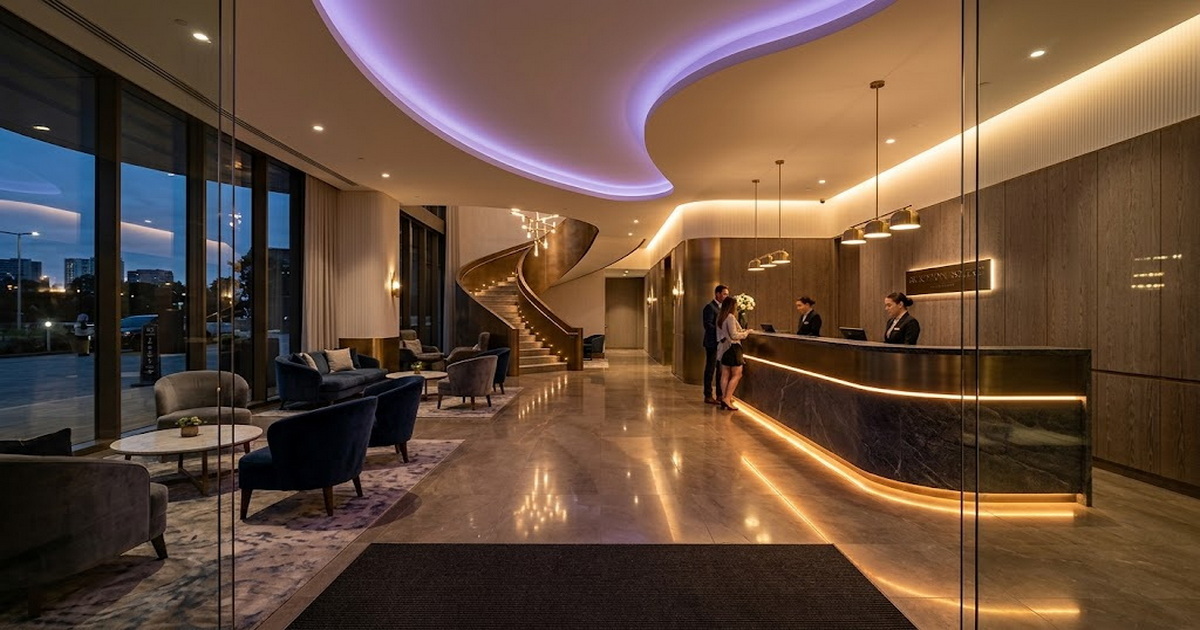
Premium hotel lighting should reveal architecture, support activities, and establish a recognizable mood. Color-changing light is most effective when it serves those purposes.
Silicone LED neon lighting can create a continuous-looking illuminated line that follows selected interior features. Depending on the product and installation, it can frame a reception desk, trace a ceiling detail, or introduce a restrained accent behind a headboard.
However, a smooth diffuser does not automatically guarantee a comfortable result. Placement, reflections, mounting, and dimming all influence what guests actually see.
My recommendation is to begin with one question: what should the guest notice first?
If the answer is the artwork, the lighting should guide attention toward it. If the answer is the view, the interior accent should remain quiet enough not to compete.
The guiding principle is restraint: use color to strengthen the space rather than become the entire experience.
Different hotel areas need different visual priorities. A successful lighting concept should recognize those differences instead of repeating the same effect everywhere.
| Hotel area | Intended experience | Suitable lighting approach | Main design caution |
|---|---|---|---|
| Reception | Welcome and orientation | Concealed accents around architectural features | Avoid distracting guests during check-in |
| Lounge or bar | Identity and atmosphere | Controlled color around selected focal points | Preserve comfortable facial illumination |
| Guestroom | Personal comfort and relaxation | Subtle headboard or furniture accents | Keep reading and everyday lighting independent |
| Corridor | Clear circulation | Restrained decorative lines | Do not compete with required safety lighting |
| Bathroom | Comfort and visual clarity | Decorative accents separate from mirror lighting | Confirm suitability for the installation environment |
Reception lighting introduces the hotel's character before a guest reaches the room.
A concealed RGB LED neon strip beneath a counter or inside a wall recess can connect the reception area with the brand's visual language. The effect should feel intentional rather than promotional.
Check the appearance from the entrance, the queue, and the receptionist's workstation. A beautiful accent can still be distracting if it reflects in screens or shines directly toward arriving guests.
In guestrooms, decorative lighting should support choice.
A guest may enjoy a soft color accent while relaxing but prefer ordinary white lighting when unpacking, reading, or preparing for bed. Keep these needs separate.
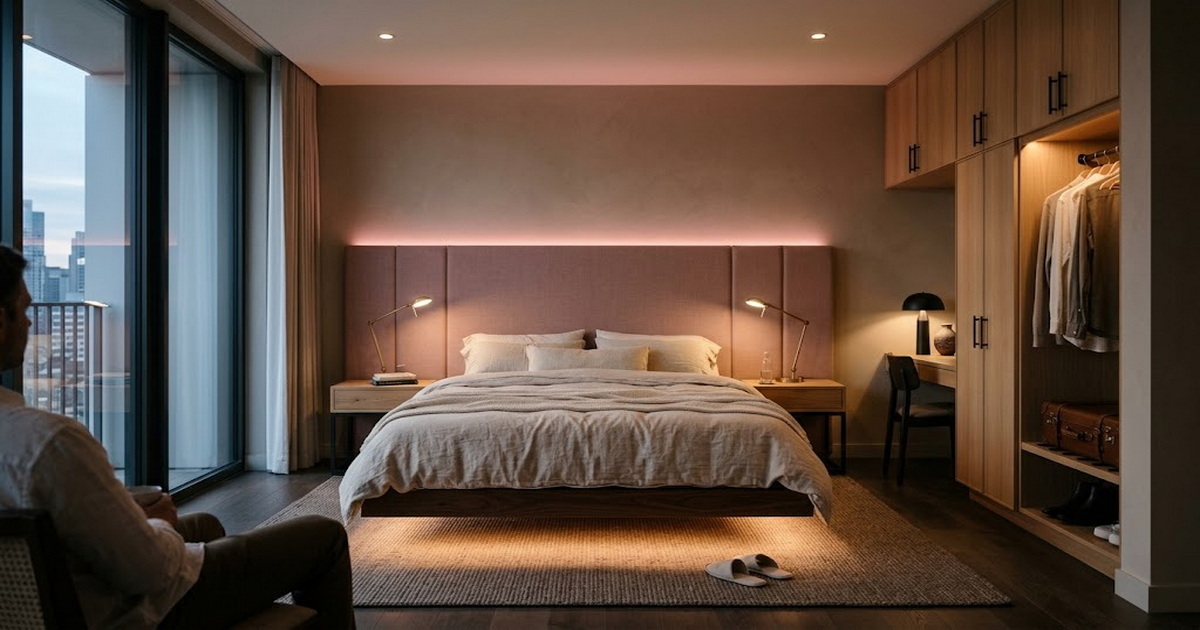
Under-bed or headboard lighting can add visual depth, but evaluate it from a reclining position. An installation that looks discreet while standing may become uncomfortable when viewed from the pillow.
Provide an obvious way to dim or switch off the decorative layer without disabling essential room functions.
Colored accents can complement bathroom cabinetry and wardrobes, but they should not replace lighting intended for grooming or clothing selection.
Keep mirror illumination independent from decorative effects. In wardrobes, assess how fabrics appear under the intended functional lighting rather than judging the installation by its color-changing display.
For bathroom applications, assess the complete installation—including connections and power equipment—not simply the outer silicone covering.
One common specification mistake is expecting a single decorative system to perform every lighting task.
RGB lighting mixes red, green, and blue light to create colors. RGBW adds a dedicated white-light source, while tunable-white systems adjust the appearance of white light.
These are different capabilities, not interchangeable descriptions.
For a premium hotel, distinguish between:
- Ambient lighting that establishes overall comfort.
- Task lighting for reading, working, and grooming.
- Accent lighting that emphasizes materials or architecture.
- Decorative color lighting that supports identity and mood.
An RGB LED neon strip can contribute strongly to the last two layers. It should not automatically be selected as the primary source for tasks requiring natural-looking white illumination.
Evaluate the intended white-light appearance separately. A controller showing a "white" option does not, by itself, demonstrate suitability for every guestroom activity.
A sophisticated installation loses value when guests cannot operate it confidently.
From a user-experience perspective, the best starting point is a small set of understandable actions. Guests should not need to learn a lighting interface after a long journey.
Scene names should describe an experience rather than a technical setting.
Possible examples include:
- Welcome: comfortable general lighting with a restrained accent.
- Relax: softer ambient lighting and optional decorative color.
- Read: focused task lighting without unnecessary visual effects.
- Night: discreet illumination for moving around the room.
- Off: a clear way to turn off nonessential lighting.
These are planning examples, not a universal prescription. Each scene should be tested against the room layout and hotel operating requirements.
Specify the strip, driver, controller, and user interface as a coordinated system.
A reference to a control protocol does not prove that every component supports the required color functions. Confirm the actual equipment combination and demonstrate the intended scenes before approval.
Also decide what happens after a power interruption, when a guest changes a scene, and when housekeeping prepares the room for the next arrival.
Predictable behavior matters more than a long menu of effects.
A sample illuminated on a desk cannot show how the finished installation will behave inside a hotel.
My preferred evaluation approach is to review the light within a representative architectural detail, using the intended finishes and viewing positions.
This turns an abstract product selection into a practical design decision.
1. Define the purpose. Identify whether the accent provides visual identity, architectural emphasis, or optional guest-controlled atmosphere.
2. Reproduce the detail. Include representative recesses, mounting surfaces, and surrounding materials.
3. Check guest viewpoints. Review the effect while entering, sitting, working, and lying down.
4. Compare scenes. Assess ordinary use, evening relaxation, and decorative settings.
5. Inspect reflections. Look at mirrors, polished stone, glass, and glossy furniture.
6. Review servicing. Confirm how the light and associated equipment can be accessed.
7. Record approval. Document the accepted appearance and operating behavior.

Ask whether the illuminated line appears consistent, whether nearby finishes change its perceived color, and whether the light draws attention to construction imperfections.
Also assess low-level operation. A system that looks attractive at its brightest setting may behave differently when dimmed for a quiet evening scene.
Keep approved photographs and written acceptance notes. Photographs support communication, but they should not replace an in-person review because cameras can alter perceived color and brightness.
Custom furniture and lighting should be developed together.
Leaving cable routes, mounting details, and service access until the final installation stage can force compromises in both appearance and maintenance.
For curved details, confirm the product's permitted bending direction and installation instructions. Flexibility does not mean the strip can be twisted or bent freely in every direction.
Avoid forcing a straight lighting concept into an unsuitable corner. Resolve changes of direction through an approved construction detail.
- The visible lighting path and concealed cable route.
- Mounting methods appropriate to the substrate.
- Access to drivers, controllers, and connections.
- Approved treatment of ends and joints.
- Cleaning practices around exposed components.
- Replacement procedures that protect finished furniture.
Electrical work should follow applicable local requirements and be completed by appropriately qualified professionals.
In moisture-exposed locations, request confirmation that the complete installed arrangement suits the intended environment. Do not assume that a protective enclosure makes every connection or accessory equally protected.
A purchasing decision should consider how reliably the supplier can translate the design into repeatable installation details.
For hotel projects, consistency across rooms and future replacement work can matter as much as the first sample.
Ask prospective suppliers:
- Can you review the proposed furniture and architectural drawings?
- Can samples represent the intended mounting arrangement?
- How are approved finishes and lighting appearances documented?
- What installation instructions accompany the supply?
- How are replacement components identified?
- What evidence supports suitability for the destination market?
- What customization is available for the proposed application?
Avoid treating broad claims such as "commercial quality" or "smart compatible" as sufficient evidence.
Request project-relevant documentation, a clear scope of supply, and written confirmation of responsibilities. Distinguish between what the manufacturer supplies and what the installer or system integrator must provide.
The finished appearance is only one part of project completion.
Hotel engineering teams need enough information to maintain the installation without rediscovering how it was assembled.
A useful handover package includes:
- Marked drawings showing lighting and equipment locations.
- Identification of approved replacement components.
- Connection and control-system documentation.
- A record of agreed lighting scenes.
- Instructions for accessing concealed equipment.
- Cleaning and maintenance guidance.
- Supplier contact details and warranty terms.
This documentation also helps protect the original design intent. Without it, later repairs may introduce mismatched components or inconsistent room settings.
When evaluating running costs, review the proposed installation and operating schedule rather than relying on a generic savings claim. The actual result depends on the complete system and how the hotel uses it.
Farwise Technology Co., Ltd. manufactures LED silicone strip lights and related furniture lighting products for cabinets, wardrobes, bathroom furniture, and bed structures.
Our OEM and ODM services support customization of dimensions, functions, appearance, and lighting solutions. For hospitality interiors, that allows the discussion to begin with the furniture detail and guest experience rather than an isolated product selection.
The practical next step is a coordinated project brief.
Send Farwise your hotel drawings, furniture details, intended lighting effects, control requirements, and destination market. Ask our team to review customization options, sample requirements, and installation considerations before bulk purchasing.
Yes, when it complements the architecture and remains comfortable to view. Concealed placement, restrained color choices, and coordinated controls generally provide a stronger design foundation than continuous dramatic effects.
It should not automatically be used that way. Guestrooms also need lighting for reading, working, unpacking, and grooming. Evaluate decorative color separately from the functional white-light scheme.
Potential locations include headboard recesses, selected ceiling details, and furniture accents. The best location depends on sightlines, reflections, access, and the room's overall lighting composition.
Potentially, but suitability must be confirmed for the location and complete installation. Review moisture exposure, connections, equipment placement, and local electrical requirements before specifying the system.
Approve a representative mock-up, confirm control behavior, review installation details, and document the accepted appearance. Also agree on replacement identification, supporting documentation, and the precise scope of supply.
1. - Farwise Technology Co., Ltd. — Company background supplied in the project brief. Source for the stated manufacturing experience, product categories, application areas, and OEM/ODM services. No company webpage or verified customer reviews were supplied.
2. - ConTech Lighting. "Hospitality Lighting Design Guide." Supports the discussion of layered lighting, visual contrast, glare, and the distinction between white-light appearance and color rendering. [contechlighting]
3. - Digital Illumination Interface Alliance. "DALI Colour." Explains the distinction between tunable-white control and RGB color-control types, including the importance of matching the required functionality to the control equipment. [dali-alliance]
4. - TRILUX. "DALI Colour Control." Explains RGB, RGBW, and tunable-white lighting and their different applications and control arrangements. [trilux]
5. - aspectLED. "Element Neon Flex Light Installation Guide." Supports product-specific installation considerations, including permitted bending direction and environmental protection. Its instructions should not be treated as specifications for Farwise products. [aspectled]
6. - Editorial basis: The zoning framework, mock-up checklist, procurement questions, and handover recommendations are project-planning guidance synthesized for this article. No measured performance improvement, completed Farwise hotel project, or customer testimonial is claimed.


