
English
Views: 222 Author: Farwise Lighting Publish Time: 2026-10-16 Origin: Site


Content Menu
● RGB vs. RGBW vs. RGBIC vs. RGBWW vs. RGBCCT: The Main Differences
● What Is an RGB LED Strip Light?
● RGB vs. RGBW: Why the Dedicated White Emitter Matters
>> Choose RGBW When White Light Has a Consistent Role
● RGB vs. RGBIC: Color Configuration Is Not the Same as Control
● RGBWW vs. RGBCCT: Understand the Naming Before You Order
● How to Choose LED Strip Lights for Furniture Applications
>> Kitchen Cabinets: Prioritize Useful White Light
>> Wardrobes: Evaluate Clothing, Not Just the Light Strip
>> Bathroom Vanities: Separate Accent Lighting from Face Lighting
>> Bedroom Furniture: Make Everyday Operation Simple
● LED Silicone Strip Lights: What Changes Beyond Color?
>> Check Light Distribution in the Actual Furniture
>> Respect the Permitted Bending Direction
>> Plan Cut Ends and Connections
● Controller Compatibility: The Hidden Cause of Disappointing Results
>> Questions to Resolve Before Purchasing
● A Practical Sample-Approval Workflow for OEM/ODM Projects
>> Step One: Define the Lighting Task
>> Step Two: Build a Representative Mock-Up
>> Step Three: Test Normal Use
>> Step Four: Record the Approved Assembly
● Develop a Furniture Lighting Solution with Farwise
>> 1.Is RGBW Better Than RGB for Cabinet Lighting?
>> 2.Can RGBW Produce Warm White?
>> 3.Are RGBWW and RGBCCT the Same?
>> 4.Does RGBIC Include High-Quality White Lighting?
>> 5.Can Every RGBIC Strip Be Cut and Reconnected?
>> 6.Are LED Silicone Strip Lights Automatically Waterproof?
>> 7.Which LED Strip Type Is Best for Furniture Manufacturers?
Choosing between RGB vs. RGBW vs. RGBIC vs. RGBWW vs. RGBCCT LED strip lights becomes easier when you separate three decisions: decorative color, everyday white light, and control effects. For cabinets, wardrobes, bathroom vanities, and bedroom furniture, the best choice depends on how people use the space—not which abbreviation sounds most advanced.
At Farwise Technology Co., Ltd., our approach to furniture lighting starts with the application. Drawing on 16 years of specialization in LED lighting, we focus on turning design intentions into practical lighting solutions.
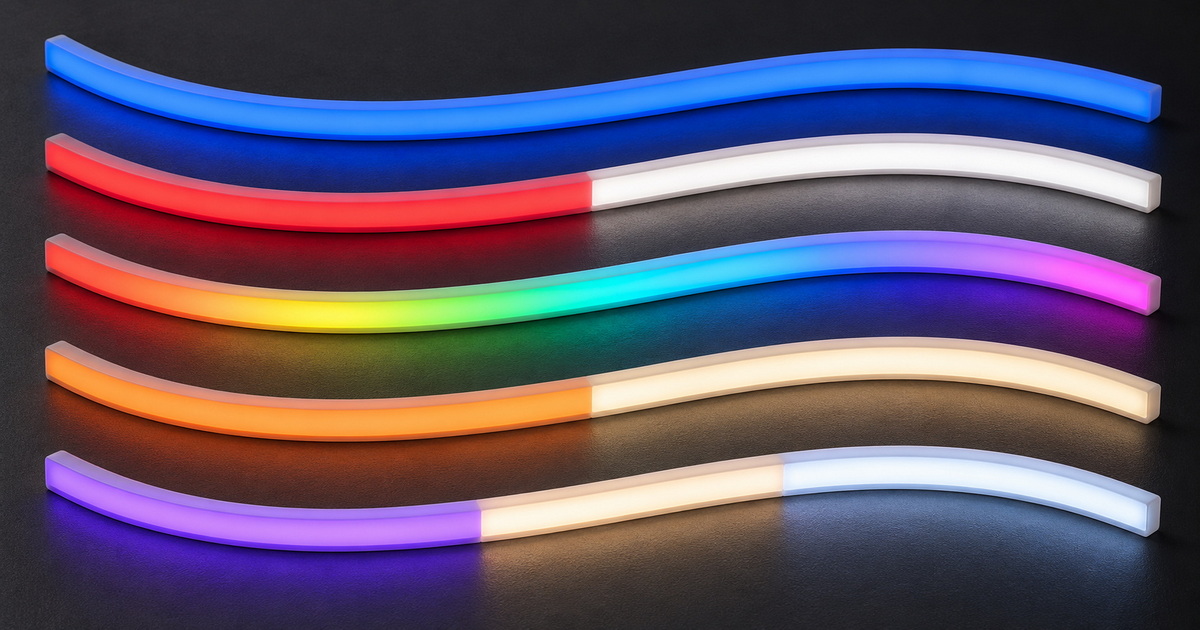
The most important distinction is between light output and control architecture.
RGB, RGBW, RGBWW, and RGBCCT generally describe color capabilities. RGBIC emphasizes addressable control, which allows different sections of a compatible strip to display different colors.
These categories can overlap. Addressable lighting can also include dedicated white emitters.
| Strip type | Main purpose | White-light consideration | Typical furniture application |
|---|---|---|---|
| RGB | Decorative color mixing | White comes from mixing colored light | Accent shelves and display features |
| RGBW | Color effects plus dedicated white | White appearance depends on the selected white emitter | Cabinets with occasional decorative scenes |
| RGBIC | Segmented, animated color effects | Dedicated white is not guaranteed | Entertainment furniture and feature displays |
| RGBWW | Color plus white, depending on supplier terminology | The meaning of "WW" needs confirmation | Bedroom furniture and mixed-use interiors |
| RGBCCT | Color effects plus adjustable white | Warm and cool white can be blended | Multipurpose furniture and coordinated interiors |
Treat this table as a starting point, not a substitute for checking the actual lighting system.
RGB means red, green, and blue. By blending these colors, an RGB LED strip produces different decorative shades.
A conventional non-addressable RGB strip normally displays the same selected color across the connected run. It suits applications where the goal is a consistent colored glow rather than moving patterns.
Consider RGB for:
- Decorative lighting behind entertainment units.
- Colored accents inside display furniture.
- Concealed lighting beneath a bed frame.
- Shelving used primarily for visual atmosphere.
RGB can mix light that appears white, but this does not guarantee convincing color rendering. A white-looking beam and natural-looking objects are different outcomes.
For clothing selection, countertop work, or evaluating furniture finishes, assess dedicated white lighting rather than relying on RGB color mixing alone.
RGBW adds a dedicated white emitter to the red, green, and blue components.
This provides a separate white-light option rather than requiring the colored emitters to create every white scene.
However, RGBW does not automatically mean cool white, neutral white, or exceptional color quality. The white emitter may be warm or cool, and its performance depends on the product.
RGBW is worth considering when a furniture installation needs both decorative color and one preferred white appearance.
For example, a display cabinet might use white light during normal operation and switch to a colored scene for entertaining.
For practical selection, ask:
- Does the white appearance suit the surrounding room?
- Do wood, fabric, and decorative objects look convincing?
- Can the controller operate white separately from color?
- Does dimming remain comfortable in the finished installation?
A dedicated white emitter expands functionality. It does not remove the need for sample evaluation.
RGBIC typically refers to RGB lighting with integrated control circuitry that enables separately controlled sections.
This supports effects such as moving gradients, animated transitions, and multiple colors along one strip.
The term does not promise that every individual light source is independently controlled. The addressable section size depends on the design.
RGBIC is useful when motion and spatial color variation support the design:
- Entertainment furniture with animated scenes.
- Feature shelving with coordinated gradients.
- Hospitality displays requiring changing visual effects.
- Decorative installations intended to attract attention.
For a wardrobe or bathroom vanity, animation may offer little benefit compared with dependable white lighting.
Also check whether white emitters, when included, are addressable. Some systems provide segmented color effects but control white light across the whole strip.
RGBWW is a particularly confusing label because suppliers do not always use it consistently.
Some use it to describe RGB with warm white. Others use it for RGB combined with warm and cool white emitters.
Consequently, two products carrying the same abbreviation may offer different functions.
Request a written explanation of:
- Which light colors the strip can produce directly.
- Whether it includes separate warm and cool white emitters.
- Whether white appearance is adjustable.
- Which functions the supplied controller supports.
- Whether white and decorative colors can operate together.
Do not approve a purchase based on the abbreviation alone.
RGBCCT generally combines RGB color mixing with adjustable white lighting.
CCT stands for correlated color temperature: a description of how warm or cool white light appears. In these strips, adjustable white commonly comes from blending warm-white and cool-white emitters.
This is useful when the same furniture serves different purposes throughout the day.
However, adjustable white does not automatically provide superior color rendering, smoother dimming, or dynamic color effects. Those are separate performance questions.
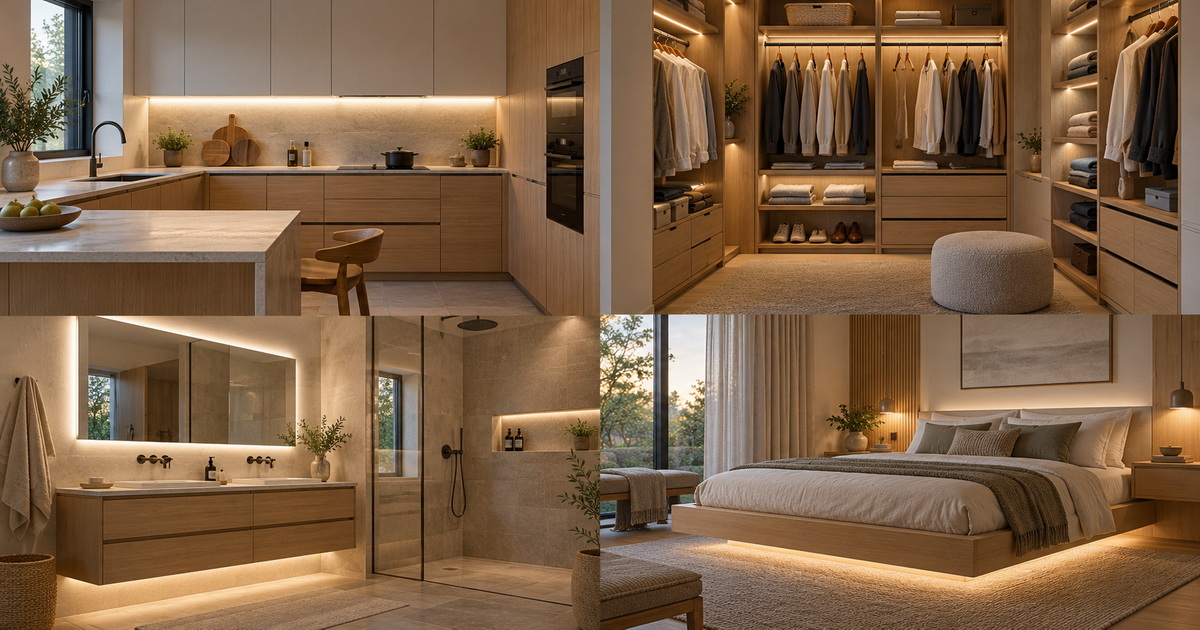
My recommended starting point is simple: define the everyday lighting task before choosing decorative effects.
Under-cabinet lighting should help people see the work surface clearly.
RGBW may suit a kitchen where one white appearance is preferred. RGBCCT may suit a space where the owner wants to coordinate white appearance with changing room scenes.
Before choosing either, inspect reflections, shadows, and the visibility of individual light points.
A wardrobe installation should make garments and accessories easy to distinguish.
Compare samples using actual clothing, including similar dark shades and textured materials. A visually attractive strip can still produce disappointing results on fabrics.
If decorative color has no practical role, a dedicated white or tunable-white solution may be more appropriate than a multicolor product.
A glow beneath a bathroom cabinet creates atmosphere, but it should not automatically be treated as adequate lighting for grooming.
Evaluate the face and mirror area separately. Also assess moisture exposure and the suitability of the complete assembly, including connectors and cable entries.
Bed frames and headboards can combine gentle white lighting with optional decorative scenes.
Look beyond the available effects. Consider whether users can activate a comfortable scene without navigating complicated controls, and check what happens after power is interrupted.
Silicone describes the enclosure or optical construction, not the color-control technology.
LED silicone strip lights can use different color configurations and control systems. The enclosure influences appearance, flexibility, and installation requirements.
It does not, by itself, guarantee waterproofing, invisible light points, or suitability for every furniture recess.
A strip that looks smooth on a workbench may create reflections or visible bright spots inside a cabinet.
Evaluate a sample with the intended:
- Furniture finish.
- Mounting position.
- Diffuser or profile.
- Viewing angle.
- Nearby reflective surfaces.
This is especially important around glossy doors, polished stone, mirrors, and glass shelves.
Flexible does not mean bendable in every direction.
Some enclosed strips are designed for side bending; others bend differently. Twisting or forcing the wrong bend can damage the assembly.
Confirm the routing before finalizing furniture grooves, corners, or attachment points.
A protective enclosure is only part of the system.
Cut ends, connectors, and cable exits must be finished using an approved method. For moisture-exposed locations, ask how the completed installation maintains its intended protection.
A suitable strip connected to an unsuitable controller can lose important functions—or fail to operate correctly.
Start by separating conventional channel-based control from addressable control.
Then verify the complete combination of strip, controller, power supply, accessories, and user interface.
1. Does the controller support the strip's actual color configuration?
2. If the strip is addressable, does the controller support its communication method?
3. Can dedicated white lighting operate independently?
4. Are the required wall controls, sensors, or automation functions supported?
5. What happens when power returns?
6. Can installers and maintenance teams access the connections?
Wireless connectivity alone does not establish compatibility. An app-controlled product is not automatically suitable for every lighting system.

For customized furniture lighting, approve a complete assembly rather than an isolated illuminated strip.
Describe what users need to see and how they should operate the lighting.
Separate essential functions from decorative preferences.
Use the intended furniture materials, mounting arrangement, strip enclosure, and controls.
A realistic mock-up reveals issues that photographs and component descriptions cannot resolve.
Check:
- White appearance on real materials.
- Dimming and scene transitions.
- Reflections and visible light points.
- Sensor or switch behavior.
- Power-restoration behavior.
- Connection access and serviceability.
Where a performance claim matters, request supporting documentation rather than relying on appearance alone.
Document the agreed strip, controller, connectors, installation approach, and finish requirements.
This gives purchasing, production, and installation teams a common reference and reduces ambiguity when replacement components are needed.
Farwise Technology Co., Ltd. provides commercial and residential LED lighting solutions, including LED silicone strip lights for cabinets, wardrobes, bathroom vanities, bedroom furniture, and related applications.
Our OEM/ODM services support customization of dimensions, functions, lighting arrangements, and appearance.
Send Farwise your furniture drawings, intended installation environment, preferred lighting effects, and control requirements. Request an application-focused proposal and a representative sample assembly before confirming the production design.
RGBW is generally more suitable when dedicated white lighting is required alongside decorative color. However, the white emitter's quality, installation position, and control behavior still need evaluation.
Yes. An RGBW product can use a warm-white emitter. The abbreviation indicates dedicated white capability, not one universal white appearance. Confirm the selected version with the manufacturer.
Sometimes suppliers use these names for similar configurations, but they are not consistently interchangeable. Verify whether the product includes separately controllable warm and cool white emitters and supports adjustable white operation.
Not necessarily. RGBIC describes segmented control rather than guaranteed dedicated white capability. Some addressable products include white emitters; others rely on RGB mixing. Check the actual configuration and evaluate a sample.
No. Some products permit cutting and reconnection, some permit cutting with restrictions, and others prohibit modification. Follow the instructions for the specific product rather than general advice about addressable strips.
No. Suitability depends on the complete product and installation, including enclosure design, cut-end treatment, connectors, and cable entries. Confirm that the finished assembly is appropriate for its intended environment.
There is no universal winner. Choose according to the lighting task, desired white appearance, decorative effects, controller compatibility, installation method, and maintenance needs. Validate the complete assembly before production.
1. - [LEDYi Lighting — "RGB vs. RGBW vs. RGBIC vs. RGBWW vs. RGBCCT LED Strip Lights"]. Original comparison reviewed for topic coverage and terminology requiring clarification; not used as the sole technical authority. [ledyilighting]
2. - [U.S. Department of Energy — "Understanding LED Color-Tunable Products"]. Explains white tuning, warm/cool emitter blending, and distinctions between white-tunable and full-color systems. [energy]
3. - [U.S. Department of Energy — "LED Color Characteristics"]. Provides background on white-light generation, color appearance, and color rendition. [www1.eere.energy]
4. - [Waveform Lighting — "Ultra High CRI LED Lighting"]. Explains why white appearance and object color rendering are separate considerations. [waveformlighting]
5. - [Govee — "RGBICWW Outdoor LED Strip Lights"]. Demonstrates that addressable color effects can coexist with dedicated warm/cool white, while white segmentation and cutting permissions remain product-specific. [us.govee]
6. - [Govee — "LED Strip Light 2"]. Illustrates overlapping color/control terminology and product-specific restrictions on cutting, reconnecting, and extending. [us.govee]
7. - [Diode LED — "NEON BLAZE RGB LED Strip Light Installation Guide"]. Supports the need to follow designated cutting locations and permitted bending directions. [diodeled]
8. - [Diode LED — Neon Strip Installation Guide]. Addresses designated cutting points, connections, and sealing for wet-location installations. [diodeled]
9. - Farwise Technology Co., Ltd. — Company background supplied for this article, including 16 years of specialization, product scope, furniture applications, and OEM/ODM customization services. No public company-source URL or customer reviews were supplied.


