
Views: 222 Author: Farwise Lighting Publish Time: 2026-10-13 Origin: Site


Content Menu
● What Is the Difference Between High Density and Standard COB LED Strips?
>> Standard COB Does Not Mean Conventional Dotted Lighting
● High Density COB LED Strip vs Standard COB Strip: Comparison Overview
● Light Uniformity: Where Higher Density Can Matter
>> Reflective Worktops and Glossy Finishes
● Brightness and Energy Efficiency: Avoid the Density Shortcut
>> Compare the Finished Lighting Effect
● Color Quality: A Separate Buying Decision
● Heat Management and Reliability: Evaluate the Whole Assembly
>> Furniture Integration Changes Operating Conditions
● Dimming and Smart Controls: Density Is Not the Deciding Factor
● Silicone COB LED Strips: Separate Protection from Optical Performance
>> Bathroom Vanity Lighting Requires Application-Specific Review
● Which COB LED Strip Works Best for Furniture Lighting?
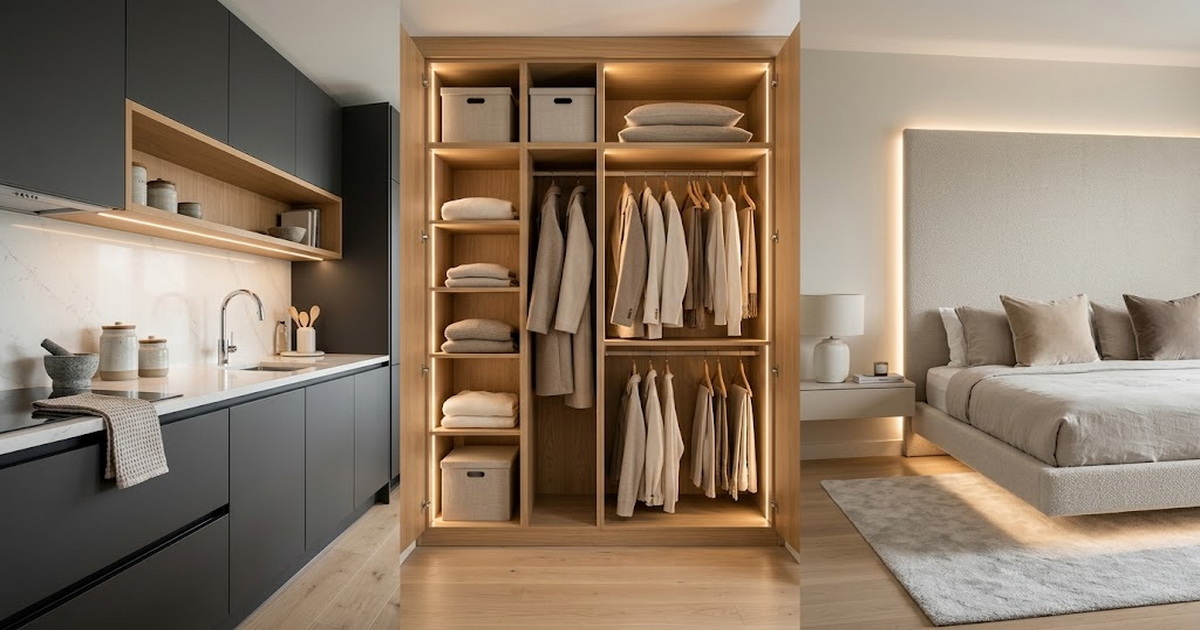
>> Kitchen Cabinets and Display Shelves
>> Wardrobes and Dressing Areas
>> Bedroom Bed Frames and Floating Furniture
● A Practical Sample-Approval Process
>> Step One: Define the Acceptance Criteria
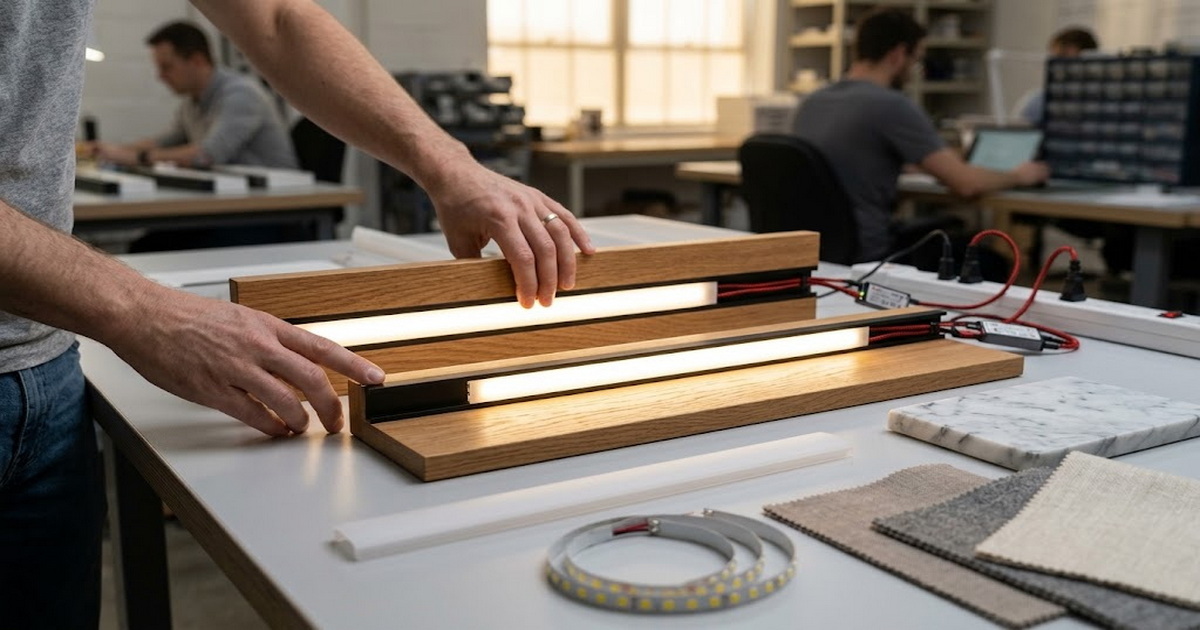
>> Step Two: Build a Representative Mock-Up
>> Step Three: Inspect Real Viewing Conditions
>> Step Four: Review Integration and Repeat Supply
● Cost and OEM/ODM Value: Compare More Than the Strip
>> 1.Is a High Density COB LED Strip Always Better?
>> 2.Can Standard COB LED Strips Look Dot-Free?
>> 3.Does Higher Density Mean Higher Brightness?
>> 4.Which COB Strip Is Better for Bathroom Cabinets?
>> 5.Do High Density COB Strips Last Longer?
>> 6.Can Both Types Work with Smart Controls?
Choosing a high density COB LED strip vs standard COB strip is not simply a decision between premium and basic lighting. Both can create attractive, continuous illumination. The better choice depends on how the strip interacts with the furniture, mounting channel, illuminated surface, and control system.
At Farwise Technology Co., Ltd., our perspective comes from 16 years of specialization in LED lighting and a focus on integrated furniture lighting solutions. For cabinets, wardrobes, bathroom vanities, and bedroom furniture, our starting point is application: what should the finished installation look like, and how will people use it?
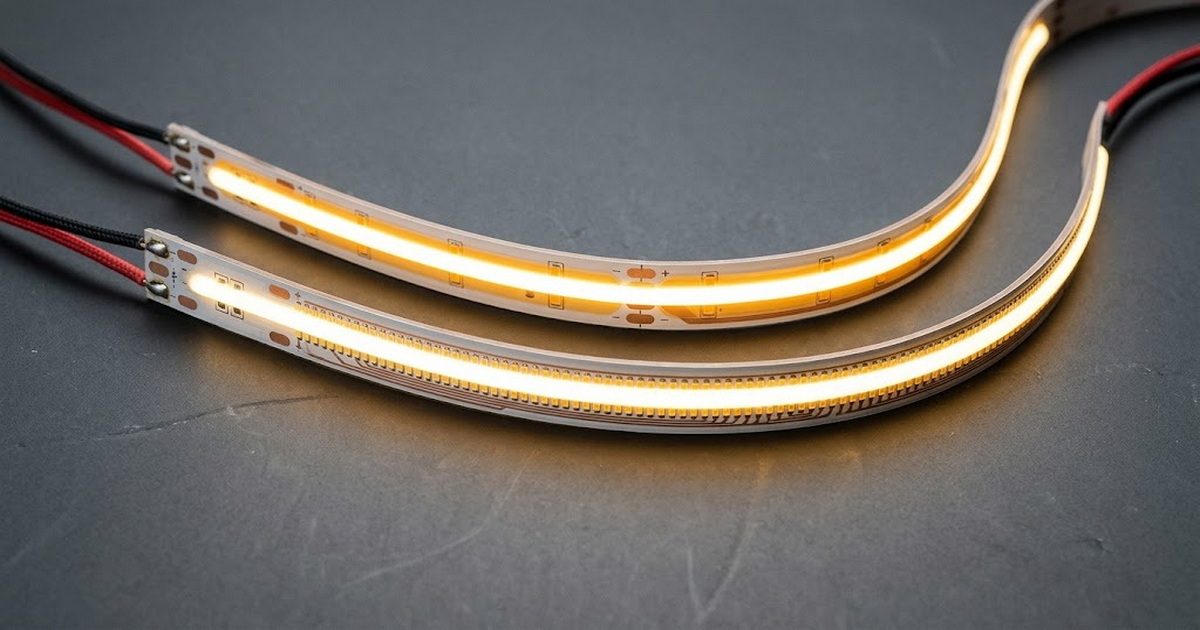
COB stands for chip-on-board. In white COB LED strips, small LED chips are mounted directly onto a flexible circuit board beneath a continuous phosphor-containing layer. This construction helps blend individual light sources into a continuous-looking illuminated line.
A high density COB LED strip places more chips along a given length than a lower-density alternative within a comparable product family.
However, "standard" and "high density" should be treated as supplier-relative descriptions—not universal performance grades. Confirm what each manufacturer means before comparing products.
A standard COB strip is still a COB product. It should not be confused with a conventional strip featuring visibly separated surface-mounted LED packages.
Well-designed standard COB lighting can already appear smooth, particularly inside a suitable channel or when concealed behind furniture details.
Higher density may improve blending in demanding installations, but it does not automatically make every visible aspect of the lighting better.
| Comparison area | High density COB LED strip | Standard COB strip |
|---|---|---|
| Light blending | Can provide additional visual continuity in challenging layouts | Often delivers smooth results with suitable positioning |
| Shallow installations | Worth evaluating where mixing space is limited | May work well with appropriate diffusion |
| Concealed lighting | Useful when the final appearance justifies it | Often a practical starting point |
| Brightness | Depends on the complete design, not density alone | Also depends on the complete design |
| Color quality | Must be evaluated independently | Must be evaluated independently |
| Thermal performance | Requires assessment in the intended installation | Requires the same application-based assessment |
| Dimming | Depends on compatible controls and power equipment | Depends on compatible controls and power equipment |
| Purchasing value | Strongest when the visual improvement is noticeable | Strongest when it already meets the design brief |
The key distinction is straightforward: density describes chip arrangement. It does not independently establish brightness, efficiency, durability, or overall quality.
Visual continuity is the most relevant reason to consider a high density COB LED strip for furniture lighting.
Closer chip spacing can help reduce visible variations along the illuminated line. The benefit is most meaningful where the installation provides little opportunity for light to blend.
Slim cabinet details and recessed shelf edges may leave limited space between the strip and its cover.
In these situations, higher density can provide more flexibility when pursuing a continuous appearance. Nevertheless, the phosphor layer, diffuser, channel geometry, and viewing angle remain important.
A standard COB strip may produce an equally acceptable result in a well-matched assembly.
Polished stone, glass, lacquer, and metallic surfaces can reveal lighting irregularities that are less noticeable on matte materials.
Evaluate both the illuminated surface and the reflected image of the strip. A smooth-looking source can still create an uncomfortable bright reflection if positioned poorly.
Our preferred selection principle is to judge the complete furniture detail, not the strip operating on an open workbench.
A common comparison mistake is assuming that more chips always mean more useful light or lower energy consumption.
Brightness depends on the chips, electrical design, operating conditions, and optical materials. Higher density can support different design approaches, including distributing the electrical load across more chips, but the resulting performance must be verified.
Likewise, a standard COB strip is not inherently an energy-saving alternative.
For under-cabinet lighting, the useful question is whether the work surface receives comfortable, adequate illumination.
For wardrobe lighting, it is whether clothing remains easy to identify without harsh shadows.
A meaningful comparison should therefore:
- Use the intended channel and diffuser.
- Illuminate the same furniture surface.
- Match the required visual result.
- Consider the complete power and control system.
- Avoid treating chip count as an efficiency certificate.
This approach keeps purchasing decisions connected to usable light rather than an isolated construction detail.
High density does not automatically improve color rendering or guarantee consistent white light.
Color quality depends on the LED and phosphor system, manufacturing consistency, and operating conditions. Two strips with similar descriptions can make the same timber, fabric, or countertop look different.
For furniture projects, evaluate samples against actual materials:
- Wardrobes: compare clothing and fabric colors.
- Kitchens: inspect food, timber, stone, and cabinet finishes.
- Bathrooms: evaluate skin appearance and mirror surroundings.
- Bedrooms: check whether the light supports the intended atmosphere.
For repeat orders, ask how the supplier manages color consistency between production batches. A visually approved sample should become part of the purchasing reference.
Neither density category guarantees cooler operation or longer service life.
Heat affects LED output, color stability, and long-term performance. The result depends on the electrical load, circuit construction, mounting interface, surrounding materials, and ability to release heat.
A higher-density strip is not necessarily hotter. A standard strip is not necessarily safer in an enclosed recess.
A strip mounted inside a narrow wooden cavity operates differently from one installed in a suitably designed metal profile.
Silicone coverings, diffusers, adhesives, and enclosure details can also change the thermal behavior of the finished assembly.
Before approving either option:
- Follow the manufacturer's mounting guidance.
- Evaluate the complete furniture installation.
- Keep power equipment accessible for servicing.
- Confirm that enclosed spaces are suitable for the proposed system.
- Request relevant reliability evidence rather than accepting density-based lifespan claims.
The objective is reliable system operation, not simply an attractive initial demonstration.
For bedroom, wardrobe, and ambient cabinet lighting, dimming quality can matter more than an incremental improvement in visual continuity.
Chip density alone does not establish whether a strip will dim smoothly. Performance depends on the strip, power supply, controller, dimming method, and their compatibility.
Evaluate the intended combination for:
- Smooth transitions between lighting levels.
- Stable illumination at low settings.
- Unwanted flicker or visible stepping.
- Reliable switching and sensor response.
- Consistent behavior across connected furniture sections.
For smart-home projects, agree on the control requirements before selecting the final strip. Choosing the light source first and resolving compatibility later can create avoidable integration work.
For LED silicone strip lights, evaluate two separate questions: how the light looks and how the assembled product is protected.
Silicone can serve as part of an optical or protective construction, but its presence alone does not establish waterproof suitability.
Protection depends on the complete enclosure, including cable entries, connectors, cut ends, and sealing methods.
Bathroom installations introduce moisture exposure and location-dependent electrical requirements.
Specify the intended installation position and ask for appropriate protection documentation. Verify whether cutting or reconnecting the strip changes the approved assembly.
Also confirm the permitted bending direction and installation method. Flexibility does not mean a strip can be twisted, sharply folded, or bent without restriction.
These considerations apply to both high density and standard COB products.
Start with high density when a shallow detail, visible light line, or reflective finish makes blending particularly demanding.
Start with standard COB when the source is concealed and the selected assembly already produces a clean result.
For worktop lighting, evaluate shadows and reflected glare alongside continuity.
Prioritize clothing visibility, color appearance, sensor placement, and comfortable viewing.
High density may help with exposed vertical lighting details. Standard COB may be sufficient behind a wardrobe frame or diffuser.
Check the lighting with doors open and from normal standing positions.
For concealed under-bed lighting, positioning and dimming often deserve attention before density.
A standard COB strip may deliver the intended ambient effect. Higher density becomes more relevant when the source or its reflection remains visible.
Many strip comparisons stop at brightness and purchase price. A stronger evaluation connects appearance, integration, and repeatability.
Write down what the finished lighting must achieve.
Include acceptable continuity, color appearance, dimming behavior, installation constraints, and service access. Use photographs or approved physical samples to reduce ambiguity.
Install both candidates using the proposed furniture materials, channel, diffuser, connectors, and controls.
A loose strip demonstration cannot reproduce every interaction in the finished product.
Evaluate the assembly from standing, seated, and close-up positions where relevant.
Check reflective surfaces, corners, joins, and strip ends. Inspect both full illumination and dimmed operation.
Confirm the cutting arrangement, connection method, installation instructions, and replacement process.
Record the approved assembly so future orders reproduce the same lighting effect rather than merely carrying the same density description.
A higher-density option may carry a price premium, but the commercially relevant comparison is the complete installed solution.
Consider the strip, channel, diffuser, wiring, controls, assembly work, inspection, and potential rework. Higher density may justify its cost when it solves a visible design problem. It adds little value when the customer cannot distinguish the finished result.
Farwise Technology Co., Ltd. supports OEM/ODM furniture lighting development, including customization of dimensions, functions, appearance, and integrated solutions.
For a productive quotation, share:
- Furniture drawings and installation locations.
- Desired lighting appearance.
- Surface materials and viewing conditions.
- Control and sensor requirements.
- Environmental conditions.
- Assembly and maintenance expectations.
Contact Farwise with your furniture drawings and lighting brief to discuss high density and standard COB alternatives, then approve the final solution through a representative sample.
No. It can improve blending in demanding installations, but standard COB may already meet the visual brief. Compare the finished assemblies rather than assuming the denser option is superior.
Yes. Standard COB can create a continuous-looking line, especially with suitable diffusion, positioning, and viewing distance. The actual result depends on the complete optical arrangement.
Not necessarily. Brightness depends on the electrical and optical design as well as operating conditions. Density alone is insufficient for comparing useful illumination.
Choose according to the installation location, protection requirements, light quality, and system compatibility. Density is secondary to safe, suitable integration.
Not automatically. Reliability depends on thermal management, component quality, electrical design, and installation. Request evidence relevant to the proposed assembly.
Yes, when paired with compatible power equipment and controllers. Confirm dimming, switching, and sensor behavior using the exact combination intended for production.
1. - [LEDsupply — "Contractor Vs. Professional Vs. Architectural Series LED Strip"]. Background on COB construction and the relationship between emitter arrangement and visual continuity. [ledsupply]
2. - [Waveform Lighting — "Everything You Need to Know About LED Strip Lights"]. Background on density, light distribution, and strip-selection considerations; not a universal classification standard for COB products. [waveformlighting]
3. - [ENERGY STAR — "Learn About LED Lighting"]. Guidance on thermal management, light-output depreciation, and LED lifetime. [energystar]
4. - [U.S. General Services Administration — "LED Lighting and Controls Guidance for Federal Buildings"]. Technical context for color appearance, driver compatibility, dimming, and flicker. [gsa]
5. - [International Electrotechnical Commission — "Ingress Protection (IP) Ratings"]. Authoritative explanation of enclosure protection against solid objects and liquids. [iec]
6. - [U.S. Department of Energy — "LED Luminaire Lifetime: Recommendations for Testing and Reporting"]. System-level discussion of reliability, thermal design, and component interactions. [energy]


