


Tel / WhatsApp
+86-13790241903

Author: Farwise Lighting Publish Time: 2026-07-13 Origin: Site
Content Menu
● Is It OK to Leave LED Strip Lights On All Night?
● How LED Strip Lights Work (And Why They're Efficient)
● Safety: Can LED Strip Lights Stay On All Night?
● Heat Generation and Fire Risk
● LED Strip Lifespan and Continuous Use
● Energy Consumption and Cost of Leaving Strips On
● Human Factors: Sleep, Glare, and Comfort
● Practical Scenarios: Where Overnight LED Strip Use Makes Sense
● Expert Best Practices for Leaving LED Strips On All Night
● How Silicone LED Strip Lights Improve Overnight Safety
● Real‑World Case Insight: Furniture Lighting Projects
● Step‑by‑Step Checklist Before You Leave LED Strips On All Night
● Why Work With a Professional OEM/ODM LED Strip Manufacturer
● Table: Key Factors for Overnight LED Strip Operation
● Call to Action: Design Safer, Smarter LED Strip Lighting
● FAQs About Leaving LED Strip Lights On All Night
It is generally safe to leave high‑quality LED strip lights on all night as long as they are correctly installed, properly ventilated, and powered by reliable drivers that match the load. However, continuous overnight operation does affect lifespan, energy bills, and user comfort, so both homeowners and project contractors should follow best‑practice guidelines when designing and using LED strip lighting systems. [besenledlight]

LED strip lights—especially modern silicone LED strips and cabinet lighting systems—are engineered for long, continuous operation with low heat and high efficiency. From a safety and performance standpoint, it is usually acceptable to keep them on overnight if the system is designed correctly and uses certified, quality components. [shine]
From my experience working with home renovation projects and commercial furniture manufacturers, I've seen that problems rarely come from the LED chips themselves; they come from cheap power supplies, poor ventilation, overloading, and improper installation. When you control these variables, your strips can safely run through the night with predictable performance and minimal risk. [besenledlight]
LED strip lights convert electrical energy into light using semiconductor diodes instead of heated filaments, which dramatically reduces wasted heat. Compared with traditional incandescent or even compact fluorescent sources, high‑quality LED strips can reach a service life of tens of thousands of hours under proper operating conditions. [pcachina]
Modern silicone LED neon strips and COB LED strips further improve reliability by encapsulating the LEDs in flexible, thermally stable silicone materials and optimizing PCB design for heat dissipation. This structure is especially beneficial when strips are used in cabinets, wardrobes, and tight furniture spaces where traditional plastic casings would yellow or crack more easily. [shine]
Leaving LED strip lights on all night is typically safe if several fundamental safety conditions are met. These conditions relate to heat, wiring, and product quality. [besenledlight]
Key safety factors include:
- Certified power supplies and drivers that match the total wattage of all strips on the circuit. [besenledlight]
- Proper ventilation around the strips and profiles so heat can dissipate naturally. [shine]
- No contact with flammable materials, especially in enclosed furniture or soft furnishings. [besenledlight]
- Correct wiring and connectors, avoiding loose terminals, poor solder joints, or mismatched plugs. [shine]
In practice, most reported safety issues with LED strip lights involve low‑cost, uncertified strips or DIY wiring that ignores basic electrical limits. When you work with a professional OEM/ODM manufacturer and follow installation guidelines, 24/7 or overnight operation can be achieved without compromising safety. [farwiselighting]
Compared with traditional lamps, LED strip lights run significantly cooler, but they still generate heat at the LED junction and on the PCB. If that heat is trapped—for example, by sealing strips in unventilated cavities or covering them with insulating materials—it can shorten their life and, in extreme cases, elevate fire risk. [pcachina]
Well‑designed silicone LED strips and aluminum profiles manage heat in two ways:
- Thermal conduction through the PCB and profile into surrounding air.
- Optimized current and LED density to keep temperature within rated ranges. [shine]
From a practical standpoint, you should be cautious about leaving strips on all night when they are:
- Sandwiched between wood panels without air gaps,
- Fully encapsulated behind non‑metallic covers with no ventilation, or
- Installed directly onto easily flammable surfaces with no thermal barrier. [besenledlight]
LED strips are rated for a certain number of operating hours, or more for quality products under nominal conditions. Continuous operation—such as leaving lights on every night—consumes that lifetime budget more quickly, but it does not automatically cause failure if the system stays within its thermal and electrical design limits. [pcachina]
Factors that most affect lifespan include:
- Operating temperature: Higher temperatures accelerate lumen depreciation and can lead to early failure. [pcachina]
- LED quality and binning: Low‑grade LEDs can drift in color or fail earlier under 24/7 use. [shine]
- Driver quality: Poor constant‑voltage supplies or unstable drivers often fail before the strip itself. [besenledlight]
Designers who specify LED strips for commercial showcases, hotels, or kitchen furniture typically assume extended daily usage, so professional‑grade strips and drivers are selected accordingly. For residential users, combining dimmers, sensors, and timers offers the best balance between comfort, lifespan, and cost. [shine]
Even though LED strip lights are highly efficient, they still consume electricity when left on all night. The total energy cost depends on strip power density (for example, 8–12 W per meter), total installed length, and the hours of operation. [besenledlight]
From an energy‑management perspective:
- Cabinet or wardrobe lighting that runs overnight at full brightness may be unnecessary; motion sensors or door switches can drastically cut wasted hours. [shine]
- Dimmed night lighting (for bedrooms or hallways) can reduce power draw by 30–70% while still providing adequate orientation light. [besenledlight]
Professional lighting designers often integrate LED strip systems with smart home platforms or centralized control for hotels and retail spaces, enabling scheduled dimming and shut‑off scenarios that keep energy usage predictable and optimized. [shine]
From a human‑centric lighting standpoint, leaving bright LED strips on all night in bedrooms or living rooms can affect circadian rhythms and sleep quality. LED sources with high blue content are more likely to suppress melatonin if they shine directly into the eyes or reflect from glossy surfaces late at night. [ledvance]
To minimize these impacts:
- Choose warm white (2700–3000 K) strips for night use in bedrooms and relaxation areas. [besenledlight]
- Use indirect installation (hidden in coves, under beds, behind headboards) to avoid direct glare. [shine]
- Combine strips with dimmers to lower intensity dramatically after a certain hour. [besenledlight]
In kitchens, bathrooms, and closets, overnight lighting is usually functional rather than decorative, so low‑level task strips, sensors, and timers are preferred over permanently on, high‑brightness illumination. [shine]
Not all applications are equal. As a manufacturer and lighting solution provider, Farwise and similar companies see very different usage patterns between domestic and commercial projects. [shine]
Typical scenarios where overnight strip operation is reasonable include:
- Hotel corridors and lobby coves where safety and visual guidance are needed 24/7.
- Retail showcases and display cabinets in duty‑free stores or showrooms operating late hours.
- Under‑cabinet kitchen lighting configured as low‑level night lights for open‑plan apartments.
In these cases, many specifiers choose silicone LED strips with IP ratings and high CRI to provide stable, uniform light with good color rendering and strong resistance to yellowing, dust, and humidity. The key is to design for the specific duty cycle and to avoid treating decorative strips as if they were disposable, low‑risk accessories. [shine]
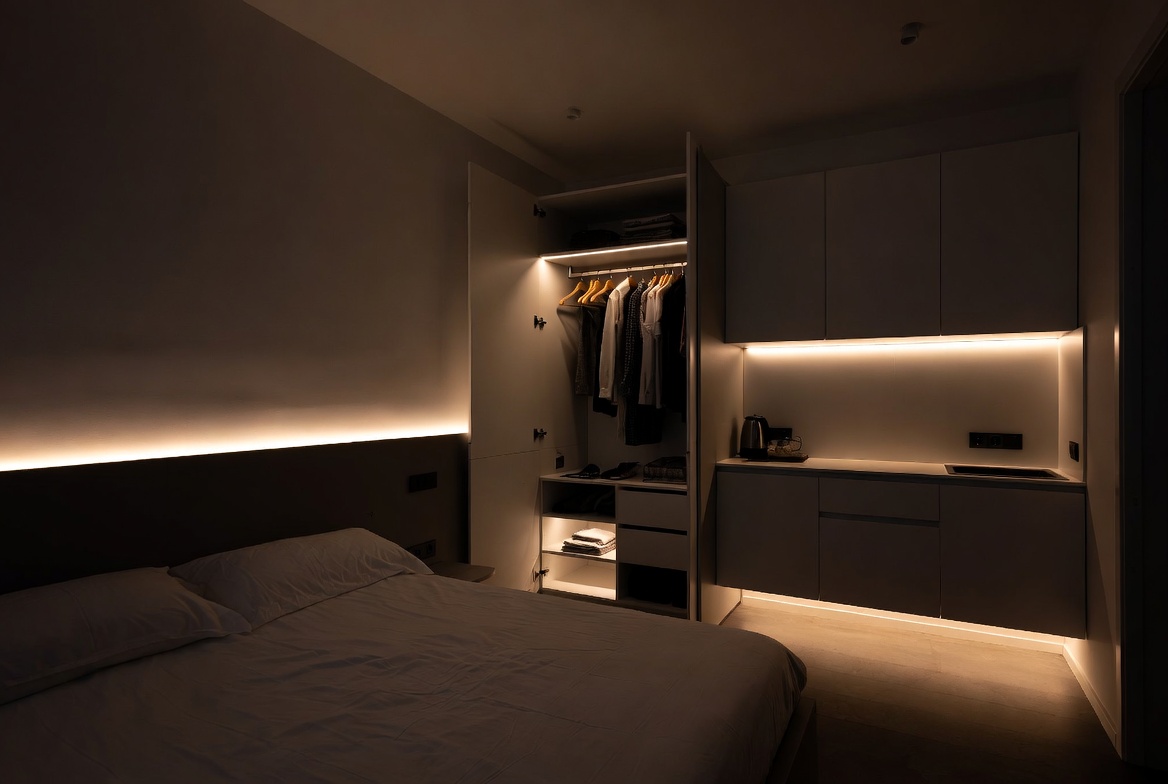
From a professional installation and manufacturing perspective, the following best practices help ensure safe, stable overnight operation. [besenledlight]
1. Start with certified, high‑quality products
- Use strips and drivers from reputable manufacturers with clear electrical ratings and test reports.
- Look for evidence of aging tests, high‑temperature tests, and surge tests on production lines. [shine]
2. Design the system with margin
- Size power supplies with at least 20% reserve capacity over the calculated load to avoid overloading. [besenledlight]
- Keep wiring lengths and cross‑sections appropriate to minimize voltage drop, especially for long runs. [besenledlight]
3. Manage heat and environment
- Install strips on thermally conductive surfaces (such as aluminum profiles) when possible.
- Ensure there is at least some airflow or space for heat to dissipate inside cabinets and furniture. [besenledlight]
4. Use control systems
- Integrate timers, motion sensors, door switches, or smart plugs to avoid unnecessary operating hours. [besenledlight]
- Use dimming to reduce brightness at night, extending lifespan and enhancing comfort. [besenledlight]
5. Inspect and maintain periodically
- Check for signs of discoloration, flicker, or hot spots, which may indicate local overheating or connection problems. [besenledlight]
- Clean away dust or debris from profiles, channels, and cabinet interiors to maintain cooling efficiency. [besenledlight]
These guidelines are consistent with both manufacturer recommendations and broader industry experience in LED system reliability. [pcachina]
Silicone LED strips and silicone "neon flex" products have become a preferred choice for furniture lighting, architectural accents, and moisture‑prone environments. For overnight operation, their material and structural advantages are particularly relevant. [shine]
Key benefits include:
- Improved thermal stability: Silicone maintains flexibility and structural integrity over a wide temperature range, reducing cracking or deformation. [shine]
- High ingress protection options (such as IP65–IP67) that resist dust and moisture in bathrooms, kitchens, and wardrobes. [shine]
- Uniform, dot‑free light that enhances user comfort when strips serve as long‑running ambient or night lighting. [shine]
In cabinets, wardrobes, and bed frames, compact silicone profiles—such as mini 6×6 mm or 3×6 mm strips—fit into tight spaces and can be combined with recessed aluminum channels to create glare‑free, continuous lines of light. This combination is particularly suitable for intelligent, multi‑scene home lighting systems that may run at low levels through the night. [shine]
In many modern furniture projects, LED strip lights are no longer decorative add‑ons but integral parts of systemized lighting solutions. Manufacturers and OEM/ODM partners design LED channels into cabinet bodies, bed frames, wardrobe systems, and bathroom vanities from the very first prototype. [shine]
Typical design patterns include:
- Under‑cabinet strips in kitchens that automatically switch to lower brightness at night.
- Wardrobe and wine cabinet lighting controlled by magnetic or infrared door switches, limiting operating hours to actual use.
- Recessed bed‑frame strips that act as low‑level night lights, often controlled by motion sensors near the floor. [shine]
From a manufacturer's perspective, designing these systems as modular, plug‑and‑play solutions helps ensure proper powering, heat management, and maintenance across different markets and installation teams. When end users leave such systems on all night at low brightness or controlled by automation, they experience both safety and comfort benefits without sacrificing energy efficiency. [shine]
For homeowners, installers, and project managers, the following checklist can serve as a quick reference before you decide to keep your LED strip lights on overnight.
1. Verify product quality
- Confirm that the strips and drivers come from a reputable manufacturer and that specifications match your application. [besenledlight]
2. Check total load vs. power supply
- Calculate the total wattage of all connected strip segments and ensure your power supply is comfortably above that figure. [besenledlight]
3. Inspect installation surfaces
- Make sure strips are attached to stable, heat‑resistant surfaces and not directly onto soft or flammable materials. [besenledlight]
4. Confirm ventilation and profiles
- Verify that channels, profiles, and cabinet spaces leave some room for air circulation. [besenledlight]
5. Test for hotspots and flicker
- Run the strips at full brightness for a period and check for abnormal temperature, flicker, or localized discoloration. [besenledlight]
6. Configure controls
- Set up timers, motion sensors, or smart scenes to avoid unnecessary all‑night full‑brightness operation. [besenledlight]
7. Schedule periodic checks
- Establish a simple inspection routine—perhaps quarterly—to ensure all components remain in good condition. [besenledlight]
Following this process ensures that overnight operation is a deliberate design choice, not an accident or an afterthought.
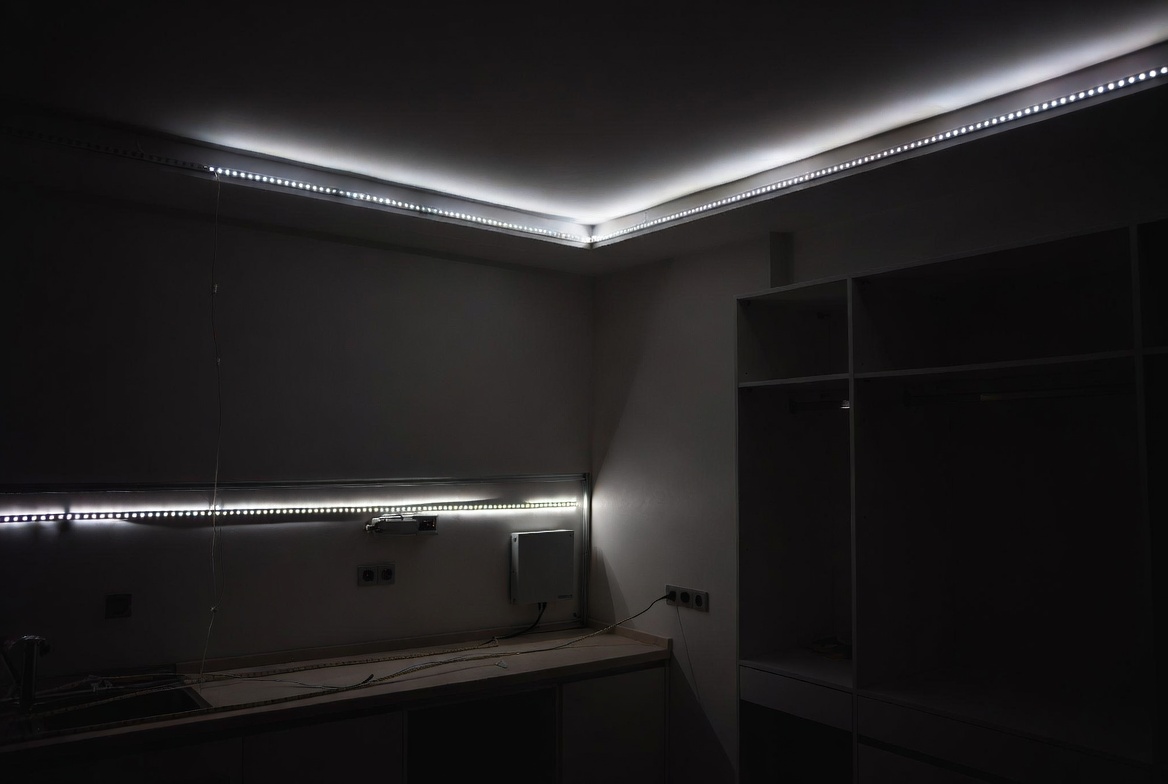
For system integrators, furniture brands, and engineering contractors, partnering with a specialized LED strip manufacturer is the most reliable path to safe, long‑life overnight lighting solutions. Professional manufacturers combine R&D, production, and testing capabilities to tailor strips, profiles, and drivers to specific application needs. [farwiselighting]
Advantages include:
- Customized dimensions and functions for cabinets, wardrobes, bathrooms, and bedroom furniture. [shine]
- Matched power supplies and accessories that ensure electrical and thermal compatibility. [shine]
- Consistent quality control, from silicone extrusion and SMT to photometric testing and aging tests. [shine]
With over a decade of experience in silicone LED strips and cabinet lighting, such manufacturers help global customers balance high performance, low energy consumption, and competitive cost while meeting local safety standards and project requirements. [farwiselighting]
| Factor | Why It Matters for All‑Night Use |
|---|---|
| Product quality | Determines reliability, color stability, and failure rates. (besenledlight) |
| Power supply capacity | Prevents overloading and overheating of drivers. (besenledlight) |
| Heat management | Extends lifespan and reduces fire risk. (besenledlight) |
| Installation surface | Influences thermal conduction and safety. (besenledlight) |
| Control system | Optimizes energy use and comfort. (besenledlight) |
| Application scenario | Defines appropriate brightness, CCT, and runtime. (besenledlight) |
If you plan to use LED strip lights in cabinets, wardrobes, bathrooms, or bedroom furniture—and especially if they may run overnight—now is the time to upgrade from basic DIY strips to professionally engineered solutions. By collaborating with an experienced OEM/ODM manufacturer, you can achieve safer, smarter, and more efficient lighting that supports both daily use and night‑time comfort. [farwiselighting]
Whether you are a furniture brand, project contractor, or distributor, consider specifying silicone LED strips, cabinet lights, and matched power systems that are designed from the ground up for continuous, real‑world operation. This approach protects your end users, strengthens your brand, and ensures your projects meet modern expectations for energy efficiency and visual comfort. [shine]
1. Will leaving LED strip lights on all night damage them?
If the strips and power supply are correctly matched, well ventilated, and within their rated temperature range, overnight use should not damage them and is often accounted for in their design. However, continuous operation does consume part of their rated lifetime, so using dimmers and controls can help extend overall service life. [pcachina]
2. Can LED strip lights cause a fire if left on overnight?
Quality LED strips with proper drivers, installed on suitable surfaces with adequate ventilation, present a very low fire risk. Fire incidents are more commonly linked to low‑grade products, overloaded power supplies, or poor wiring practices that violate basic safety guidelines. [besenledlight]
3. Do LED strip lights use a lot of electricity if they stay on all night?
Compared to traditional lighting, LED strips are highly efficient, but keeping them on all night still adds to your energy bill proportionally to their wattage and runtime. Using dimming, motion sensors, or time schedules can significantly reduce unnecessary consumption while maintaining basic night‑time visibility. [besenledlight]
4. Is it better to switch LED strip lights off frequently or leave them on?
Unlike some older technologies, LEDs are relatively tolerant of on/off cycles, but extremely frequent switching can still create stress in drivers and connections. For night‑time use, many users find it more practical to run strips at reduced brightness for longer periods instead of repeatedly turning them on and off. [besenledlight]
5. What kind of LED strip is best for furniture and cabinet lighting that may run at night?
Silicone LED strips and compact cabinet lighting bars designed for furniture applications offer excellent heat management, durability, and visual comfort. When combined with recessed profiles, warm color temperatures, and smart controls, they are particularly suitable for night‑time or low‑level continuous operation in homes and commercial spaces. [farwiselighting]
1. Mingxue LED – "Is it OK to leave LED strip lights on all night?" (Jan 4, 2025).
https://www.mingxueled.com/news/is-it-ok-to-leave-led-strip-lights-on-all-night/ [shine]
2. Farwise Lighting – Official Website, Product and Company Information.
https://www.farwiselighting.com/ [farwiselighting]
3. PCA China – (LED lighting system reliability).
https://www.pcachina.com/article/3000152870 [pcachina]
4. LED Strip Safety Article – (LED strip light safety).
https://besenledlight.com/zh-CN/led-strip-lights-safety/ [besenledlight]
5. LEDVANCE China –
http://www.ledvance.cn/IndustryNews/info.aspx?itemId=662 [ledvance]