


Tel / WhatsApp
+86-13790241903

Views: 272 Author: Farwise Lighting Publish Time: 2026-07-22 Origin: Site


Content Menu
● Understanding Modern LED Strip Light Categories
● Single‑Color LED Strip Lights: Reliable Everyday Illumination
● RGB and RGBW LED Strip Lights: Colorful Atmosphere and Accent Effects
● Addressable Digital RGB Strips: Precision Control and Animations
● High‑Output LED Strips: When Brightness Really Matters
● Flexible LED Strips: Creative Routing and Custom Furniture Integration
● Waterproof LED Strips: Kitchen, Bathroom and Semi‑Outdoor Usage
● Dimmable and Tunable White Strips: Lighting That Adapts to Mood
● Smart LED Strips: Connected Lighting for Modern Interiors
● Neon Flex and 360‑Degree Silicone Strips: Continuous, Dot‑Free Lines
● Core Types of LED Strip Lights for Home and Furniture Projects
● Why Silicone LED Strip Lights Stand Out in Furniture Lighting
● Furniture‑Focused Application: From Wardrobes to Bed Frames
● Customization Options: Size, Function and Appearance
● Reliability and Quality Control: What Professionals Look For
● Growth of Flexible and Smart LED Strip Solutions
● Practical Selection Checklist for Cabinet and Furniture LED Strip Projects
● FAQs
Choosing the right LED strip light today is no longer just about brightness or price. It is about matching specific strip technologies to clearly defined furniture, cabinet, and interior applications so that lighting remains comfortable, efficient, and visually consistent over time.
Homeowners, designers and project contractors now treat strip lights as a structural part of modern furniture. From kitchen cabinets and wardrobes to bathroom vanities and bed frames, each scenario benefits from carefully selected strip types that support both everyday tasks and ambient atmosphere.
LED strip lights have evolved into a broad family of products designed for different installation scenarios, ranging from basic accent runs to high‑end custom furniture integration. At a high level, most products fall into several core categories, each with its own strengths and ideal use cases.
The most widely used categories include single‑color strips for stable functional light, RGB and RGBW strips for decorative and mood effects, high‑output strips for bright tasks, and flexible, waterproof or smart variants that serve more demanding spaces. Rather than searching for one universal product, it is more practical to treat each room or cabinet as a separate scene and choose accordingly.
Single‑color LED strip lights use one fixed color temperature or monochrome tone. They are designed to deliver consistent, comfortable illumination without the complexity of color control, which makes them a staple in everyday residential and commercial use.
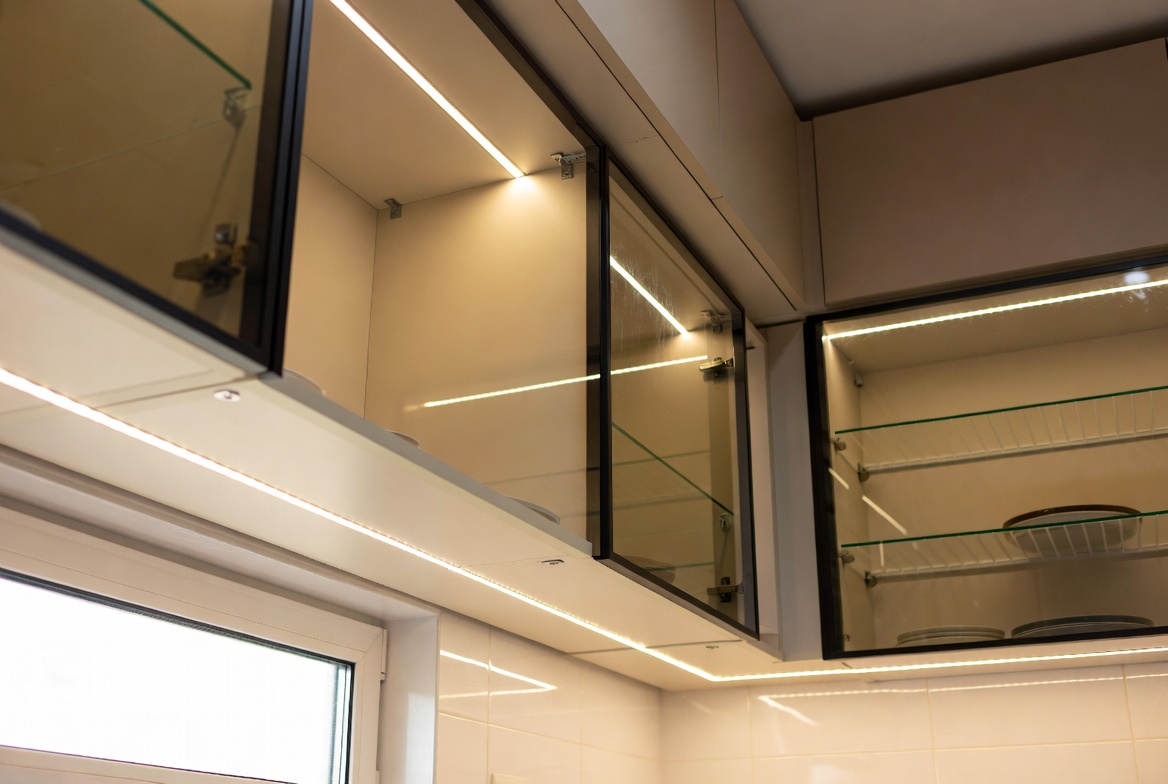
In furniture and cabinet lighting, single‑color strips are widely adopted in areas such as under‑cabinet kitchen lighting, wardrobes and closets, and bathroom vanities. High color‑rendering performance is particularly important in these locations because users must see objects clearly and comfortably, whether they are chopping food, selecting clothing or doing personal care.
For long‑term residential projects, many designers now prioritize high‑CRI single‑color strips. These products reproduce colors more accurately, reduce visual fatigue and make furniture surfaces and stored items look closer to how they appear under natural daylight.
RGB LED strips combine red, green and blue diodes to create a wide spectrum of colors. They are ideal where vivid, dynamic lighting effects matter more than strict functional performance, such as entertainment zones and decorative features.
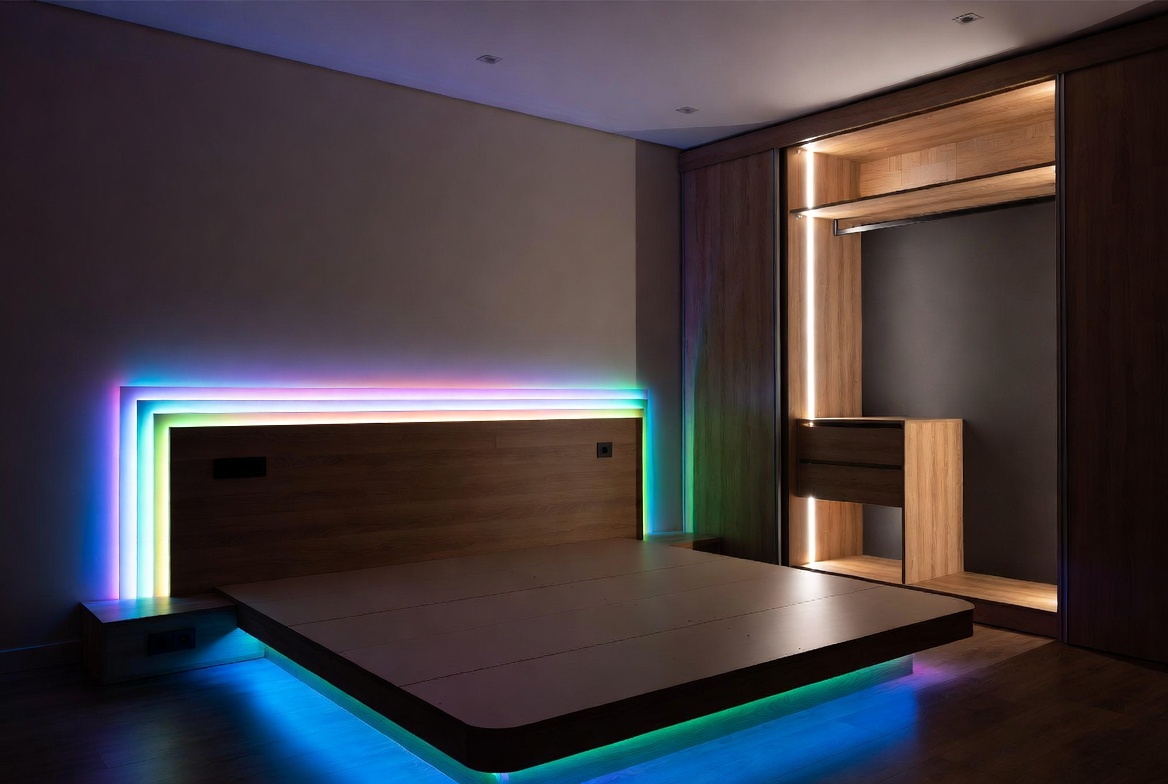
In practice, RGB strips are frequently used around bedroom headboards and bed frames, behind televisions and display shelves, and in gaming or lounge spaces. The ability to change colors and create different scenes helps homeowners transform the mood of a room without altering the furniture layout.
RGBW strips add a dedicated white channel to the RGB mix. This extra channel allows the strip to deliver a clean, high‑quality white light in addition to colored effects. As a result, RGBW products are often preferred for bedroom furniture and living room cabinets, where the same lighting must support daily tasks and occasional mood changes.
Addressable or digital RGB strips use individually controllable LEDs or LED groups. Instead of changing color for the entire length at once, the system can create complex animations such as gradients, color chasing or pixel‑level patterns.
These strips are well suited to premium display cabinets, feature walls and retail showcases where moving light can attract attention and emphasize specific lines or objects. They also fit well into advanced home setups where lighting is treated as a dynamic element tied to events, sound or user commands.
Because addressable strips carry both power and data signals, they require extra planning. Installers must consider controller selection, data direction, cable routing and power injection points to ensure stable performance, especially for longer runs embedded in furniture.
High‑output LED strips use higher‑density LED arrays or more efficient chips to deliver significantly increased light output per meter. They are designed for applications where strong, uniform illumination is critical.
Common scenarios include deep cabinets where light must reach the back, long kitchen islands or countertops that need even task lighting, and commercial shelving where products must stand out even under ambient daylight. In these environments, low‑power decorative strips may leave dark areas or uneven lines that reduce usability.
Manufacturers of high‑output strips pay close attention to thermal management. Quality PCB design, current regulation and the use of aluminum profiles or other heat‑spreading structures help keep operating temperatures within safe limits, reducing the risk of color shift, lumen depreciation and premature failure.
Flexible LED strips use bendable circuit boards and materials that allow them to follow curves, corners and irregular surfaces. This flexibility is very useful in modern furniture lighting, where many channels and grooves are hidden within structures rather than laid out in straight lines.
Typical uses include curved wardrobe or display cabinet structures, hidden channels behind bed frames or sofas, and decorative trims around shelves and mirrors. A flexible strip can follow these shapes more elegantly, creating a continuous line of light that matches the designer's intent.
When selecting flexible strips, planners consider the minimum bending radius, adhesive quality and compatibility with mounting profiles or channels. If bends are too tight or profiles are poorly matched, stress on the circuit board or encapsulation may shorten the lifespan of the product.
Waterproof LED strips are designed to resist moisture, steam and occasional splashes through coatings or full encapsulation. Their role is critical in environments where standard strips would be exposed to humidity or cleaning agents.
In home projects, waterproof strips are commonly installed near kitchen sinks and cooktops, around bathroom mirrors and vanities, and in balcony or semi‑outdoor cabinets. In these locations, the protective structure helps prevent corrosion, short circuits and discoloration caused by water or temperature fluctuations.
Installers of waterproof strips pay attention to ingress protection ratings, sealing around connectors and material resistance to yellowing. Poorly sealed ends or inferior materials can allow moisture to enter over time, even if the strip initially seems protected.
Dimmable LED strips allow users to adjust brightness. This simple capability often has a large impact on comfort and energy consumption because light levels can be tuned to different activities and times of day.
Tunable white strips extend this concept by offering adjustable color temperature. Users can shift from warm white for relaxing evenings to neutral or cool white for work and concentration. In a multifunctional home, this flexibility makes lighting much more adaptable.
Furniture‑integrated tunable strips are often found in bedrooms, living rooms and home offices. For example, a bedside shelf might use warm light at night and cooler light during reading sessions, while a home office cabinet can change its tone to support long work hours without causing eye strain.
Smart LED strips integrate with mobile apps or home control systems, offering remote management, scene switching and automation. They form the backbone of many contemporary lighting designs where users expect convenient control from their phones or voice interfaces.
In cabinet and furniture lighting, smart strips enable grouping of different runs into unified scenes. A single command can adjust the lighting under kitchen cabinets, inside wardrobes and around bed frames, creating a coordinated effect across the interior.
Planning for smart strips involves more than just buying compatible products. Designers and installers must consider network coverage, controller compatibility, firmware updates and user interface simplicity so that everyday operation remains smooth for all occupants of the home.
Neon flex strips and 360‑degree silicone LED strips focus on delivering continuous, dot‑free light lines. Their appearance is reminiscent of traditional neon but with the efficiency, control and longevity of modern LED technology.
These strips use full extrusion silicone or specialized diffusers to eliminate hot spots and visible LED dots. When installed correctly, they produce soft, uniform lines that look premium in both residential and commercial spaces.
In cabinet and furniture projects, neon‑style silicone strips are particularly effective for outlining bed platforms, framing mirrors, tracing architectural edges or highlighting the contours of custom furniture. Designers often choose them when the light line itself is a key visual element rather than a hidden source.
The main categories of LED strips can be summarized by their core features and typical applications in furniture and cabinet lighting.
- Single‑color strips: fixed white or monochrome light, stable performance, suited to kitchens, wardrobes and bathroom furniture.
- RGB and RGBW strips: color‑changing capability, with RGBW adding high‑quality white; ideal for bed frames, shelves and entertainment units.
- Addressable digital RGB strips: pixel control for complex animations; useful in feature cabinets and display walls.
- High‑output strips: high brightness for task‑oriented spaces such as deep cabinets or long counters.
- Flexible strips: bendable structures for curves, corners and hidden routing paths.
- Waterproof strips: encapsulated or coated for humid or splash‑prone locations.
- Dimmable and tunable white strips: adjustable brightness and color temperature for mood and comfort.
- Smart strips: connected control in multi‑room or multi‑cabinet systems.
- Neon flex and 360‑degree silicone strips: dot‑free, continuous, design‑focused lines for visual emphasis.
Silicone LED strips have become a preferred choice for many furniture and cabinet lighting projects because they combine optical performance, durability and structural flexibility.
First, silicone materials can be engineered to resist yellowing and cracking better than many traditional encapsulation methods. This is especially important in kitchens and bathrooms where temperature changes, steam and cleaning agents can degrade conventional materials over time.
Second, full extrusion silicone bodies help diffuse light uniformly. By controlling LED spacing and optical geometry, manufacturers can provide continuous lines without visible dots or glare. This uniformity is critical when strips are directly visible along furniture edges or behind translucent panels.
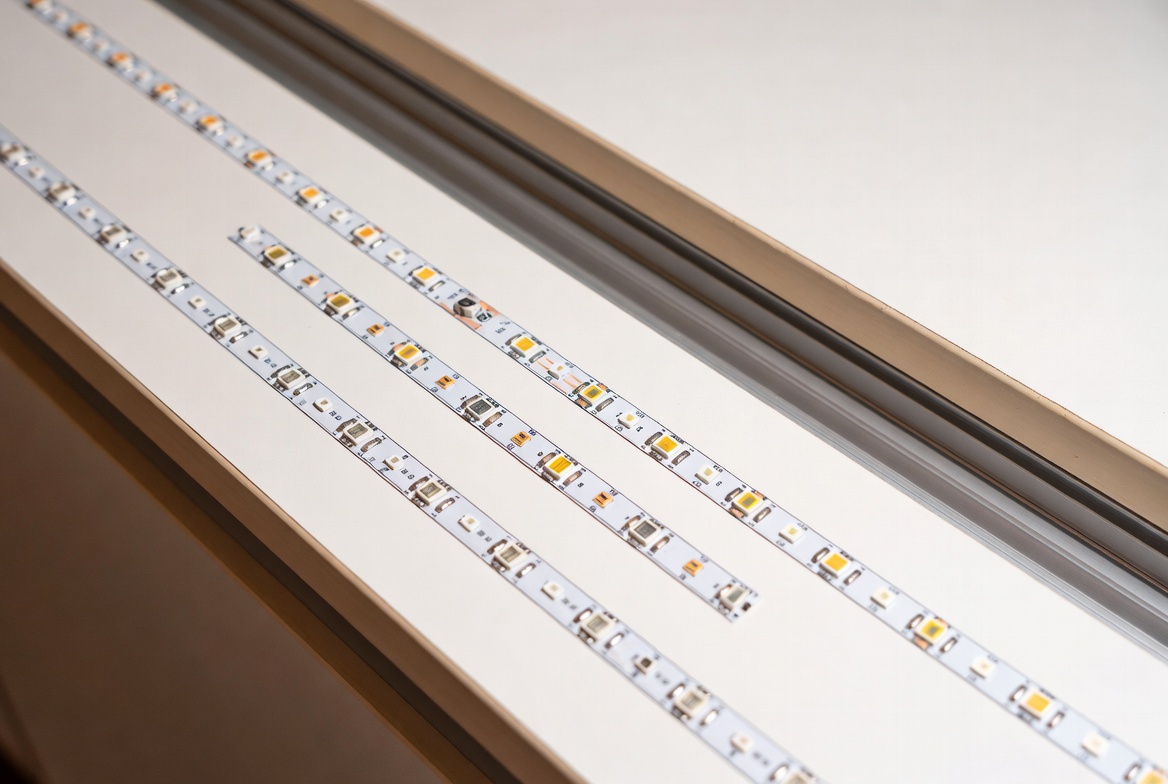
Third, silicone strips can be produced in compact profiles such as ultra‑slim rectangular or rounded shapes. These profiles fit into narrow grooves, edge channels and small gaps within furniture designs, allowing lighting to remain discreet while still effective.
Modern residential projects increasingly treat furniture lighting as a foundational element rather than an afterthought. Instead of relying solely on ceiling fixtures, designers embed strips into cabinets, wardrobes and bed structures to create layered, adaptable illumination.
In kitchens, strips under wall cabinets brighten work surfaces and enhance safety, while inner cabinet runs help users see items stored at the back. Wardrobes benefit from vertical or horizontal strip lines that remove shadows and improve color recognition for clothing.
Bathrooms use strips around mirrors, under floating cabinets and along toe‑kick zones to create soft glow and support night‑time navigation. Bedrooms adopt strips around bed frames, headboards and shelves to build a calm, layered atmosphere without overpowering overhead light.
It is common to mix several strip types in one room. For example, a bedroom might use high‑CRI single‑color strips inside wardrobes, neon‑style silicone strips around the bed platform, and tunable strips in shelving to transition from day to evening lighting.
Professional manufacturers offer extensive customization to ensure that LED strips can be integrated seamlessly into diverse furniture and cabinet designs. This customization helps project teams align lighting precisely with structural and aesthetic requirements.
Dimension adjustments include ultra‑narrow strips for tight spaces, square or rounded profiles for specific grooves, and different emission directions such as side‑emitting or top‑emitting structures. These options allow designers to place light exactly where it is needed.
Electrical and optical specifications can be tailored as well. Voltage, lumen output, color temperature ranges and color‑rendering performance can all be matched to project goals, whether the priority is efficiency, visual comfort or decorative impact.
Functional customization is equally important. Plug‑in solderless designs simplify cut‑to‑length cabinet installations. Sensor‑based activation works well for wardrobes and drawers, while the integration of dimming or smart features supports more advanced scene control across the home.
Reliability is a central concern in furniture lighting because many strips are difficult to access once cabinets and structures are fully assembled. Replacing embedded strips may require partial dismantling, which is disruptive and costly.
To manage this risk, reputable manufacturers invest heavily in reliability testing. Aging tests simulate long periods of continuous operation to screen out early failures. Waterproof and thermal tests assess performance under humidity, temperature cycling and occasional high‑voltage stress.
Color consistency is another important quality factor. Professional projects demand that all strips in a single room or cabinet system match in tone and brightness. Optical measurement and strict binning help ensure that replacement sections or extended runs remain visually uniform.
By focusing on these quality controls, project teams can build lighting systems that stay stable and visually coherent throughout years of everyday use.
Industry research shows that LED strip lighting continues to grow strongly in both residential and commercial sectors, with flexible and smart segments expanding particularly fast. This growth reflects a structural shift from simple decorative use toward integrated, functional applications.
As more homeowners invest in custom wardrobes, kitchen systems and integrated storage, demand for furniture‑oriented flexible strips has increased. These strips must fit complex geometries and support long runs across multiple pieces of furniture.
Smart and tunable white strips are also gaining momentum. Users are increasingly interested in personalizing light scenes, aligning interior lighting with daily routines, and improving comfort through adjustable tone and brightness.
At the same time, manufacturers continue to refine energy efficiency and overall price‑performance. The result is a wider range of high‑quality, low‑energy strip options that make advanced lighting more accessible to global buyers.
A structured approach helps ensure that each strip chosen for a project genuinely fits the intended use. The following checklist can guide homeowners, designers and contractors through the selection process:
1. Define key scenes
List the locations where strips will be installed, such as kitchen cabinets, wardrobes, bathroom vanities, bed frames, display shelves or mixed spaces.
2. Clarify visual objectives
Decide whether each area requires functional task lighting, soft ambient glow, decorative contour lines or dynamic color effects.
3. Set technical requirements
Specify brightness targets, color temperature or RGB/RGBW needs, color‑rendering expectations and any requirements for water resistance or connectivity.
4. Select appropriate strip category
Match each scenario to one or more categories: single‑color, RGB/RGBW, addressable, waterproof, high‑output, tunable white, smart, silicone neon or other specialized formats.
5. Confirm installation constraints
Review furniture dimensions, bending needs, groove sizes, connector accessibility and maintenance possibilities to avoid future complications.
6. Align with quality and testing standards
Choose products that are supported by meaningful aging, waterproof, thermal and color‑consistency testing so that they can perform reliably over the long term.
Taking the time to work through these steps leads to lighting solutions that feel cohesive, comfortable and robust, while remaining in harmony with the design language of modern cabinets and furniture.
Q1: What is the main difference between standard LED strips and silicone LED strips in furniture lighting?
Standard strips usually expose LED dots through a basic cover, while silicone strips use full extrusion bodies that produce uniform, dot‑free lines and offer better resistance to yellowing, cracking and moisture in demanding environments.
Q2: Are RGB or RGBW strips more suitable for bedroom furniture lighting?
RGBW strips tend to be more versatile because they combine vivid color effects with a dedicated white channel. This makes them well suited to both daily functional lighting and occasional mood lighting around bed frames and headboards.
Q3: How important is color rendering for wardrobe and closet LED strip lighting?
High color‑rendering performance is very important in wardrobes and closets. It helps clothing and textiles appear accurate, making color selection easier and reducing visual strain in spaces that may lack natural daylight.
Q4: When should waterproof LED strips be used in home projects?
Waterproof strips are recommended near sinks, stoves, bathroom mirrors and other locations exposed to steam, splashes or frequent cleaning. Encapsulation and sealing help protect the electronics and maintain long‑term performance.
Q5: Why do professionals prefer customized sizes and profiles for cabinet LED strips?
Customized profiles and cut‑to‑length solutions allow strips to fit precisely into narrow grooves, recessed channels and complex furniture geometries. This leads to cleaner installations, better visual integration and easier maintenance.
1. Mingxue Lighting – What are the different types of LED strip light? https://www.mingxueled.com/news/what-are-the-different-types-of-led-strip-light-2/
2. Farwise Lighting – Custom Silicone LED Strip, LED Cabinet Light Manufacturer Profile and Product Categories https://www.farwiselighting.com/
3. Market Growth Reports – LED Strip Market Size | Global Analysis 2035 https://www.marketgrowthreports.com/zh/market-reports/led-strip-market-104140
4. Wise Guy Reports – LED Flexible Strip Market Analysis (2032) https://www.wiseguyreports.com/cn/reports/led-flexible-strip-market
5. Future Market Report – LED带 Market: 12,875.80 million by 2033 | 8.81% CAGR https://www.futuremarketreport.com/zh-CN/industry-report/led-strip-market
6. Signlite LED – Aging Test Report for Potting Silicone LED Strip Lights https://www.signliteled.com/zh/aging-test-report-for-potting-silicone-led-strip-lights/
7. H‑C LED – 5050 Silicone LED Strip Full Analysis: Definition, Specifications and Industrial Application Guide https://www.h-cled.com/hangyedongtai/3959.html
8. Global Info Research – Smart LED Strip Lights Market Overview https://www.globalinforesearch.com.cn/reports/1940283/smart-led-strip-lights
9. Farwise Technology Co., Ltd. – Company Profile and LED Lighting Specialities https://www.linkedin.com/company/farwise-technology-co-ltd-
10. Industry PDF – China LED Strip Industry Status and Development Trend Analysis (2025–2031) https://pdfs.cir.cn/JiXieDianZi/09/LED%E7%81%AF%E5%B8%A6%E8%A1%8C%E4%B8%9A%E5%8F%91%E5%B1%95%E8%B6%8B%E5%8A%BF_2900909.pdf