


Tel / WhatsApp
+86-13790241903

Views: 248 Author: Farwise Lighting Publish Time: 2026-07-23 Origin: Site


Content Menu
● Introduction to Linear LED Furniture Lighting
● LED Tape Lights vs LED Strip Lights: What's the Difference?
● Structural Differences in Detail
>> Flexibility and Bend Radius
>> Materials, Encapsulation, and Profiles
● Performance Comparison: Brightness, Efficiency, and Heat
>> Light Output and Distribution
>> Thermal Management and Lifetime
● Installation Realities in Furniture Projects
>> LED Tape Lights in Cabinets and Wardrobes
>> LED Strip Lights in Task and Feature Lighting
● Silicone LED Strip Lights: Bridging Flexibility and Durability
● OEM/ODM Perspectives on Tape vs Strip
● Practical Selection Guide for Projects
>> Step 1 – Define the Lighting Role
>> Step 2 – Analyze Space and Geometry
>> Step 3 – Understand Environmental Conditions
>> Step 4 – Plan for Lifetime and Maintenance
● Application: Cabinets, Wardrobes, Bathrooms, and Beds
>> Cabinets and Kitchen Furniture
>> Bathroom Vanities and Mirrors
● Emerging Trends in Linear Furniture Lighting
● Summary and Strategic Outlook
● FAQ
Discovering the real difference between LED tape lights and LED strip lights can transform how you design and deliver lighting solutions for modern furniture and interior projects. When you look beyond the similar form factor, each option supports very different roles in cabinets, wardrobes, bathroom vanities, bedrooms, and whole‑home fit‑outs.
Linear LED lighting has become the backbone of contemporary residential and commercial interiors, especially in built‑in furniture and custom millwork. Thoughtful use of compact, flexible light sources allows designers to create clean visual lines, highlight materials, and improve everyday usability without cluttering spaces with bulky fixtures.
Manufacturers specializing in furniture lighting have moved from simple single‑product offerings to complete, systemized solutions. These systems are fine‑tuned for key scenes such as kitchen cabinets, wardrobes, bathroom furniture, and bed frames, combining various types of LED tape and strip lights to achieve the desired performance and aesthetic.
When people talk about LED tape lights and LED strip lights, the terms are often used interchangeably. In reality, there are important structural and performance distinctions that matter a lot once you move from casual decorative use to serious residential or commercial projects.
Understanding these differences is essential for furniture manufacturers, interior designers, and project owners who want lighting that not only looks good on day one, but also remains reliable, comfortable, and visually coherent over the long term.
LED tape lights are ultra‑slim, flexible linear lighting products built on a narrow circuit board with surface‑mounted LEDs and an adhesive backing. They are designed for discreet accent and ambient illumination, especially in tight or concealed locations.
In practice, LED tape lights are supplied on reels and can be cut to length at pre‑defined cut points. Installers peel off the backing and adhere the tape directly to compatible surfaces such as the underside of cabinets, inside wardrobes, or hidden recesses in furniture and architecture. This makes tape lights ideal wherever the goal is to see the glow, not the hardware.
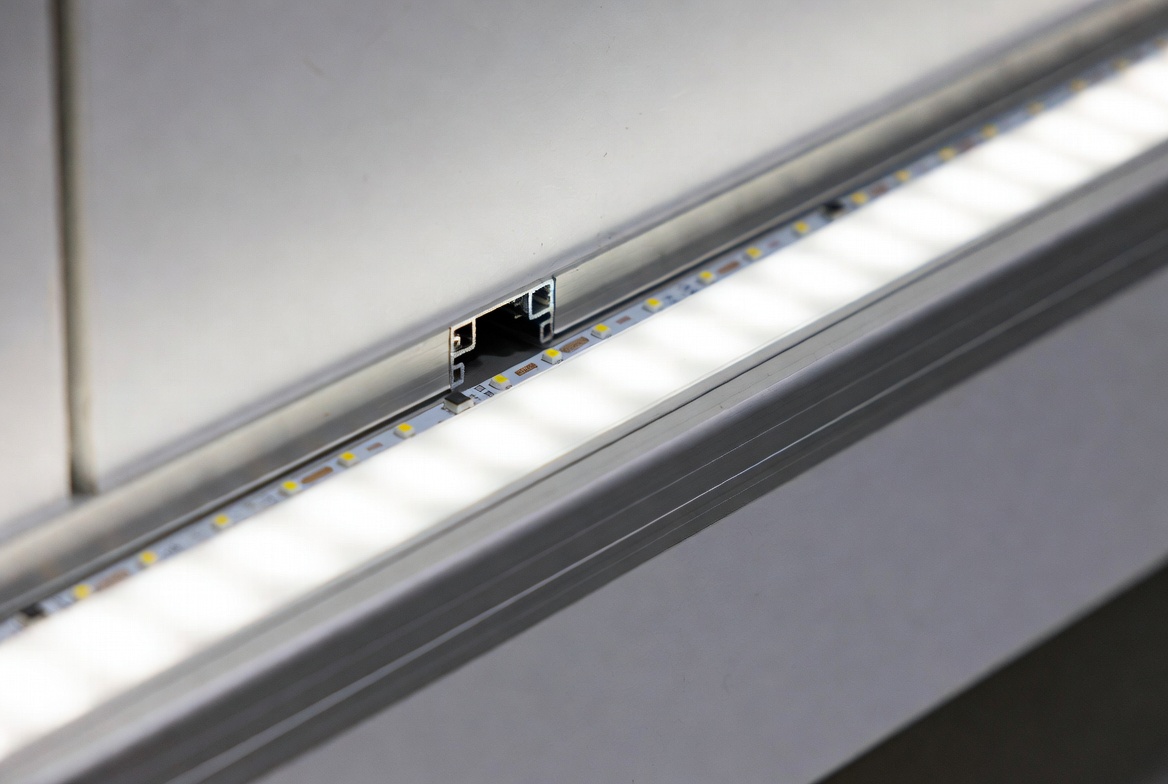
LED strip lights, in a more precise professional sense, refer to linear lighting systems that are structurally more robust. They often feature rigid or semi‑rigid profiles, integrated housings, or thicker encapsulation. While they may still be flexible in some configurations, the emphasis is more on mechanical strength, thermal management, and light output.
These strip systems are commonly built into aluminum channels or durable plastics with diffusers and mounting accessories. They support brighter and more uniform illumination, making them well suited to general and task lighting over work surfaces, along shelves, and in demanding commercial or residential zones that experience frequent use.
LED tape lights provide excellent flexibility thanks to their thin circuit board and minimal casing. They can bend around gentle curves and navigate tight spaces, which is valuable in complex millwork, furniture edges, and decorative recesses. This allows lighting to follow the geometry of the furniture without forcing design compromises.
LED strip lights, especially rigid bar‑type systems, usually have limited or no bending capability. Their strength lies in maintaining straight, stable lines of light over longer runs. This makes them ideal for situations where the design calls for clear, unbroken linear highlights or continuous task illumination along straight edges.
Basic LED tape lights may expose the circuit board or use a thin protective layer. They are typically intended for dry, protected, indoor locations and recesses where mechanical impact and moisture are minimal.
By contrast, advanced LED strip systems use more substantial housings. Aluminum channels act both as structural elements and heat sinks, while diffusers and encapsulation protect the LEDs and soften the light. Many strip configurations are also available with higher protection ratings, making them suitable for use near water, in bathrooms, kitchens, and other challenging environments.
LED strip lights often deliver higher lumen output per meter than simple tape products. With robust thermal management and efficient optics, they can supply bright, even light that is comfortable for tasks such as cooking, working, or reading.
LED tape lights usually focus on softer, more intimate illumination. They excel at adding depth, highlighting materials, and generating atmosphere without overpowering the space. When installed behind diffusers or in narrow slots, tape lights create continuous lines of light that enhance perceived quality without drawing attention to the fixture itself.
Thermal behavior is a key factor in lifetime and reliability. Strip lights installed in aluminum profiles or robust housings dissipate heat more effectively, allowing higher drive currents and longer service life under demanding usage.
Tape lights mounted on thermally poor surfaces or in enclosed spaces without adequate heat sinking may need more conservative operation. Thoughtful installation, including appropriate substrates and power settings, helps maintain performance and reduces the risk of early lumen depreciation or color shift.
In cabinets and wardrobes, LED tape lights are widely used for subtle accent and internal illumination. Typical applications include:
- Highlighting shelves and vertical dividers.
- Creating soft lines of light inside compartments.
- Providing gentle visibility for clothes, tableware, or display items.
Their peel‑and‑stick installation makes them practical during furniture assembly and retrofits. With proper connectors and drivers, tape lights integrate cleanly into cabinet interiors without requiring major structural changes.
Rigid or encapsulated strip lights take the lead wherever stronger mechanical support and higher light levels are necessary. Common uses include:
- Under‑cabinet lighting for kitchen worktops.
- Linear lighting along retail shelving or display counters.
- Integrated task lighting in office desks, workbenches, and preparation areas.
Mounted in profiles or dedicated channels, strip lights provide clean visual lines and robust installation. They can be serviced or replaced in modules, which is important for long‑term projects and large portfolios of furniture.

Silicone LED strip lights are an important development that sits between traditional tape and conventional strip systems. By encapsulating flexible strips in silicone, manufacturers can combine bendability with strengthened protection and refined appearance.
Silicone offers impact resistance, environmental protection, and visual uniformity. It supports smooth, dot‑free light along visible edges and surfaces, making it attractive for high‑end cabinets, wardrobes, bathroom furniture, and bed structures where the light source is deliberately visible as part of the design.
In OEM and ODM collaborations, the distinction between tape and strip lights becomes part of a wider system design conversation. Rather than treating these products as isolated items, manufacturers and brand partners address multiple parameters at once:
- Lengths, cut points, and connector systems tailored to specific cabinet series.
- Color temperature, color rendering, and color consistency adapted to regional tastes.
- Profiles, finishes, and optical elements that align with brand aesthetics and installation methods.
The result is a coordinated furniture lighting platform. Tape lights may handle accent and internal zones, while strip or silicone systems take care of task and feature lighting. All components share a common visual language and electrical architecture, simplifying manufacturing, installation, and future updates.
A structured approach helps designers and specifiers decide when to choose LED tape lights and when to opt for LED strip lights.
Start by clarifying whether the primary purpose is ambient and decorative or functional and task‑oriented. For subtle atmosphere and material highlighting, LED tape lights are usually appropriate. For clear visibility and strong illuminance on working surfaces, strip systems are often the better choice.
Consider the furniture geometry. Complex shapes, curves, and narrow recesses favor flexible tape or silicone strips. Straight, visible runs and longer lines of light can benefit from rigid strip profiles that maintain alignment and appearance over time.
Projects in bathrooms, kitchens, near water sources, or semi‑outdoor areas require special attention to protection and materials. Encapsulated strip lights and silicone systems with suitable protection ratings support safe, durable operation. Dry, protected interior zones can often rely on simpler tape solutions.
In high‑traffic sites and commercial environments, ease of maintenance and replacement matters. Modular strip systems in channels or profiles can be serviced relatively quickly. Residential accent lines, especially those integrated during furniture production, can use tape lights designed primarily for long‑term, fixed installation.
Under‑cabinet lighting over kitchen worktops demands bright, uniform illumination and robust mounting. Here, strip lights in aluminum profiles often take precedence. Inside cabinets, especially glass or open units, tape lights can add depth and highlight items without producing glare.
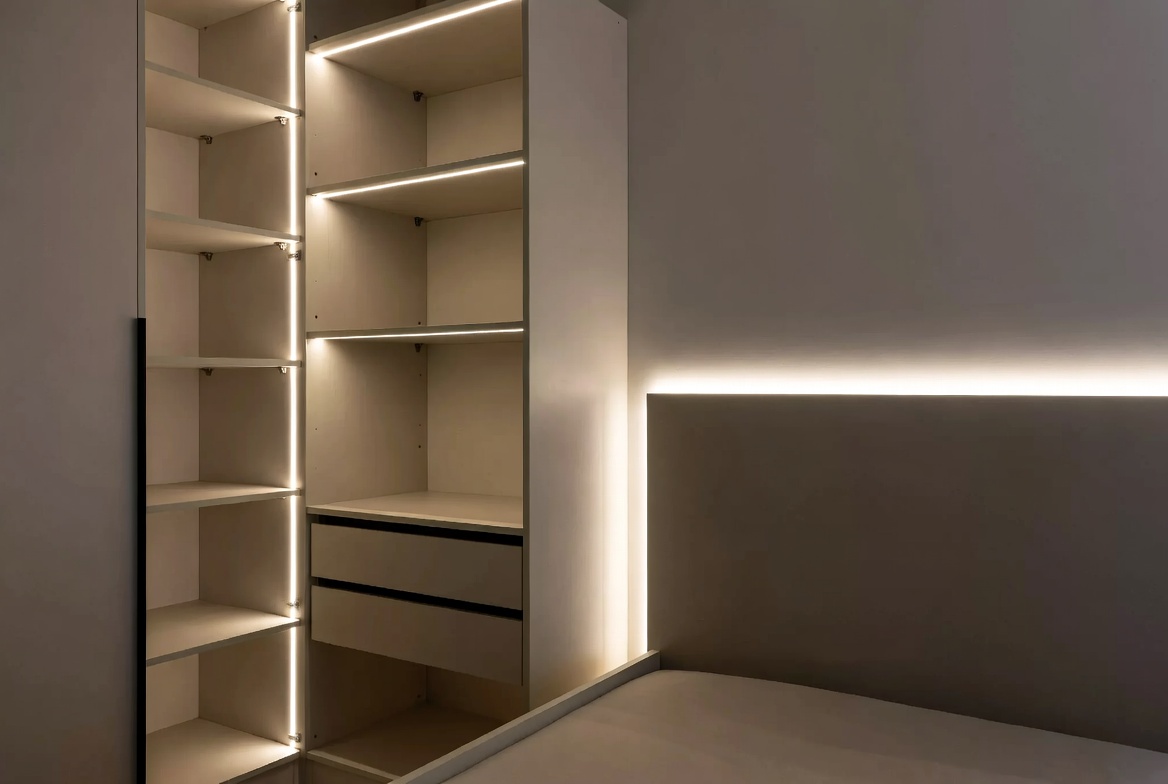
Wardrobes benefit from a combination of internal accent and practical lighting. Tape lights can run along interior edges and shelves, while strip or silicone systems can be integrated into the main opening or hanging zones to make clothing selection easier and more comfortable.
For vanities and mirrors, integrated linear lighting has to handle humidity and potential splashes while controlling glare. Encapsulated strip or silicone solutions mounted around the mirror or within the cabinet structure are commonly used. Concealed tape lights may supplement these at toe‑kicks or behind shelving to create a layered, spa‑like atmosphere.
In beds and associated furniture, lighting tends to favor comfort and subtlety. Tape lights are often placed under the bed frame, behind headboards, or along recessed channels to produce calming visual cues. Silicone strips can be used where the light line itself becomes a design feature, offering continuous and visually refined effects.
New developments in linear LED lighting are influencing how professionals think about tape and strip systems. High color rendering, smooth dimming, and consistent color performance across large installations are becoming baseline requirements rather than optional extras.
At the same time, the rise of flexible silicone systems and coordinated profiles is reducing the need to choose strictly between classic tape and rigid strip formats. Hybrid solutions provide both flexibility and strength, allowing designers to focus more on application and user experience than on product labels.
Manufacturers with deep experience in furniture lighting are increasingly offering full lighting platforms instead of single items. With consistent hardware, connectors, and optics across cabinets, wardrobes, bathrooms, and bedrooms, projects can achieve visual and functional coherence in every room.
LED tape lights and LED strip lights each bring distinct strengths to contemporary furniture and interior projects. Tape lights contribute flexibility and subtlety, while strip systems supply structure and brightness. Silicone‑encapsulated designs bridge this gap and open new possibilities for integrated, visible lines of light in high‑end environments.
By aligning lighting roles, geometry, environmental conditions, and long‑term maintenance needs, it becomes possible to design systems that feel natural, improve daily life, and support consistent quality across diverse applications. This mindset turns linear lighting from a decorative afterthought into a core element of modern furniture and interior design.
1. Are LED tape lights suitable for all cabinet applications?
LED tape lights are ideal for many cabinet interiors and accent lines, but they may not be the best option for high‑intensity task lighting on worktops or areas with frequent moisture exposure. In such cases, more robust strip or silicone systems are usually preferred.
2. Do LED strip lights always provide more brightness than tape lights?
LED strip lights often deliver higher brightness because they are designed with better heat management and structural support. However, modern tape lights can also be quite powerful when correctly installed and cooled, so the choice depends on the specific project requirements.
3. Can flexible silicone LED strips replace traditional tape lights?
Flexible silicone strips can replace tape lights in many situations, especially where environmental protection, impact resistance, and a refined appearance are important. They combine flexibility with durability, making them suitable for both decorative and functional lighting roles.
4. What should be considered when integrating lighting into wardrobes?
Wardrobe lighting should balance visual comfort with practicality. Internal tape lines can highlight shelves and compartments, while brighter strip or silicone modules at the main opening can make clothing selection easier without causing glare or uneven shadows.
5. How do linear lighting systems contribute to bedroom comfort?
In bedrooms, carefully placed tape and strip lights can create gentle visual guidance at night, emphasize architectural details, and support reading or relaxing without harsh contrast. Using dimmable, warm‑tone linear systems under beds, behind headboards, and within furniture helps maintain a calm, comfortable atmosphere.
1. AntLux. "What is the Difference Between LED Tape Light and Strip Light?" https://www.antlux.com/blogs/news/what-is-the-difference-between-led-tape-light-and-strip-light
2. Approved Business. "What's the difference between LED strip lighting and LED tape?" https://www.approvedbusiness.co.uk/articles/16475
3. SIRS‑e. "The difference between LED tape lights and strip lights." https://sirs-e.com/general/the-difference-between-led-tape-lights-and-strip-lights/
4. ADLED. "LED Tape Lights vs LED Strip Lights: What's the Difference?" https://www.adledlights.com/led-tape-lights-vs-led-strip-lights-what-is-the-difference.html
5. K2 Lighting. "Revolutionize Your Lighting with Durable Silicone LED Light Strips." https://k2lighting.com/blogs/news/revolutionize-your-lighting-with-durable-silicone-led-light-strips
6. Farwise Lighting – Official Website. https://www.farwiselighting.com/
7. Sparks Direct. "LED tape and LED strips: what are the types, uses, and do you really need them?" https://www.sparksdirect.co.uk/blog/led-tape-strips-types-uses-do-you-really-need-them
8. Signlite LED. "LED Tape Lights Vs LED Strip Lights: What's The Difference?" https://www.signliteled.com/led-tape-lights-vs-led-strip-lights-whats-the-difference/
9. Wikipedia. "LED strip light." https://en.wikipedia.org/wiki/LED_strip_light