


Tel / WhatsApp
+86-13790241903

Views: 283 Author: Farwise Lighting Publish Time: 2026-07-24 Origin: Site


Content Menu
● What Makes COB LED Strip Lights Unique?
● What Defines CSP LED Strip Lights?
● Performance Comparison Between COB and CSP LED Strip Lights
>> Optical Quality and Visual Comfort
>> Color Rendering and Efficiency
>> Beam Angle and Spatial Experience
>> Mechanical Durability and Cutting Flexibility
● COB LED Strip Lights in Furniture and Interior Projects
>> Kitchen Cabinets and Under‑Counter Lighting
>> Wardrobes and Walk‑In Closets
>> Bedroom Furniture and Ambient Lines
● CSP LED Strip Lights in Furniture and Architectural Details
>> Compact Shelving and Display Niches
>> Bathroom Cabinets and Mirror Frames
>> Long‑Run Architectural Lines
● Combining COB and CSP LED Strip Lights in One Project
>> Layered Lighting in Residential Interiors
>> Furniture Systems with Multiple Lighting Roles
● Practical Guidelines for Selecting COB vs CSP LED Strip Lights
● Building Better Furniture Lighting with COB and CSP Technologies
● FAQs
As furniture lighting has evolved from simple decorative accents into core functional systems, the choice of LED strip technology has started to shape both user experience and project performance. COB and CSP LED strips each solve specific design challenges, and understanding their behavior in real installations is essential for creating coherent lighting in kitchens, wardrobes, bathrooms, and bedrooms.
COB (Chip on Board) LED strips mount many bare LED chips directly onto a flexible PCB and encapsulate them under a continuous layer of silicone mixed with phosphor. Instead of seeing discrete points, the user sees a single uniform luminous surface that appears as a clean line of light.
Because the chips share a common optical and thermal environment under one coating, COB strips create very soft, dot‑free illumination that remains comfortable even at higher output levels. This continuous surface helps reduce harsh reflections on glossy materials and prevents the "spotted" look that is often associated with traditional point‑source strips.
In practical projects, COB strips are widely preferred where designers want to "see the light but not the lamp". When installed in shallow profiles or open recesses, the absence of visible dots supports minimalist furniture design and premium interior aesthetics. As a result, COB configurations are frequently selected for linear ambient lighting in high‑end residential spaces, hotel furniture, and gallery environments.

CSP (Chip Scale Package) LED strips start with LED chips that are packaged at wafer level so that the final package size remains close to the original chip dimensions. Each chip‑scale package integrates electrical pads, optical structures, and protective layers into an extremely compact footprint.
These miniature packages are then soldered onto the PCB as dense point sources. Each point has built‑in reflective structures and is tested individually for electrical and chromatic parameters. This leads to very high luminous efficacy and precise color consistency along the length of the strip.
Because CSP strips are composed of many compact point sources, they retain a granular appearance at short distances, although the points are densely packed. This point‑source nature is valuable when projects require more focused beams, stronger highlights, or higher center‑beam intensity. CSP strips are therefore often chosen for task zones, accent lines, and compact fixtures where tight control over light distribution matters more than perfectly uniform appearance.
COB strips are designed to produce an almost perfectly continuous luminous band. The silicone‑phosphor layer merges emissions from many chips and softens the transitions, resulting in low glare and highly uniform brightness along the entire strip length. Users typically perceive the light as gentle and enveloping rather than harsh or spotty.
CSP strips, on the other hand, provide more pronounced point sources. They can still be comfortable when correctly diffused, but the underlying optical structure makes them better suited for applications where designers want to emphasize edges, outlines, and small details. In narrow compartments or around decorative elements, CSP can create crisp highlights that enhance visual contrast.
For furniture and interior lighting, color rendering directly affects how materials, fabrics, and skin tones appear. COB strips are commonly optimized for high color rendering indices, making them a strong choice for wardrobes, kitchen cabinets, and display shelves where color accuracy is very important. The larger coverage area and shared phosphor environment contribute to balanced, natural color perception.
CSP strips excel in luminous efficacy. Their chip‑scale construction and reflective micro‑structures help direct more light forward, achieving impressive lumens‑per‑watt figures. This makes CSP particularly attractive for long‑run installations and energy‑sensitive projects where operating cost and thermal load must be carefully controlled. At the same time, careful binning during manufacturing helps maintain tight color consistency across long stretches of strip light.
COB LED strips usually deliver very wide beam angles, often approaching 180 degrees. This wide flood effect is ideal for indirect light in coves, recesses, and wall‑washing applications. The result is smooth transitions from bright surfaces to adjacent zones and an overall sense of spatial depth and comfort.
CSP LED strips tend to provide narrower beams in the range commonly associated with point sources. This allows designers to direct light more precisely, create defined highlights, and avoid unnecessary spill in compact luminaires or tight architectural details. In small furniture compartments, narrower beams can reduce unwanted reflections and help shape the visual rhythm of the interior.
COB strips bond chips directly to the PCB and lock them under a continuous coating. This creates a stable module but generally follows standard cutting intervals defined by the chip groups and circuit layout. Once cut, repair work requires more attention, and local failures may influence the appearance of the continuous luminous surface.
CSP strips rely on chip‑scale packages without traditional frames or fragile gold wires. The chip connects directly to the pads, which reduces vulnerability to bending and mechanical stress during installation. Their compact size enables very short cutting units, often just a few centimeters, making it easier to match exact lengths in customized furniture and complex architectural shapes.
In kitchen environments, under‑cabinet lighting must balance task performance and visual comfort. COB strips integrated into aluminum or silicone profiles beneath wall cabinets can deliver soft yet sufficient illumination across countertops. The continuous light reduces shadows and avoids visible dots on reflective surfaces such as polished stone or glossy backsplashes.
Because COB strips create wide, uniform beams, they support both food preparation and everyday use without drawing attention to the hardware. Their high color rendering helps ingredients and utensils appear natural, while the smooth visual impression enhances the perceived quality of the kitchen furnishings.
Wardrobes and walk‑in closets require lighting that allows users to easily distinguish colors and fabrics. COB strips mounted vertically along door frames or horizontally along shelves can provide even light when the doors open, ensuring that clothing items are well lit from multiple angles.
When integrated into slim profiles with silicone diffusers, COB strips help create a clean, high‑end look inside closets. The absence of visible points reduces strain on the eyes when users look directly at garments, and the overall effect supports a feeling of order and clarity in the storage space.
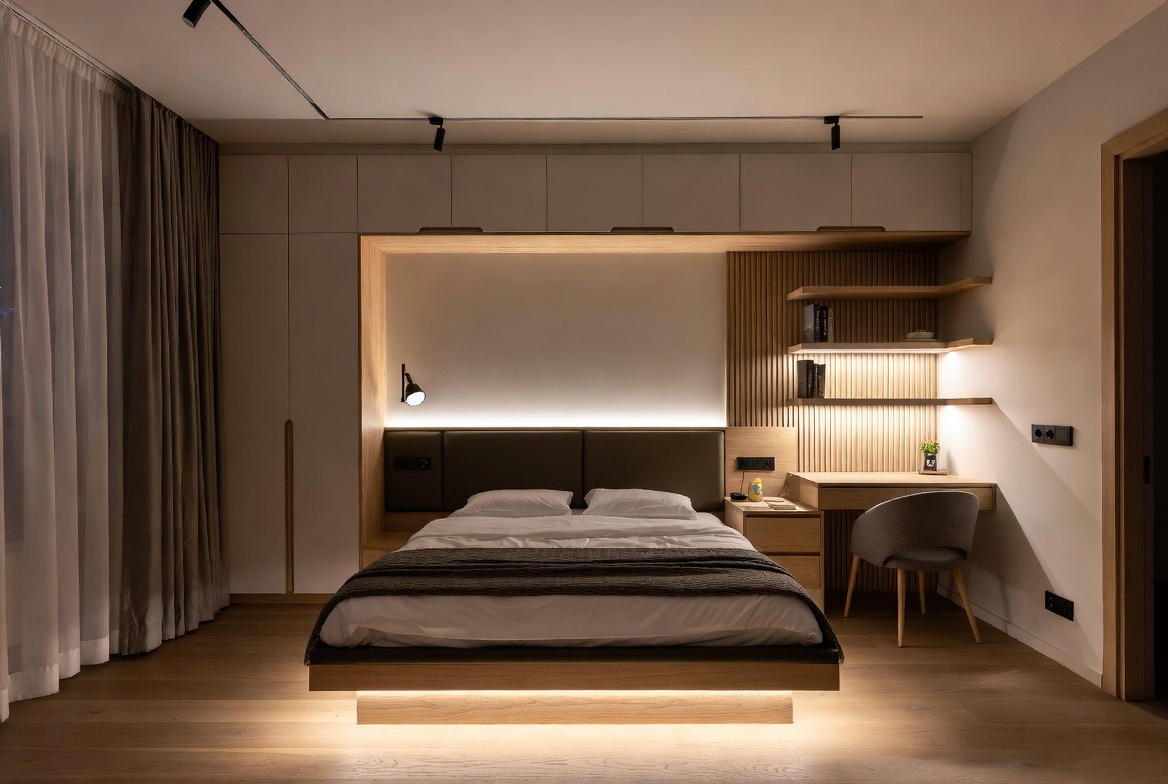
In bedrooms, lighting should promote rest and relaxation while still supporting everyday activities. COB strips are commonly used in bed frames, headboard recesses, and ceiling coves to create soft ambient lines that do not interfere with sleep or relaxation.
Continuous, dot‑free lines of light around bed edges or behind panels can define the room's geometry without producing harsh shadows. When paired with suitable dimming, COB strips become a versatile tool for creating different scenes—from gentle night illumination to more active daytime use—without changing the visual character of the furniture.
CSP strips are particularly valuable in narrow shelves and compact display niches. Their dense point‑source structure and high efficiency allow designers to integrate lighting into very small cross‑sections while still delivering strong, focused illumination on objects.
In retail displays, showcases, or decorative furniture elements, CSP strips can highlight products, artwork, or collectibles with precise beam control. The ability to cut strips at ultra‑short intervals enables installers to follow complex shapes, corners, and custom dimensions without leaving dark gaps.
Bathroom environments often involve limited space and highly reflective surfaces. CSP strips can be installed in slim channels around mirrors, under shelves, or inside cabinets to provide functional, high‑contrast lighting for grooming and storage.
Their compact packages work well with narrow profiles and integrated control modules. When correctly positioned, CSP strips can emphasize edges and create a visually sharp outline around mirrors or cabinet doors, supporting both function and style.
In corridors, staircases, and perimeter lines around rooms, energy performance becomes important because the lighting may run for long periods. CSP strips are strong candidates for these situations thanks to their high lumens‑per‑watt and robust mechanical characteristics.
Designers can use CSP strips in slim architectural channels to create continuous lines along walls, ceilings, or handrails. Short cutting intervals make it possible to adapt the strips on‑site to exact dimensions, while consistent color and brightness contribute to a unified visual experience across the entire space.
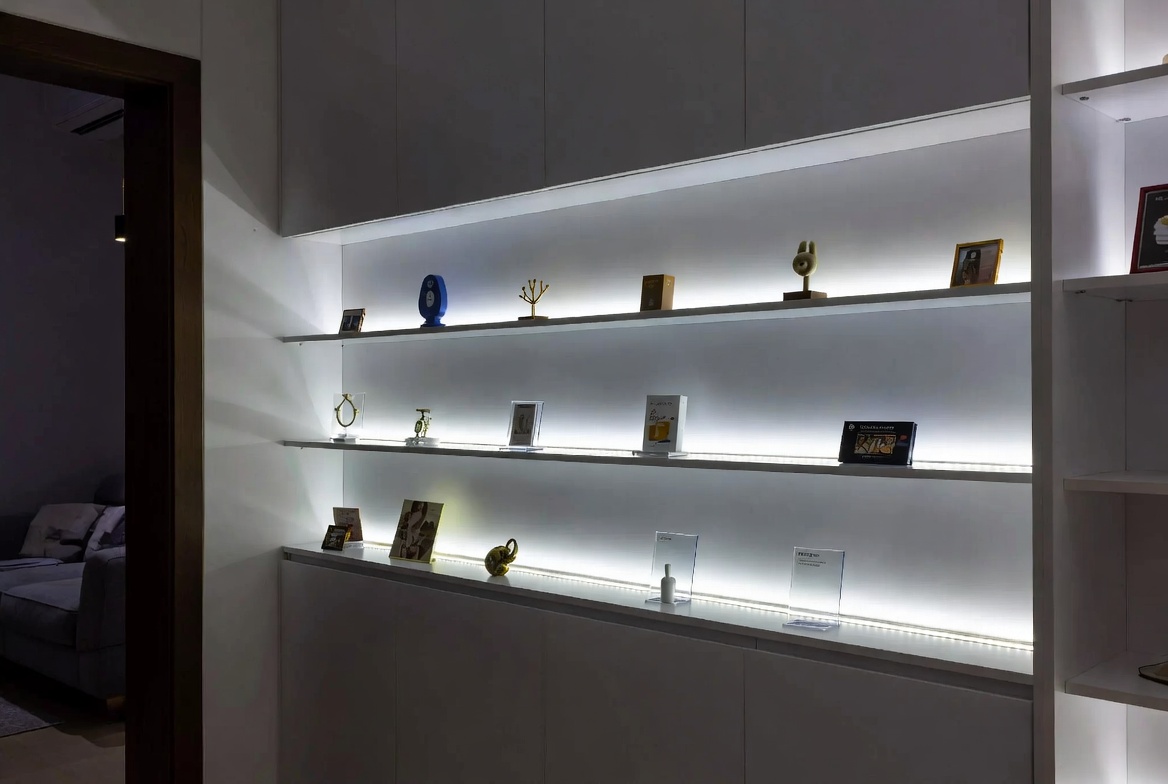
A mature interior lighting concept usually builds layered light: ambient, task, and accent. COB and CSP strips can work together to support this structure. For example, COB strips may provide soft ambient light in ceiling coves and furniture recesses, while CSP strips deliver sharper task lighting for worktops, desks, or reading areas.
By mixing continuous COB lines with targeted CSP accents, designers can fine‑tune the mood of each zone without disrupting the overall aesthetic. This approach allows one room to feel harmonious yet adaptable, meeting different daily needs through the subtle interplay of light quality and direction.
Modern furniture often integrates several lighting roles into a single piece. A large wardrobe might require ambient lighting to gently illuminate the entire interior, task lighting to highlight specific compartments, and accent lighting to emphasize design features.
In such systems, COB strips can serve as the main ambient layer inside cabinets and along structural elements, while CSP strips handle detailed tasks such as drawer illumination, shoe racks, or accessory compartments. Matching color temperature and control settings across both technologies ensures that users experience the furniture as one coherent system rather than a collection of separate light sources.
Designers, manufacturers, and installers can follow several practical guidelines when choosing between COB and CSP strips for furniture and interior projects:
- Use COB strips when visual comfort, continuous lines, and a soft ambient feel are the primary goals in residential and hospitality spaces.
- Select CSP strips when installations must fit into ultra‑slim profiles, follow complex shapes, or adhere to strict efficiency targets over long distances.
- In wardrobes, kitchens, and display cabinets, prioritize high‑CRI COB strips in zones where users directly assess colors and materials.
- Reserve CSP strips for compact compartments, detailed task areas, and accent features where precise beams and strong highlights are needed.
- Consider combining both technologies in layered lighting designs, using COB for general ambience and CSP for specific tasks and decorative emphasis.
With these guidelines, lighting decisions can align more closely with real user needs, installation constraints, and long‑term performance expectations.
COB and CSP LED strip lights represent two powerful approaches to modern linear lighting. COB strips offer continuous, dot‑free illumination that excels in ambient and comfort‑oriented applications, making them ideal for premium furniture and interior projects. CSP strips provide compact, efficient point‑source lighting that supports precise beam control, short cutting intervals, and robust performance in constrained spaces.
Instead of asking which technology is universally better, successful projects focus on matching each option to specific roles within the space. By understanding the strengths of COB and CSP strips and learning how to combine them intelligently, designers and manufacturers can create furniture and interiors that feel visually coherent, highly functional, and welcoming over the long term.
Q1: Why do COB LED strips appear smoother than traditional point‑source strips?
COB strips encapsulate many chips under one continuous silicone‑phosphor layer, blending individual emission points into a single luminous surface and removing visible dots, even in shallow or open profiles.
Q2: When should CSP LED strips be used in wardrobes and closets?
CSP strips are ideal in wardrobes and closets when the layout involves irregular dimensions, tight profiles, or complex shapes, because ultra‑short cutting intervals and compact packages simplify precise length matching.
Q3: How important is color rendering when choosing LED strips for furniture lighting?
Color rendering is crucial in furniture lighting because it affects how fabrics, finishes, and accessories appear. High‑CRI COB strips are often preferred in wardrobes, cabinets, and display units where users evaluate colors directly.
Q4: Are CSP LED strips limited to technical or high‑end projects?
CSP strips are increasingly used in mainstream furniture and interior lighting wherever compact form factors, energy performance, and precise optical control are important, not only in specialized technical projects.
Q5: Can COB and CSP LED strips be used together in the same piece of furniture?
Yes, many successful designs combine COB and CSP strips in one piece of furniture or room, using COB for soft ambient lighting and CSP for focused task or accent lighting, achieving both comfort and precision.
1. Mingxue Lighting – "COB vs. CSP LED Strips: Key Differences and Application Advantages"
[https://www.mingxueled.com/news/cob-vs-csp-led-strips-key-differences-and-application-advantages/]
2. Farwise Technology Co., Ltd. – Company information and product portfolio for silicone LED strips and furniture lighting solutions
[https://www.farwiselighting.com/]
3. PCBMay – "COB VS CSP LED: What's the Real Difference?"
[https://www.pcbmay.com/cob-vs-csp-led/]
4. PCBONLINE – "COB vs CSP LED: Their Difference and Applications"
[https://www.pcbonline.com/blog/cob-vs-csp-led.html]
5. NSE LED – "COB vs CSP LED: Illuminating the Differences"
[https://www.nseled.com/cob-vs-csp-led/]
6. NeonFlex – "Understanding SMD, COB, and CSP in the LED Industry"
[https://www.neonflex.ca/blog/knoledge-base-2/understanding-smd-cob-and-csp-in-the-led-industry-1]