
Views: 210 Author: Farwise Lighting Publish Time: 2026-08-13 Origin: Site


Content Menu
● Storefront Neon Lighting vs Backlit Signage
>> Which Option Gets More Attention?
>> Brand Fit Matters More Than Trend
● Customer Attraction Beyond Brightness
>> Visibility Is About Contrast and Readability
>> The "Nighttime Trust" Effect
>> Energy, Durability, and Service Access
● How to Choose the Right Storefront Lighting
>> Start With the Customer Path
>> Use a Hybrid Signage Strategy
>> Avoid These Common Mistakes
>> A Practical Supplier Checklist
>> Is storefront neon lighting better than backlit signage?
>> Are LED neon signs suitable for commercial storefronts?
>> Does backlit signage work during the daytime?
>> Can I use neon-style lighting and backlit letters together?
>> What businesses benefit most from storefront neon lighting?
>> What businesses benefit most from backlit signage?
>> How can I make an illuminated storefront feel more premium?
For a physical store, the sign is often the first brand interaction a passerby receives. Storefront neon lighting and backlit signage can both create stronger curb appeal, improve after-dark recognition, and make a business easier to find—but they persuade customers in different ways.
After working with lighting projects across retail, hospitality, residential, and commercial environments, one lesson is consistent: the sign that attracts more customers is not automatically the brightest one. The better choice depends on viewing distance, brand personality, local surroundings, operating hours, façade materials, and the action you want people to take.
This guide compares storefront neon lighting vs backlit signage from a practical buyer's perspective. It also explains how architects, shopfitters, sign makers, and business owners can build a more effective illuminated storefront using flexible LED lighting solutions.

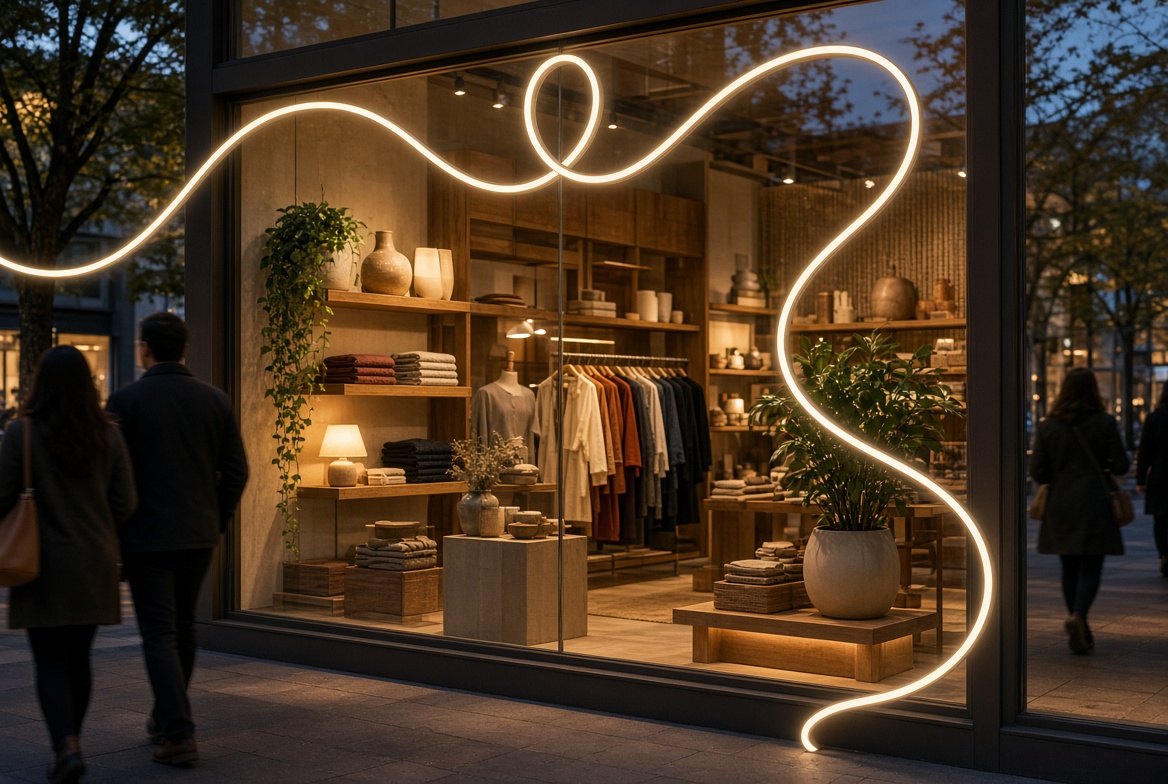
Storefront neon lighting traditionally refers to illuminated lettering, symbols, outlines, or graphic elements made with glowing neon tubes. Today, many businesses choose LED neon-style lighting instead of traditional glass neon because it can reproduce the familiar continuous glow while offering more design flexibility.
Neon-style storefront lighting is highly expressive. It can frame a window, display a slogan, outline an entrance, or create a recognizable visual signature. A café may use warm handwritten lettering. A fashion boutique may use a sharp geometric outline. A beauty store may create a photo-friendly statement wall visible from the street.
Its strongest advantage is emotional impact. Neon does more than identify a location—it creates a mood before customers enter.
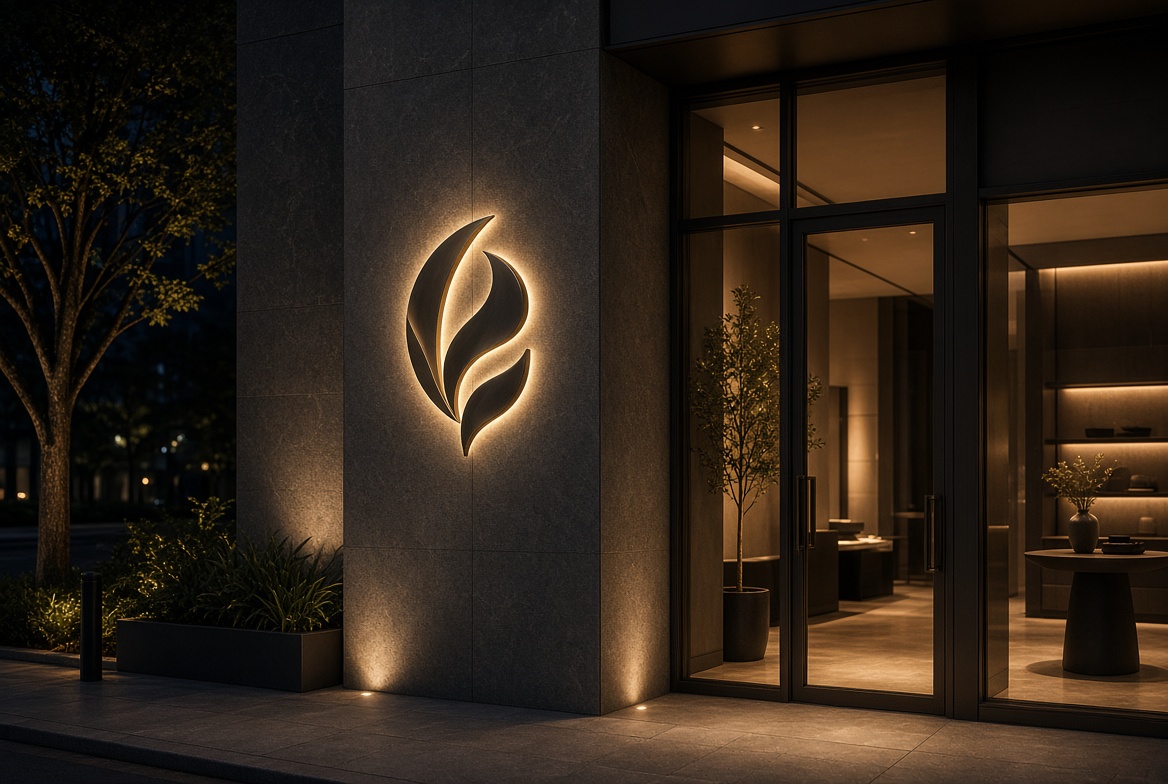
Backlit signage uses a concealed light source behind letters, logos, panels, or graphics. The lighting creates a halo effect, illuminated face, or glowing outline that separates the sign from the building surface.
This format is usually cleaner and more architectural than neon-style lighting. It is commonly selected for premium retail stores, corporate offices, clinics, hotels, shopping malls, showrooms, and professional service brands.
A well-designed backlit sign improves legibility at a distance. It can make a logo feel more permanent, refined, and trustworthy, particularly when the storefront needs to communicate professionalism rather than playfulness.
Neither option wins in every retail environment. The best choice comes from matching the lighting effect to the customer journey.
| Decision Factor | Storefront Neon Lighting | Backlit Signage |
|---|---|---|
| First visual impression | Energetic, artistic, memorable | Polished, established, premium |
| Best viewing range | Close to medium distance | Medium to long distance |
| Brand personality | Youthful, expressive, social, lifestyle-driven | Professional, minimalist, luxury, corporate |
| Design freedom | Excellent for curves, outlines, icons, and custom phrases | Excellent for logos, letter sets, and clean brand marks |
| Daytime appearance | May need thoughtful integration with the façade | Usually maintains a strong structured appearance |
| Nighttime effect | Creates atmosphere and emotional pull | Creates clarity, depth, and strong recognition |
| Typical placement | Windows, entrances, feature walls, menu zones | Building façades, reception areas, wayfinding, main brand signs |
| Maintenance planning | Depends on material quality and installation access | Depends on letter construction, mounting, and driver access |
For immediate emotional attention, neon-style lighting often has the advantage. Its visible glow, color possibilities, and continuous light line can interrupt visual clutter on busy streets. This is especially useful for restaurants, bars, cafés, salons, gaming stores, pop-up shops, and lifestyle brands.
For recognition and perceived credibility, backlit signage often performs better. A clean halo-lit logo can look highly intentional on stone, metal, wood, glass, or textured wall surfaces. It gives customers a clear visual anchor, even when they are driving past or approaching from across a parking area.
The better question is not, "Which sign is more eye-catching?" It is: What should customers feel and do when they see it?
- Choose neon-style lighting when the goal is to make people pause, photograph, enter, or remember a distinctive phrase.
- Choose backlit signage when the goal is to make the business easy to identify, easy to trust, and easy to locate.
- Combine both when the storefront needs brand authority from a main sign and personality from an entrance or window feature.
A strong sign should make sense before a customer reads it. If a law firm uses a loud neon script, the brand message may feel inconsistent. If a late-night dessert bar uses only a restrained backlit logo, it may not generate enough street-level excitement.
Consider the personality customers should associate with your location:
- A luxury jewelry store may benefit from restrained backlit lettering and carefully controlled façade lighting.
- A skincare studio can combine soft halo-lit branding with warm neon-style details in the window.
- A sportswear store can use bold backlit graphics for distance visibility and flexible LED neon lines to create movement around displays.
- A restaurant can use a backlit logo as the primary identifier, then add a neon-style message near the entrance to encourage walk-ins.
The point is consistency. Lighting, typography, colors, storefront materials, interior displays, and customer expectations should support one visual story.
More light does not always mean better visibility. A sign can be bright yet still fail if it has poor contrast, crowded artwork, shallow letter depth, or a background that competes with the message.
From an installation perspective, I recommend reviewing the storefront from three real customer positions:
1. The approach view from the nearest road, corridor, or pedestrian route.
2. The decision view where customers can choose whether to enter.
3. The close-up view at the door, window, or reception point.
At each point, ask whether a first-time visitor can quickly understand the business name, category, and entrance location. Research on retail signage consistently shows that unclear or undersized signs can prevent customers from finding a business at all.
Backlit signage tends to be stronger for the approach view because its letterforms remain structured and readable. Storefront neon lighting tends to be stronger at the decision and close-up views because it adds personality, warmth, and a sense of activity.
Customers make quick judgments about whether a storefront looks open, safe, current, and welcoming. An illuminated sign can support all four impressions, but only when the lighting is even and intentional.
Uneven light, exposed wiring, inconsistent color, flicker, or dim sections can damage perceived quality. This matters particularly for brands selling premium services, beauty products, home furnishings, electronics, or professional expertise.
Backlit signage is often selected for brands that want a stable nighttime presence. The light appears to come from within the identity itself, which can make the business feel established.
Neon-style lighting creates a different kind of trust. It signals personality and social energy. For venues that rely on ambience, impulse visits, or social sharing, that emotional invitation can be more persuasive than formality.
Traditional glass neon has a distinct visual character, but modern LED-based lighting is often the more practical choice for many commercial projects. LED technology is widely recognized for high efficiency and its suitability for colored-light applications.
For a buyer, the important consideration is not simply "LED versus neon." It is how the entire system is designed:
- Is the lighting source suited to indoor, covered outdoor, or exposed exterior use?
- Can installers access drivers and connections without dismantling the full sign?
- Will the mounting surface manage heat, moisture, vibration, and cleaning requirements?
- Does the lighting remain visually consistent across long runs and shaped sections?
- Can the supplier support replacement, redesign, or repeat orders later?
For custom storefronts, flexible LED silicone strip lights can be useful where the design needs continuous curves, soft diffusion, narrow recesses, cabinet edges, architectural outlines, or integrated furniture lighting. They are particularly valuable when a sign concept must connect the façade with interior details, such as a window display, reception desk, product shelf, or wall feature.
Before choosing a sign style, map the path from street to sale. A customer may notice the building from a distance, identify the brand at the curb, look for the entrance, check the window, and then decide to walk in.
Each moment can require a different lighting role:
- Recognition: Main illuminated logo or business name.
- Direction: Entrance lighting, blade sign, window cue, or wayfinding detail.
- Attraction: Neon-style phrase, graphic, outline, or seasonal focal point.
- Reassurance: Clean lighting around the door, hours, and customer service area.
- Experience: Interior lighting that continues the same visual language.
This approach prevents a common mistake: placing all budget into one oversized sign while neglecting the entrance and window areas where the final visit decision happens.
The most effective answer is often not "neon or backlit." It is a layered system with separate jobs.
For example, a home-furnishing showroom could install a large backlit logo above the entrance to support long-distance visibility. Inside the window, a warm flexible LED neon contour could highlight a cabinet display or lifestyle message. At night, both elements work together: one clarifies the brand, while the other makes the store feel inviting.
This hybrid strategy also helps businesses adapt over time. The primary backlit sign can remain consistent for years, while smaller neon-style messages can change for holidays, product launches, promotions, or new visual campaigns.
- Using too many colors without a clear hierarchy.
- Choosing decorative lighting before confirming sign readability.
- Copying a trend that does not match the target customer.
- Ignoring the appearance of the sign during daylight.
- Mounting lighting without planning cable routes, drainage, service access, and surface compatibility.
- Creating a beautiful feature that cannot be seen from the customer's main approach direction.
- Treating the storefront and interior as separate projects.
A storefront is a visual promise. When exterior branding and interior lighting feel disconnected, the customer experience can feel less credible.
For OEM and ODM lighting projects, give suppliers a complete brief rather than only a reference image. A stronger brief reduces revisions and helps manufacturers recommend suitable construction methods.
Include:
1. Installation location and whether the project is indoor, covered outdoor, or fully exposed.
2. Sign drawings, logo artwork, façade photos, and intended viewing directions.
3. Required light effect, such as continuous glow, halo effect, edge highlight, or illuminated face.
4. Target installation method and available mounting depth.
5. Brand colors, material samples, and desired daytime appearance.
6. Project quantity, schedule, packaging requirements, and local compliance needs.
7. Whether matching interior furniture lighting is required.
Farwise Technology Co., Ltd. supports custom LED lighting solutions for commercial and residential environments, including flexible LED silicone strip light applications. For brands, sign makers, furniture manufacturers, and project contractors, the right development partner can help translate a visual concept into a repeatable lighting solution that is easier to install and maintain.
Ready to turn your storefront concept into a complete lighting system? Share your sign drawing, installation photos, intended lighting effect, and project requirements with Farwise Technology Co., Ltd. to develop a tailored LED lighting solution for your commercial space.
Not universally. Storefront neon lighting is usually better for atmosphere, creative expression, and close-range engagement. Backlit signage is usually better for clear branding, long-distance visibility, and a premium architectural appearance.
Yes. LED neon-style lighting can suit storefronts, windows, feature walls, entrances, and interior displays when the structure, sealing, mounting, electrical design, and service access match the installation environment.
Yes. A well-built backlit sign should remain visually strong in daylight because the letter shape, material finish, color contrast, and mounting depth still communicate the brand. Nighttime illumination adds an additional layer of visibility.
Yes. This is often the most balanced solution. Use backlit letters as the main identity sign and neon-style lighting for window displays, directional cues, promotional messages, or customer photo areas.
Restaurants, cafés, bars, salons, boutiques, studios, entertainment venues, fitness brands, pop-up stores, and youth-oriented retail concepts often benefit because the lighting helps create a memorable mood.
Corporate offices, clinics, hotels, luxury stores, property developments, showrooms, banks, professional services, and premium retail brands often choose backlit signage for its clean and authoritative appearance.
Keep the message simple, use consistent colors, ensure even illumination, select materials that suit the façade, hide wiring and fixings where possible, and coordinate the exterior sign with interior lighting details.
- U.S. Department of Energy, "[LED Basics]" — background on LED efficiency and colored-light applications. [energy]
- U.S. Department of Energy, "[Energy Savings Estimates of Light Emitting Diodes in Niche Lighting Applications]" — analysis of LED adoption and energy-saving potential in sign-related applications. [energy]
- Sign Research Foundation, "[Consumer Perceptions in Retail Signage: Executive Summary]" — consumer findings on sign clarity, size, and business discoverability. [signresearch]
- Sign Research Foundation, "[Research Behind the Signs]" — signage research insights related to consumer attention and store visits. [signresearch]
- Journal of Retailing and Consumer Services, "[Vision (im)possible? The effects of in-store signage on customers' visual attention and choice processes]" — field experiments on the influence of signage on customer visual attention. [ideas.repec]
- Journal of Business Research, "[The effect of digital signage on shoppers' behavior]" — research on sensory experiences, brand attitudes, and willingness to engage. [sciencedirect]


