


Tel / WhatsApp
+86-13790241903

Views: 272 Author: Farwise Lighting Publish Time: 2026-07-29 Origin: Site


Content Menu
● What Makes Silicone Neon Flex Different
● Farwise Manufacturing Strength
● FAQ
Architects increasingly choose silicone neon flex when a project needs a cleaner visual line, stronger design flexibility, and a more premium lighting effect than standard LED strip lights can usually deliver. For cabinetry, feature walls, hospitality interiors, and sculptural accents, it helps create a continuous glow that reads better in finished spaces.
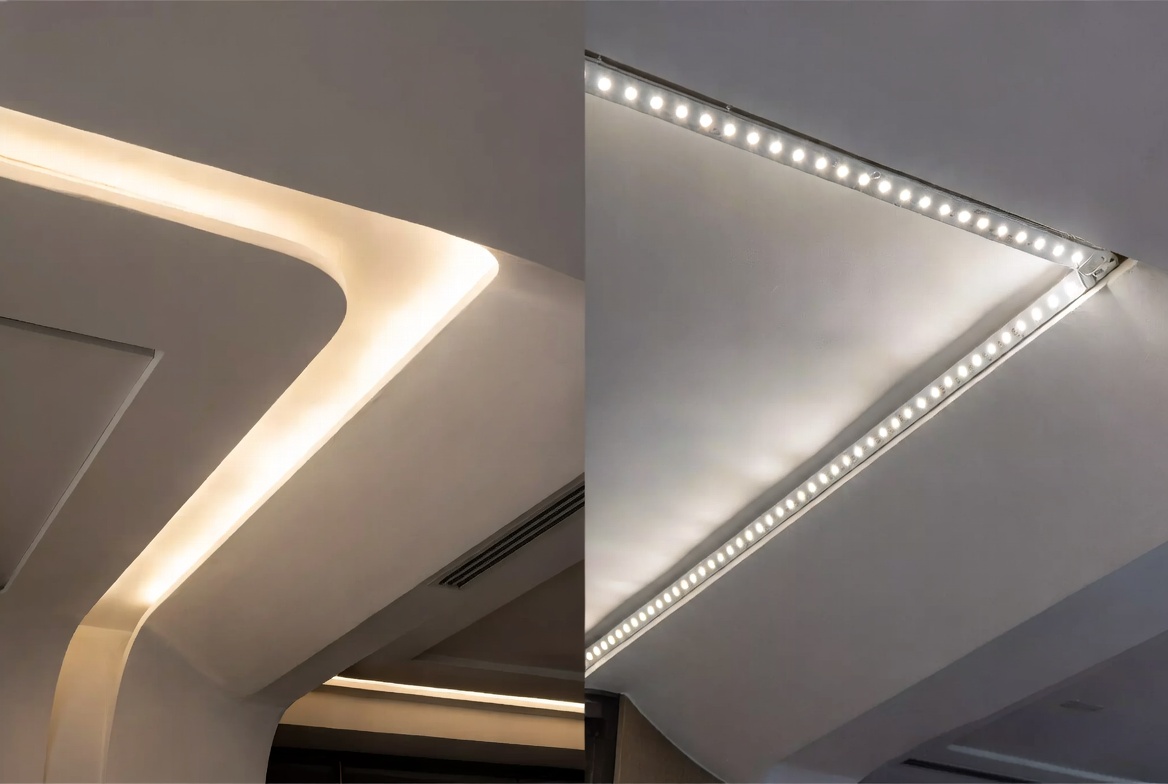
In architectural lighting, the visual result matters as much as the light source itself. Traditional LED strip lights can work well in many concealed applications, but they often expose individual LED points when the strip is visible. Silicone neon flex solves that problem by wrapping LEDs in a diffusing silicone body, giving designers a smoother and more refined illuminated line.
This is one reason it appears so often in modern interior and architectural design. It supports curved layouts, cleaner edges, and more expressive forms without sacrificing practicality.
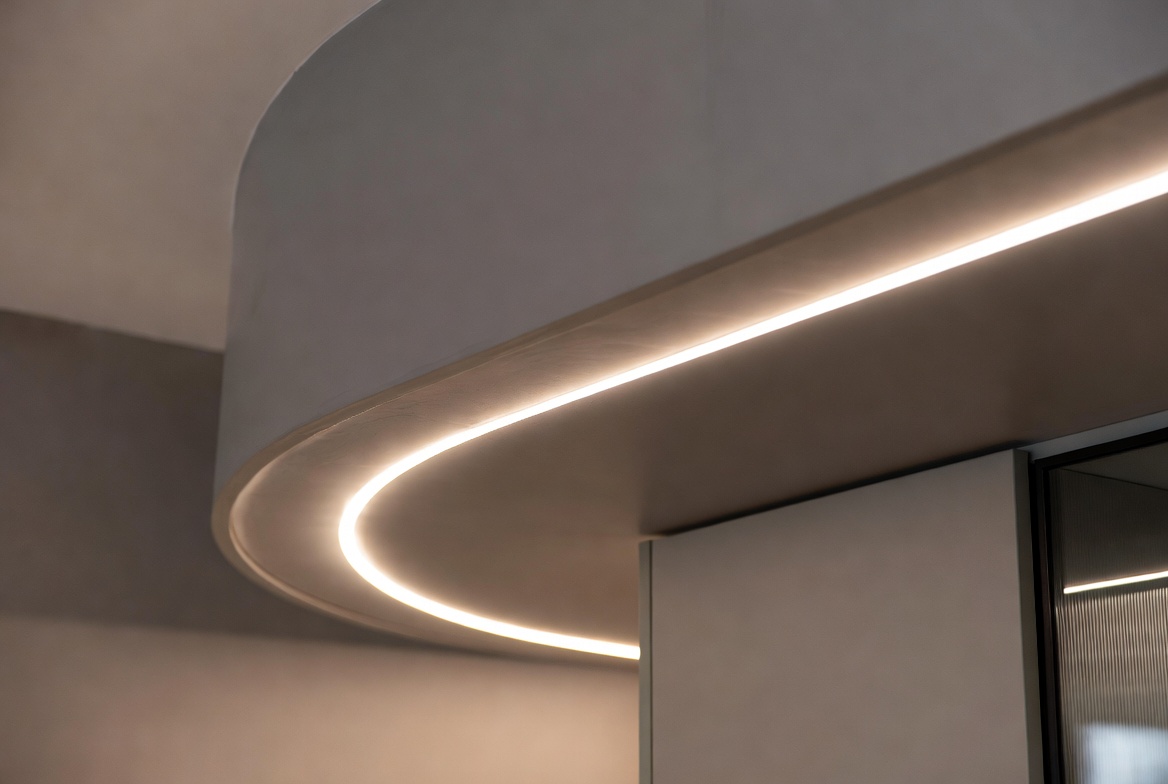
Silicone neon flex is designed to mimic the look of classic neon while using LED technology inside a flexible silicone housing. That construction helps distribute light more evenly and makes the product better suited to visible installations where appearance is critical.
Compared with ordinary strip lights, it also handles complex shapes more naturally. For architects, that means more freedom to trace outlines, emphasize geometry, and integrate lighting into the architecture instead of treating it as an afterthought.
Architects usually evaluate lighting based on how it supports the space, not just how bright it is. Silicone neon flex stands out because it offers a continuous, dot-free appearance that works especially well in premium interiors and branded environments.
It is also more resilient in demanding settings. Silicone housings are valued for better resistance to UV exposure and outdoor conditions, which is why this type of lighting is often selected for both indoor and outdoor use.
Silicone neon flex gives designers several practical advantages that standard strips cannot match as easily.
- Smoother light output. The diffused body softens hotspots and produces a more elegant line of light.
- Better visual consistency. It looks more uniform in open-view applications where the source itself is part of the design.
- More creative shaping. It can follow curves, outlines, and custom forms with greater ease.
- Cleaner architectural integration. It can be used to underline shelves, frames, niches, and feature details without visual clutter.
In practice, that makes the product a stronger fit for spaces where the lighting is meant to be seen, not hidden.
Another reason architects prefer silicone neon flex is its durability. Silicone-based designs are often described as more weather-resistant and more stable under heat and sunlight than PVC-based alternatives.
That matters in real projects because lighting failures can compromise both aesthetics and maintenance budgets. When a product is selected for facades, hospitality spaces, or built-in furniture, decision-makers want a solution that maintains its appearance over time and requires less frequent intervention.
Silicone neon flex is especially effective in spaces where the lighting needs to become part of the architecture.
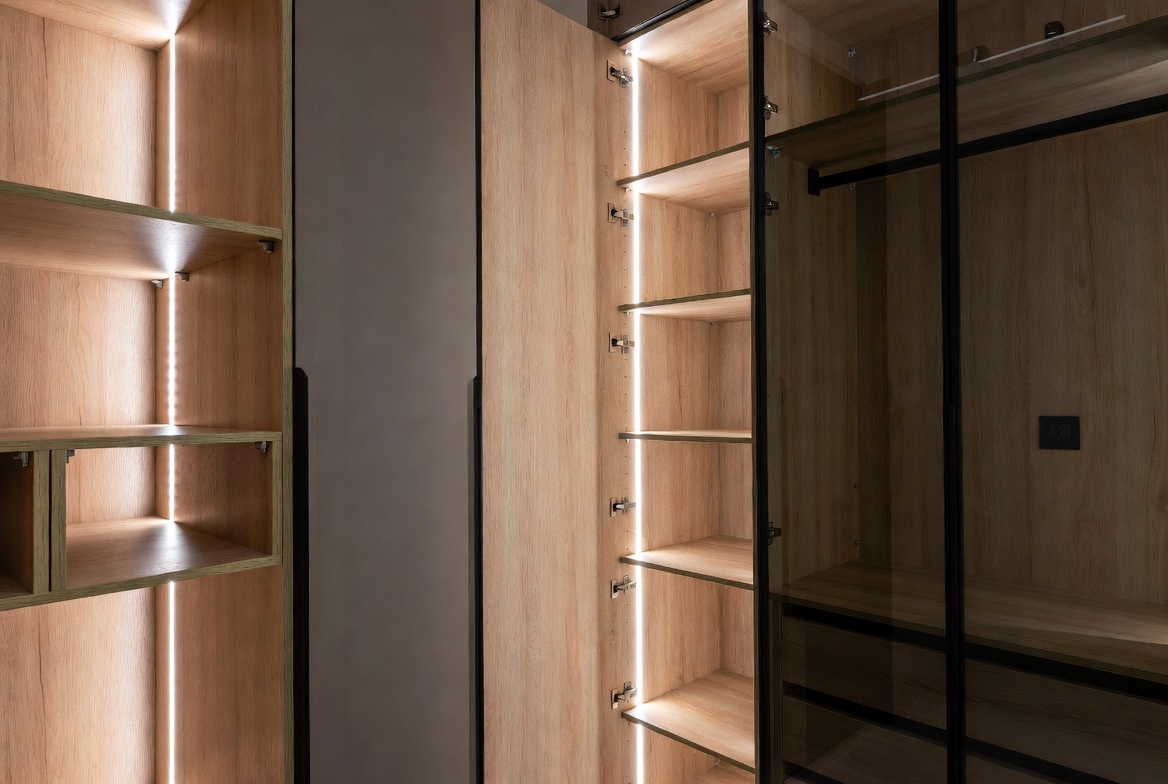
- Cabinet and wardrobe lighting. It adds soft linear illumination without harsh points of light.
- Hotel and hospitality interiors. It supports atmosphere, branding, and visual continuity.
- Ceiling details and wall features. It outlines forms cleanly and enhances depth.
- Display and decorative projects. It helps create premium visual impact in retail and showcase settings.
- Outdoor outlines and signage. Its weather-resistant construction makes it suitable for more exposed conditions.
For architects, this broad adaptability reduces the need to specify different products for every scene.
The choice is not about whether LED strip lights are good. It is about whether the space needs a hidden light source or a visible design element. Standard strips are often the right answer for concealed cabinet grooves and indirect lighting, while silicone neon flex is usually better when the strip itself will be seen.
| Factor | Silicone neon flex | Traditional LED strip lights |
|---|---|---|
| Visual appearance | Continuous and neon-like | May show visible LED points |
| Design freedom | Better for curves and custom outlines | Better for straight or hidden runs |
| Exposure in view | Works well as a feature element | Best when concealed |
| Weather resistance | Stronger for exposed use | Depends heavily on protection level |
| Architectural effect | More decorative and premium | More functional in many cases |
For this reason, many designers use both in the same project, choosing each product for its strongest role.
Selecting the right silicone neon flex is easier when the project is defined clearly from the beginning.
1. Decide whether the light will be visible or hidden.
2. Identify indoor or outdoor exposure requirements.
3. Confirm the curve direction and shape complexity.
4. Match the product style to the architectural mood.
5. Plan installation access early so maintenance stays simple.
This approach helps avoid the common mistake of choosing a strip light based only on appearance or only on technical convenience.
Farwise Technology Co., Ltd. positions itself as a manufacturer with 16 years of experience in silicone LED strips and cabinet lighting, supported by in-house R&D, production, and OEM/ODM customization capabilities. Its product range includes silicone LED strips for cabinet, wardrobe, and decorative applications, which aligns closely with the project types discussed in this article.
That manufacturing depth matters because architectural lighting often needs more than a standard catalog product. Projects may require custom dimensions, special emission styles, or a specific visual effect to match the design intent.
From a design perspective, silicone neon flex is preferred because it turns lighting into a visible architectural language. It offers better aesthetics, stronger flexibility, and a more polished result when the lighting line itself becomes part of the space.
From a practical perspective, it also supports durability and long-term stability in more demanding environments. That combination explains why architects often choose it over ordinary LED strips when the goal is premium visual impact.
For your next architectural or furniture lighting project, choose a manufacturer that can support both custom design and stable mass production. Request a tailored silicone neon flex solution when you need a lighting line that looks refined, installs cleanly, and fits your project vision.
1. Is silicone neon flex better than standard LED strip lights for visible installations?
Yes. It usually looks more uniform and more polished when the strip is exposed.
2. Can silicone neon flex be used outdoors?
Yes. Silicone housing is commonly valued for weather resistance and better performance in exposed environments.
3. Why do architects like the neon-style appearance?
Because it creates a clean, continuous line of light that strengthens the overall architectural composition.
4. Is silicone neon flex suitable for cabinet and wardrobe lighting?
Yes. It is widely used in cabinet, wardrobe, and other furniture lighting applications.
5. Should every project use silicone neon flex instead of LED strip lights?
No. Hidden or purely functional lighting may still be better served by standard LED strips. Silicone neon flex is strongest when the lighting is meant to be seen.
1. Farwise Technology Co., Ltd. official website: [https://www.farwiselighting.com/] [farwiselighting]
2. Farwise Technology Co., Ltd. profile page: [https://www.shine.lighting/farwise/] [shine]
3. Architectural LED Flex archives: [https://www.surelight.com/product-category/architectural-led-flex/] [surelight]
4. Architectural LED strip lighting discussion: [https://www.shine.lighting/threads/top-manufacturers-of-led-strip-lights-for-architectural-lighting.4980/] [shine]
5. LED neon flex advantages article: [https://www.ledmyplace.com/blogs/stories/advantages-of-using-led-neon-flex-over-traditional-neon-lights] [ledmyplace]
6. Neon Flex product page: [https://www.enttec.com/product/neon-flex/neon-flex-led-strip/] [enttec]
7. Architectural strip lighting page: [https://www.tcpi.com/architectural-strip-lighting/] [tcpi]
8. LED neon flex over traditional strip lights: [https://www.ukledlights.co.uk/blogs/ideas-advice/advantages-of-led-neon-flex-over-traditional-strip-lights] [ukledlights.co]
9. Latest trends in LED neon flex lighting: [https://atomled.co.uk/blogs/news/latest-trends-in-led-neon-flex-lighting-the-future-of-flexible-outdoor-illumination] [atomled.co]
10. Flexible LED strip lights in architectural lighting design: [https://www.wilgex-led.com/news/the-benefits-of-using-flexible-led-strip-lights-in-architectural-lighting-design/] [wilgex-led]
11. PU vs silicone LED neon flex lights: [https://www.colorsled.com/blog/pu-vs-silicone-led-neon-flex-lights] [colorsled]
12. Flexible neon sleeve installation instructions: [https://www.ledlightinghut.com/flexible-neon-sleeve-installation-instructions] [ledlightinghut]
13. Why LED neon sign lights use silicone material: [https://www.superlightingled.com/blog/why-led-neon-sign-lights-use-silicone-material-to-diffuse-light/] [superlightingled]
14. PU vs silicone LED neon flex lights comparison: [https://clearlighting.com/pu-vs-silicone-led-neon-flex-lights-which-is-better/] [clearlighting]
15. How to install flexible silicone neon lights: [https://chronoslights.com/blogs/news/how-to-install-flexible-silicone-neon-lights-a-step-by-step-guide] [chronoslights]
16. LED neon flex architectural lighting design project: [https://ledsuntech.com/led-neon-flex-architectural-lighting-design-project/] [ledsuntech]