


Tel / WhatsApp
+86-13790241903

Views: 283 Author: Farwise Lighting Publish Time: 2026-07-31 Origin: Site


Content Menu
● What LED Strip Light Lifespan Really Means
● Factors That Shorten Lifespan
● How Installation Affects Performance
● Reading Lifespan Claims Correctly
● Best Practices to Extend Lifespan
● Choosing the Right Strip for Furniture Projects
● Practical Expectations by Use Case
● What Buyers Should Ask Suppliers
● Why Professional Manufacturing Matters
● FAQ
>> 1. How long do LED strip lights usually last?
>> 2. Do LED strip lights get dim before they fail?
>> 3. What is the biggest reason LED strip lights fail early?
>> 4. Can better installation really extend lifespan?
>> 5. Are cabinet LED strips harder to keep alive?
>> 6. How can buyers judge a supplier more accurately?
LED strip lights can last for many years, but their real lifespan depends on quality, heat control, installation, and daily operating conditions. In practical use, a well-made LED strip light often outperforms a cheaper one by a wide margin, especially in furniture, cabinet, wardrobe, and other built-in lighting applications.
When people ask how long LED strip lights last, they usually mean more than just whether the light still turns on. A more useful question is how long the strip can keep delivering usable brightness, stable color, and safe operation before performance drops too much. That is why lifespan is often discussed alongside lumen maintenance rather than only "hours of use."
In everyday language, LED strip light lifespan includes three stages: the strip works normally, the output gradually declines, and then the light becomes too dim or unstable for its intended job. This matters in home and commercial projects because a strip can still function while no longer meeting visual standards.

For many quality products, a realistic lifespan expectation is often measured in tens of thousands of hours, not just a few years. Some industry and manufacturer sources commonly place LED strip light life in the high hour range, while better-built products and favorable conditions can extend that further.
However, the number on a spec sheet should never be read in isolation. The same strip may perform very differently depending on temperature, enclosure design, power stability, and how hard it is driven in real projects.
Several issues have a direct effect on how long LED strip lights stay bright and reliable. Heat is one of the biggest problems, because LED components and drivers both age faster when temperatures stay high for long periods. Poor ventilation, tight recesses, and enclosed cabinet spaces can all increase stress on the system.
The second major factor is component quality. A strip built with better LED chips, stronger circuit materials, and more stable driver components will usually outlast a low-cost alternative. Even if two products look similar, their internal parts and assembly quality may be very different.
Other common lifespan reducers include:
- Overloading the strip with the wrong power supply.
- Frequent voltage fluctuation.
- Poor installation on heat-retaining surfaces.
- Moisture, grease, or dust buildup.
- Repeated bending, pulling, or cutting errors.
- Weak sealing in humid or splash-prone spaces.
Heat is the hidden reason many LED strip lights fade too soon. As temperature rises, LED output gradually drops, and supporting electronic parts also wear out faster. In practical terms, this means a strip in a sealed cabinet or near a heat source may age much faster than the same product installed in an open, well-ventilated location.
This is especially important in furniture lighting, where strips are often hidden inside cabinets, wardrobes, vanity units, or display frames. A clean visual result is valuable, but thermal planning matters just as much if the goal is long service life.
A good product can still fail early if installed badly. Surface preparation, cable handling, and mounting position all influence long-term stability. Dust, grease, or uneven contact can reduce adhesion and make the strip less effective at releasing heat.
For built-in furniture lighting, proper installation usually means:
1. Cleaning the mounting surface before installation.
2. Making sure the strip is positioned for airflow where possible.
3. Avoiding tight folds, sharp bends, or strain on joints.
4. Matching the power supply to the strip's operating requirements.
5. Testing the system before final closure of panels or covers.
These basic steps may sound simple, but they often decide whether a strip lasts for years or starts failing early.
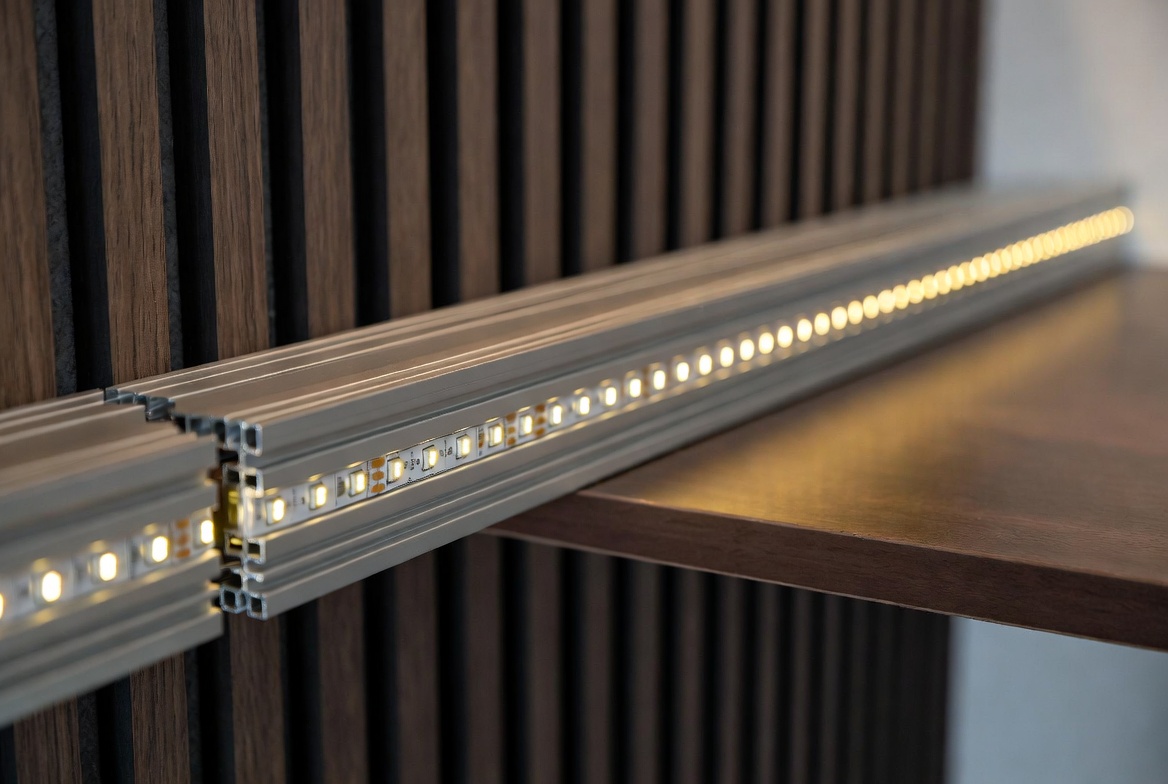
Lifespan claims can be misleading when they are treated as a promise rather than an estimate. A product might be described as lasting 50,000 hours, but that figure usually assumes favorable conditions and normal operating temperatures. It does not mean the strip will look exactly the same at the end of that period.
A more realistic way to judge lifespan is to ask three questions:
- How long will the strip stay bright enough for the application?
- How stable will the color remain over time?
- How likely is the strip to avoid early failure in the actual installation environment?
That mindset is more useful for kitchen, wardrobe, and decorative furniture lighting than focusing on a single lifespan number alone.
A better way to evaluate LED strip lights is to think in terms of system lifespan, not just LED lifespan. In real projects, the strip, adhesive, power supply, wiring, connectors, and installation environment all age together. A strong strip paired with a weak power supply can still fail early.
This is one reason many professional lighting projects prioritize integrated design. For OEM/ODM buyers, the winning solution is not always the brightest strip; it is often the one that balances optical output, thermal control, installation depth, and long-term reliability. That approach reduces maintenance calls and improves customer satisfaction in the field.
You can extend LED strip light lifespan with a few practical habits. The goal is not only to make the strip last longer, but also to preserve light quality throughout its useful life.
Recommended practices include:
- Choose a strip designed for the environment where it will be used.
- Use a properly matched power supply.
- Avoid sealing heat inside a completely closed cavity.
- Keep the strip clean and dry.
- Reduce unnecessary full-power operation where dimming is possible.
- Inspect wiring and connectors during routine maintenance.
For cabinet and furniture lighting, regular cleaning is especially important because dust and residue can make the strip appear dimmer even before the LEDs themselves age noticeably.
Furniture lighting places special demands on LED strip lights because the light must be compact, visually smooth, and easy to integrate. In cabinets, wardrobes, and vanity areas, users usually want a soft, even glow rather than harsh brightness. That makes thermal design, beam control, and installation flexibility more important than raw output alone.
For manufacturers and project buyers, the best product choice often depends on the end use:
- Cabinet interiors need neat appearance and stable output.
- Wardrobes need flexible fitting and reliable long-term operation.
- Bathroom and humid areas need stronger environmental protection.
- Decorative home applications need color consistency and visual comfort.
These requirements are why many global buyers look for custom solutions instead of standard off-the-shelf strips. Farwise Technology's product line and OEM/ODM support are positioned around this kind of application-specific demand.
The same LED strip can age differently in different environments. A strip used a few hours a day in a ventilated bedroom may last much longer than one used for long hours inside a warm, enclosed kitchen cabinet. This is why real-world service life depends on the complete installation scenario, not just the product category.
A simple rule of thumb is:
- Light residential use usually produces a longer service period.
- Heavy daily use accelerates brightness loss and component fatigue.
- Humid, hot, or enclosed areas require better product selection and maintenance.
- Poorly matched accessories can shorten the life of even a premium strip.
Before placing an order, buyers should ask more than "How many hours does it last?" A smarter conversation focuses on reliability, testing, and use conditions.
Useful questions include:
1. What is the expected usable life under real operating conditions?
2. How is heat handled in the strip design?
3. What type of testing is performed before shipment?
4. Can the strip be customized for size, function, or appearance?
5. What environments is the product best suited for?
These questions help separate marketing claims from practical performance. They also reduce the risk of purchasing lighting that looks suitable on paper but underperforms in the field.
Long-lasting LED strip lights depend on consistent manufacturing, stable quality control, and reliable material selection. In factory-direct projects, the difference often comes from the discipline behind the product: repeatable production, aging tests, and clear matching between design and application.
For commercial buyers, this is especially important when the lighting is part of a larger furniture or interior system. A dependable supplier can help align product structure, installation method, and maintenance needs so the final result stays stable over time.
If your goal is long life, don't start with the lowest price. Start with the right application, the right thermal design, and the right supplier support. A well-chosen LED strip light should deliver stable brightness, safe operation, and low-maintenance performance for years.
For projects that require custom size, special appearance, or furniture-specific integration, working with an experienced manufacturer can make a major difference in long-term performance. For OEM/ODM cabinet lighting and silicone LED strip solutions, Farwise Technology can support custom project development from concept to production.
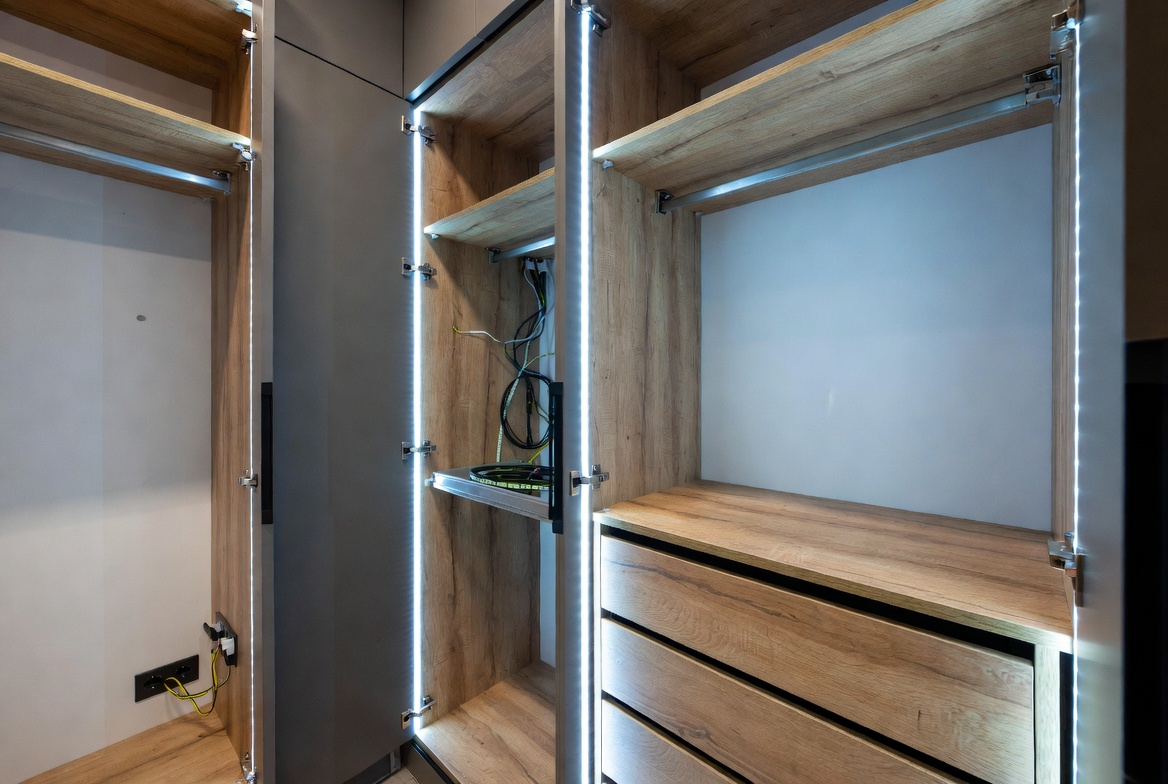
Most quality LED strip lights are commonly expected to run for tens of thousands of hours, but actual service life depends on heat, installation, and component quality.
Yes. In many cases, brightness drops gradually before the strip stops working, so reduced output is often the first sign of aging.
Excess heat is one of the biggest causes of early aging, especially in enclosed or poorly ventilated installations.
Yes. Clean mounting surfaces, proper power matching, and better airflow can all help the strip stay stable for longer.
They can be, because cabinets and furniture spaces often limit airflow, so thermal design and product quality become more important.
Ask about testing, customization, thermal design, and real use conditions instead of relying on a single lifespan number.
1. Beijing Lighting Society, "What factors affect the lifespan of LED lamps?" [https://www.iesb.org.cn/page152?article_id=158] [iesb.org]
2. IES TM-21 overview, "Projecting Long Term Lumen Maintenance of LED Light Sources." [https://energycodeace.com/site/custom/public/reference-ace-2019/Documents/gloss_iestm21.htm] [energycodeace]
3. IES TM-21-11 preview, "Projecting Long Term Lumen Maintenance of LED Packages." [https://webstore.ansi.org/preview-pages/IESNA/preview_IES+TM-21-11.pdf] [webstore.ansi]
4. Farwise Technology official website, manufacturer profile and product pages. [https://www.farwiselighting.com/] [farwiselighting]
5. LEDYi Lighting, "How Long Do LED Strip Lights Last?" [https://www.ledyilighting.com/zh-CN/how-long-do-led-strip-lights-last/] [ledyilighting]
6. Govee, "How Long Do LED Strip Lights Last? Lifespan Facts." [https://us.govee.com/blogs/led-strip-lights/how-long-do-led-strip-lights-last] [us.govee]
7. LED World Lighting, "Installation and maintenance tips for LED lighting strips." [https://www.ledworldlighting.com/installation-and-maintenance-tips-for-led-lighting-strips/] [ledworldlighting]
8. PAC Lights, "A Comprehensive Guide to under cabinet lighting led installation and maintenance." [https://www.paclights.com/learning-center/a-comprehensive-guide-to-under-cabinet-lighting-led-installation-and-maintenance/] [paclights]
9. Flexfire LEDs FAQ, LED strip lighting lifespan and heat guidance. [https://flexfireleds.com/FAQ] [flexfireleds]
10. DesignLights Consortium manufacturer guide. [https://designlights.org/wp-content/uploads/2021/01/DLC_Manufacturers_Guide_Mandarin_5-10-19.pdf] [designlights]